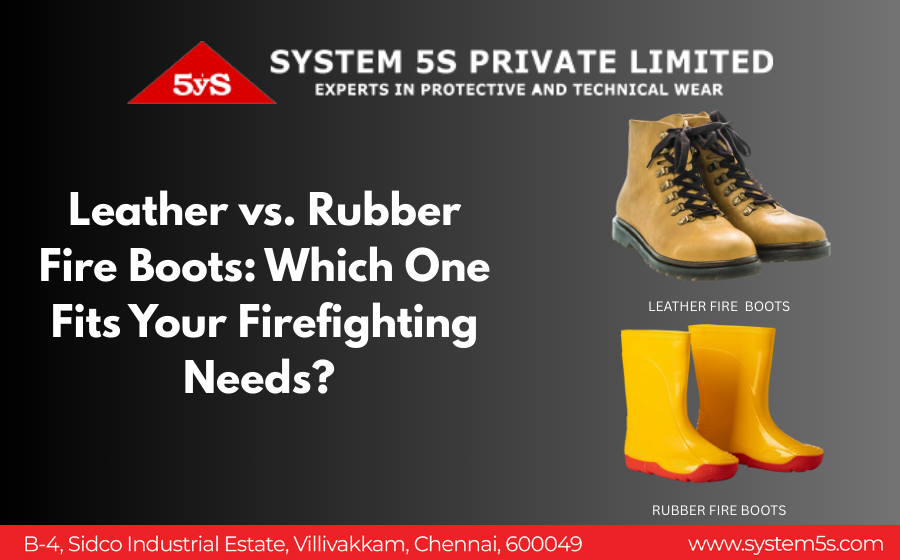
When it comes to firefighting footwear, both leather and rubber boots have their places – it just depends on your needs. Leather boots (like System5S’s Holik Lukov) are typically lighter and more comfortable, conforming to your foot and providing excellent ankle support. They breathe better and often feel like an “athletic” fit, reducing fatigue on long shifts. Rubber boots (such as System5S’s Harvik 9687L) are heavier but offer 100% waterproof protection and superb chemical/oil resistance. Rubber boots can handle wet or muddy conditions and are easy to hose off.
| Feature | Leather Boots (e.g. Holik Lukov) | Rubber Boots (e.g. Harvik 9687L) |
| Comfort & Fit | Generally lighter (2–3 lbs lighter than rubber). Molds to the foot, offering snug fit and ankle support. Better breathability (less sweating). | Heavier and more cumbersome. Bulkier feel can increase effort (each pound adds ~5 lbs to your load). No ankle conformity. |
| Durability | Very durable if cared for; high-quality leather resists heat and abrasion. Requires conditioning/oiling to prevent cracks. | Extremely durable in harsh conditions: fully vulcanized rubber won’t rot or corrode, and stands up to flame, acids, oils, and punctures. |
| Protection | Provides strong mechanical protection (steel toes, puncture plates) and heat resistance. Slip-resistant and sturdy, ideal for structural fires. | Naturally flame-retardant and waterproof. Steel toes and midsoles protect against impacts and punctures. Often rated for electrical hazards (up to 18–35 kV) and chemicals. |
| Flexibility | More flexible – leather bends and flexes as you move, allowing easier kneeling or climbing. | Stiffer by nature (more rigid soles), which may feel awkward when crouching or sprinting. |
| Maintenance | Needs regular cleaning and leather treatment (wax/oil). Surprisingly, studies show leather retains fewer contaminants after cleaning than rubber, meaning a good wash can remove most toxic residues. | Easy to clean with hose or wipes (fully waterproof). However, research indicates rubber can trap chemicals in its matrix, retaining more toxins after decon than leather. No special conditioning needed. |
| Best Use Cases | Favored for structural firefighting (building fires) where agility and comfort matter. Also good for ice or cold because leather can absorb sweat away from feet. | Excellent for all-weather or industrial firefighting (oil, chemical, wildland). Waterproof rubber keeps feet dry in rain or foam, and resists caustic substances. Cheaper initial cost makes rubber boots a budget-friendly option for general rescue and bush fires. |
In short, leather boots shine in comfort and lighter weight, while rubber boots excel in wet/chemical environments and tough durability. The “better” choice depends on your fire scenario: structural firefighters often prefer leather for mobility, whereas industrial or wildland teams may choose rubber for its water- and chemical-proof qualities.
Buying certified boots ensures you’re getting real protection. The key certifications to look for are:
Why Certifications Matter: Certified boots are lab-tested to protect you from exactly the hazards you’ll face. For example, NFPA certification guarantees that in real fires they will resist flaming liquids, punctures, high heat and shock. Without certification, “fireproof” claims are just marketing. Always check for a tag or stamp that lists the standard (e.g. “EN 15090:2012” or “NFPA 1971”) – it’s often sewn inside the tongue or box.
Inspect the boot itself. Certified footwear typically has a label on the inside of the boot or on the box. Look for logos or codes like CE/EN numbers, NFPA/UL, or the ISI diamond. For instance, an EN-certified boot will have a CE mark and “EN 15090” printed, and a NFPA-certified boot will often carry “UL” or “NFPA 1971” on its label. System5S boots include these on their product tags: the Harvik and Holik models, for example, show EN 15090:2012 compliance. In India, check for the ISI/BIS diamond mark and an IS code on the tongue. If in doubt, check the manufacturer’s spec sheet or ask the supplier to verify the certifications.
As a trusted fire-safety brand since 1990, System5S offers boots that meet all the above criteria. Here are some recommended models for different needs:
System5S manufactures and supplies each boot with quality assurance: ISO 9001:2015 quality control, in-house testing, and BIS-approved facilities ensure you’re getting genuine certified gear.
Ready to protect your team? Browse System5S’s full range of certified firefighter boots and gear with confidence, your safety depends on it!

