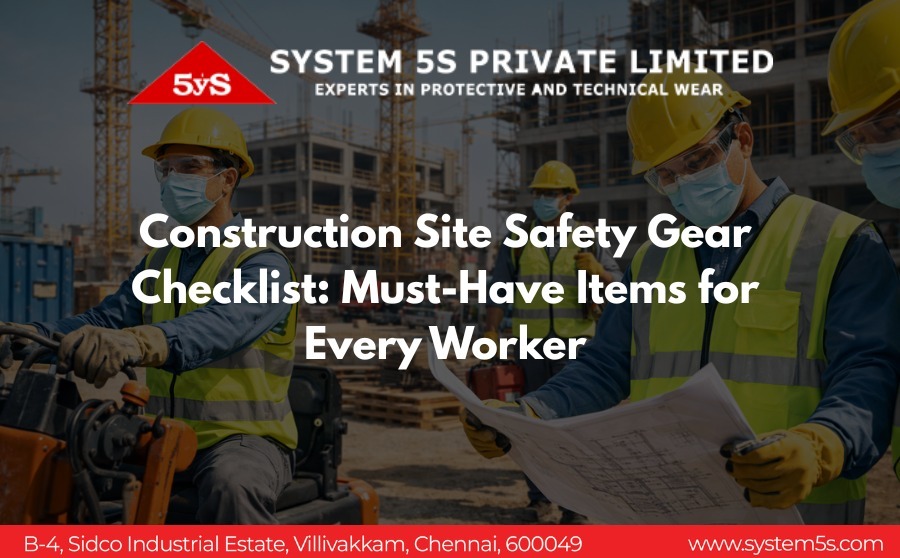
Construction sites are dynamic and hazardous environments, which is why no worker should ever step on site without proper safety gear. In India, the construction industry is the second most dangerous sector, with roughly 38 construction-related fatalities every day. The good news is that most accidents are preventable; the right personal protective equipment (PPE) can mean the difference between a close call and a serious injury. Equipping everyone with adequate safety gear PPE (personal protective equipment) isn’t just best practice; it’s also a legal requirement. The Building and Other Construction Workers Act mandates that employers provide PPE at no cost and enforce its use. In short, wearing the proper protective clothing and equipment isn’t optional, it’s a lifesaver and a law.
Why Safety Gear (PPE) Matters on Construction Sites
Every construction project involves risks like falling objects, sharp materials, heavy machinery, noise, dust, and working at heights. Protective gear shields workers from these hazards before they cause harm. For example, a hard hat can prevent a fatal head injury if something falls from above, and steel-toe boots can stop a crushing injury if a heavy object drops on your foot. Many of the worst accidents on sites occur when basic PPE is missing. Tragically, reports in India show that workers are often not given safety gear like helmets, gloves, reflective jackets, or harnesses, even though these are mandatory under the law. By ensuring every person on site has the right gear and wears it, construction companies can dramatically reduce injuries and fatalities. Beyond safety, having proper PPE also improves productivity and morale, workers feel safer and more confident, which means they can focus on doing their jobs well. And importantly for contractors, a safe site means avoiding legal troubles, fines, and project delays that come with accidents.
Essential Construction Site Safety Equipment (PPE)
Below is a construction safety equipment list highlighting the must-have PPE for every worker. This checklist covers all the construction personal protective equipment needed to keep workers safe and compliant:
- Hard Hat (Safety Helmet): A sturdy helmet for construction site work is absolutely essential to protect against head injuries from falling or flying objects. Every worker should wear an industrial safety helmet that meets the IS 2925 standard (look for the ISI mark indicating compliance). A good hard hat resists impact and penetration, and it should have a chin strap so it stays secure. Indian regulations now require all industrial helmets to be BIS-certified, underscoring how critical this gear is.
- Tip: Many sites use color-coded helmets (e.g. white for engineers, yellow for laborers) for easy identification, but color is secondary to quality and fit, always choose a high-quality, ISI-marked helmet designed for construction safety.
- High-Visibility Vest / Protective Clothing: Construction workers must remain visible, especially around moving equipment or road traffic. A high-visibility vest or jacket with reflective strips makes sure operators of cranes, trucks, or forklifts spot workers from a distance. In India’s bright daylight and nighttime conditions alike, these vests help prevent “struck-by” accidents. High-vis clothing is part of basic PPE for all construction crews. Along with vests, ensure workers wear appropriate protective clothing for the job, for example, durable coveralls or aprons when handling sharp materials, or flame-resistant clothing if dealing with hot work. The key is to cover the body and make the worker stand out visually. This protective clothing and equipment not only guards against minor scrapes and dirt but also signals everyone to exercise caution around the person.
- Safety Footwear (Steel-Toe Boots): Construction sites abound with heavy tools, concrete blocks, nails, and slippery surfaces. Safety boots with steel toe caps protect workers’ feet from falling objects and compression injuries. They also usually have tough midsoles to prevent punctures from stepping on nails or sharp debris. In India, safety footwear should conform to IS 15298 standards, which means the toe cap can withstand a heavy impact (200 Joules for standard safety boots). Equally important, soles should be non-slip and sturdy, giving good traction on uneven ground or wet surfaces. Always ensure the boots are the correct size and laced properly for ankle support. A quality pair of safety shoes might feel a bit heavy, but they are critical safety equipment supplies for every construction worker, never allow someone to work in sandals or thin sneakers on-site!
- Gloves (Hand Protection): Hands are often the first point of contact with hazards, so the right gloves are a must. There is no one-type-fits-all glove, since tasks vary: workers handling bricks and rough materials need cut-resistant gloves; those doing electrical work need rubber insulating gloves; welders need heat-resistant leather gloves; and workers mixing chemicals or paints may need chemical-resistant gloves. Always choose gloves appropriate for the task at hand. For general site work, sturdy leather or synthetic gloves can prevent cuts, abrasions, and splinters. By wearing gloves, workers also get a better grip on tools and materials, reducing the chance of slips. Remember that gloves wear out, replace them when they get torn or thin. Having a supply of various glove types in your safety kit ensures that every worker can find suitable hand protection before starting a job.
- Eye and Face Protection: Construction work generates plenty of flying debris, dust, and sparks that can injure the eyes. Safety glasses or goggles should be worn for any task that risks particles or splashes to the face. For instance, chiseling, grinding, cutting tiles or metal, or even simply working in a dusty environment calls for eye protection. Regular sunglasses or prescription glasses are not enough, use proper safety spectacles with side shields or goggles that meet ANSI/EN standards (or IS equivalent) for impact resistance. For high-risk tasks like welding or cutting metals, specialized face protection is needed: welders must use welding helmets with proper filter lenses, and workers cutting or grinding may use a face shield (in addition to safety glasses) to protect against sparks and larger fragments. Eye injuries can be life-altering, so there’s no excuse to skip goggles when required. Keep safety eyewear readily available on site, it’s cheap compared to an eye injury!, and make it a rule that no one operates power tools without it.
- Hearing Protection: Construction sites can be extremely noisy, think of jackhammers, concrete cutters, heavy machinery, and constant vehicle movement. Prolonged exposure to high noise levels can lead to permanent hearing loss. If noise exceeds safe limits, generally around 85 dB over long periods, workers should use hearing protection. Earplugs, disposable foam ones or custom molded are a simple solution, and earmuff-style protectors are great for very loud environments. Workers in high-noise areas like pile driving or working near loud generators should always have ear protection. Even for short tasks, if it’s loud, use the earplugs, they’re easy to carry in your pocket and can prevent a lifetime of hearing damage. Make sure the ear protection is comfortable and fits well, so workers actually wear it consistently. It’s also good to educate the team about noise risks: if you have to shout to talk to someone 3 feet away, hearing protection is needed.
- Respiratory Protection: Construction dust and fumes are another invisible danger. Simple dust masks (disposable respirators) should be worn when doing activities like mixing cement, cutting wood or drywall, or sweeping debris, any job that kicks up dust. Fine silica dust from concrete and cement is a known health hazard that can cause silicosis over time, so dust masks are vital for those tasks. For heavier exposure, say, working in enclosed spaces with paint or chemical fumes, or during demolition of old structures with unknown substances, a respirator with appropriate cartridges may be necessary. For example, N95 or FFP2 masks can filter out most construction dust, while organic vapor cartridges are needed for strong chemicals. Make sure workers know how to wear masks properly, sealed around the nose and mouth and replace them as needed, dust masks lose effectiveness when clogged or damp. Providing clean drinking water and rest breaks also helps reduce dust inhalation. A worker’s lungs are as important as any tool, protect them with proper respiratory gear whenever the air isn’t clean.
- Fall Protection Gear (Harnesses & More): Falls from height are the leading cause of construction fatalities, which makes fall protection gear absolutely crucial for any work above ground level. The basic rule in India and many other places, is that if a worker is more than 2 meters (~6 feet) off the ground, they must use fall protection. This typically means wearing a full-body safety harness attached to a secure anchor point via a lanyard. A proper harness, conforming to IS 3521 or EN 361 standards, will distribute force in a fall and prevent the worker from hitting the ground. Always inspect harnesses and lanyards for damage before use, and ensure anchorage points are strong (there are portable lifeline systems or fixed anchors that can be used on site). In addition to harnesses, safety nets can be installed below work-at-height areas as a secondary precaution, nets are often used in high-rise building projects. Scaffolding should have guardrails, and ladder work should be done with someone footing the ladder. Helmet for construction site safety is extra critical when working at heights, since even with a harness, a slip can jolt you or cause tools to drop. Train workers on how to properly wear and hook their harness, a dangling or loose harness won’t help in a fall. By rigorously using fall protection equipment, falls, the most deadly hazard in construction, can be prevented or mitigated.
- First Aid and Emergency Gear: While not worn on the body like other PPE, no safety gear checklist is complete without mentioning first aid and emergency equipment. Every site should have at least one well-stocked first aid kit and fire extinguishers accessible, typically one every 30 meters on site. Workers should know where these supplies are and how to use them. Additionally, at least a couple of workers or supervisors should be trained in basic first aid. In case of any injury despite all precautions, immediate first aid can reduce the severity. Other emergency equipment includes alarm whistles or air horns to raise an alert in case of an accident, and emergency contact numbers posted clearly. While these items aren’t personal protective equipment that each worker carries all day, they are a vital part of construction site safety preparedness. Make sure your safety equipment supplies include replenishing first aid kits, spare PPE, so replacements are available if something breaks or a new worker arrives, and even drinking water and shade for heat protection, especially in India’s hot climate, health and safety go hand in hand.
Pro Tip: Quality matters. Always use good-quality, standards-approved PPE. Cheap or fake safety gear can fail when it’s needed most. Check that helmets and shoes bear the ISI mark (or relevant standard), and that harnesses, ropes, and lanyards have valid certification tags. Also, ensure PPE fits the worker well, an ill-fitting harness or oversize boots can create new hazards. Supervisors should keep a PPE checklist and replace gear that is worn out or damaged. Safety equipment is only effective if it’s in good condition and used properly!
Building a Safety Culture
Having the right gear is step one; making sure everyone uses it consistently is step two. Site managers and senior staff must lead by example, always wearing their PPE, to set the tone. Encourage workers to speak up if they see someone without proper gear or if a piece of equipment is faulty. Remember, safety is a collective effort.
In India, enforcement is improving, and neglecting safety can lead to legal action against contractors. But the goal isn’t just to avoid penalties; it’s to ensure every worker goes home healthy each day. By fostering a culture where PPE is a non-negotiable part of the routine, you protect lives and boost efficiency, safe workers are more productive and less likely to take time off due to injuries.
At System 5S, we believe that safety starts with the right gear and grows with the right culture. Our high-quality, certified PPE solutions support safer construction sites across India, helping teams stay protected, productive, and prepared every day.
To keep safety top-of-mind, hold brief tool-box talks or safety meetings regularly. Use these to remind everyone about hazard awareness and to check that gear is being used correctly. Over time, wearing a helmet or safety glasses will become second nature on your sites. That’s when you know you’ve succeeded in creating a safety-first environment.