Purchasing firefighting boots and helmets is about protecting lives, there’s no room for compromise on safety. However, a new risk has emerged: fake safety certification documents circulating in the market. Imagine investing in critical personal protective equipment (PPE) for your fire crew, only to discover the “Module B” certificate, the EU Type Examination approval, it came with is bogus. Unfortunately, this scenario is real, and it can put firefighters in danger and organizations at legal risk. This blog post will raise awareness about the risks of fake Module B certificates for firefighting boots and helmets, explain how to spot them, and highlight the vital role of Notified Bodies in genuine PPE certification. We’ll also show an example of a fake certificate versus a real one, and conclude with recommendations of verified helmet models from System5S that you can trust.
In the European Union, high-level PPE such as structural fire helmets and boots must comply with Regulation (EU) 2016/425. This includes undergoing a Module B: EU Type Examination, where an independent lab checks the product meets all safety standards before it can be CE marked. The Module B certificate is essentially the “EU Type Examination Certificate” issued after a helmet, boot, or other PPE passes rigorous testing for example, against standards like EN 443 for firefighting helmets or EN 15090 for firefighting boots. This certificate is not just a piece of paper, it’s proof that the equipment will perform as expected in life-threatening situations.
Notified Bodies play a key regulatory role here. A Notified Body is an organization accredited and authorized by EU authorities to test and certify PPE. They are assigned a unique four-digit ID and are listed on official EU databases as competent to certify specific types of equipment. For instance, CSI S.p.A. in Italy (Notified Body No. 0497) is one such accredited body; it is notified for PPE including head protection and even has accredited labs for helmet standards like EN 443. Only a genuine Notified Body can issue a valid Module B EU Type Examination certificate. The Notified Body’s name and ID number will appear on the certificate and often next to the CE mark on the product. Their job is to ensure the product truly meets all safety requirements, an essential safeguard for firefighters who rely on this gear.
Why would anyone present a fake certificate? Unfortunately, some manufacturers or distributors try to cut corners by bypassing expensive and time-consuming testing. They might produce a counterfeit certificate to falsely claim compliance, hoping procurement officers won’t spot the fraud. This is more than just a paperwork issue, it’s a serious danger. Supplying fake PPE can be life-threatening, as the equipment likely has not been properly tested and “often does not perform as it should,” compromising users’ safety and exposing your organization to harm or liability. In the context of firefighting, a helmet with a fake certificate might not actually resist heat or impact as required, or a boot might fail to protect against punctures or flame. The people wearing this gear would have a false sense of security while actually being at risk.
From a legal and ethical standpoint, using PPE with fabricated certification can lead to severe consequences. It’s illegal to sell or use non-compliant PPE in many jurisdictions. If an accident occurs and the equipment is found to lack genuine certification, the organization could face investigations, lawsuits, or penalties. Moreover, trust is eroded, firefighters and staff expect that the gear provided to them meets the standards printed on it. As a safety decision-maker, the last situation you want is to explain that an injured firefighter’s helmet was never truly certified.
Fake certificates can be convincing at first glance, but they always have tell-tale signs if you know what to look for. Here are some warning signs and verification tips to help procurement officers and safety managers identify a fraudulent “CE certificate” for PPE:
By keeping these points in mind, procurement teams can catch many fake certificates before any purchase is made. Now, let’s look at a real-world example of a fake vs. a genuine certificate to solidify these concepts.
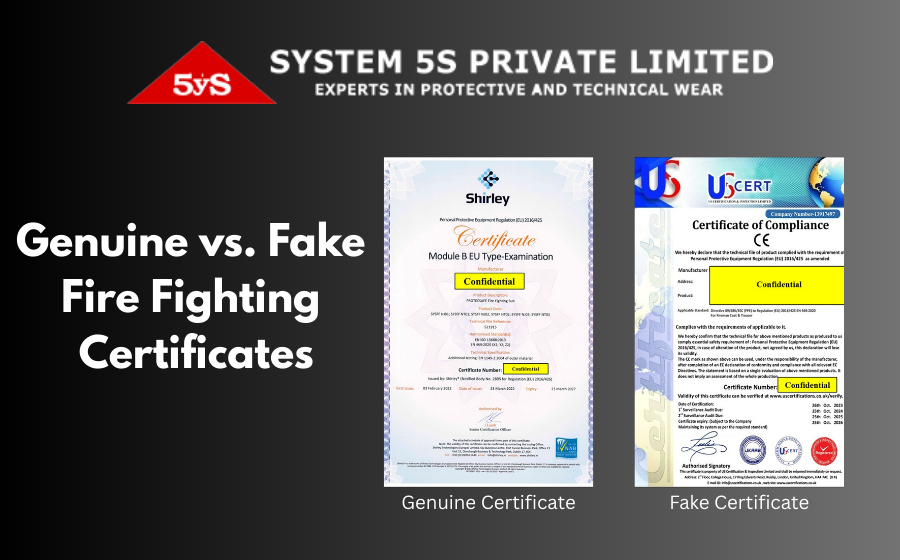
To illustrate the differences, consider the case of a firefighting helmet being sold with what appears to be a CE certificate. Below we have two certificate documents side by side, one is fake and one is authentic. This example highlights exactly the kinds of discrepancies mentioned.
An example of a fake Module B certificate presented as a “Certificate of Conformity” for a firefighting helmet. The issuer listed is “Beide (UK) Product Service Limited”, which is not an EU Notified Body. Such a document has no legal standing under the PPE Regulation. The use of a misleading title Certificate of Conformity instead of the proper term, and the fact that the provider is a UK-based company post-Brexit, are clear indicators of a fraudulent certificate. In short, any PPE “approval” paper from this source is invalid for CE marking.
A genuine EU Type Examination Certificate for a firefighting helmet, issued by CSI S.p.A. Notified Body No. 0497 in Italy. Notice the correct title on the document: “EU Type Examination Certificate” in the native language and English, referencing the EU PPE Regulation. It clearly shows the Notified Body’s name and ID (0497) and details of the certified product helmet model, standards, etc. CSI S.p.A. is an accredited Notified Body authorized to issue such certificates, so this certificate is valid evidence that the helmet meets the required safety standards. The contrast between this and the fake document is evident, from the issuer’s legitimacy to the document formatting, underscoring why buyers must remain vigilant.
In the fake certificate example, the combination of a non-authorized issuer and an incorrect certificate format was a dead giveaway. By contrast, the real certificate from CSI S.p.A. uses proper terminology and comes from a known, EU-recognized certifier. This difference is crucial: a firefighter helmet with the CSI certificate has truly been tested to EN 443 and other relevant standards, whereas a helmet with a “Beide (UK)” paper may not have been properly tested at all. The fake paperwork can be generated in minutes; proving a helmet’s resilience to flames and impacts cannot. Always demand the right certification.
Fake Module B certificates are a hidden threat in the PPE supply chain, but with awareness and due diligence, you can avoid falling victim. Always verify the credentials of any safety document presented to you. Remember: the EU Type Examination Certificate is your assurance that an independent Notified Body has approved the product. If anything about the certificate seems odd, the title, the issuer, the details, investigate further. It’s better to pause a purchase than to risk firefighters’ lives on untested gear.
At System5S, we are committed to providing only fully compliant, certified PPE to our clients. We work with reputable manufacturers and ensure all our firefighting helmets and boots come with genuine CE certificates from accredited Notified Bodies. For example, our premier helmet models, the PAB Fire Compact and PAB Fire 05, are certified to the latest standards and come with documentation you can trust. You can explore these helmets here: Fireman Helmet PAB Fire Compact and Fireman Helmet PAB Fire 05. Both helmets have undergone EU type examinations by legitimate Notified Bodies like CSI, so you can have peace of mind about their protective performance.
Don’t take certificates at face value, take a closer look. By being informed and cautious, procurement officers and safety managers can ensure that every boot and helmet they buy will stand up to the job when it matters most. Safety documentation is only as good as the authority behind it. Choose verified products and suppliers who prioritize compliance. Lives may literally depend on it, and there’s nothing more important in our industry than making sure our heroes have equipment that’s been proven safe and effective. Stay alert, stay informed, and keep your teams safe with truly certified gear.
Watch our awareness video: Identification of FAKE v/s GENUINE Fire Fighting helmet certificates
Learn how to spot fake PPE certifications and ensure the safety of your team.

