How Heat Stress Impacts Firefighters and Industrial Workers

Heat Stress

A leading provider of fire fighting equipment and safety wear recognizes that heat stress is a serious workplace safety issue for both firefighters and industrial workers. Whether it’s battling a blaze in full turnout gear or laboring in a hot factory, workers face extreme heat that can strain their bodies and put them in danger. In fact, heat stress isn’t just about discomfort; it can lead to life-threatening conditions and accidents if not managed properly. This blog explores how heat stress affects firefighters and industrial workers, and what can be done to protect these everyday heroes on the job.

Heat Stress in Firefighting: Understanding the Risk

Firefighting often creates a perfect storm of heat exposure. Firefighters or firemen wear heavy, insulated protective clothing that shields them from flames but also traps body heat. They work in high ambient temperatures with radiant heat from fire, while performing intense physical activity. This combination pushes the human body to its limits. For example, one simulation found firefighters in full gear had heart rates near 182 bpm and core temperatures over 104°F (40°C) during fireground tasks. It’s no surprise that heat stress is a leading factor in firefighter fatigue and medical events.

Health impacts: Heat stress in firefighters can cause dehydration, dizziness, and impaired decision-making. Perhaps most alarming, it contributes to cardiovascular strain. Sudden cardiac events (like heart attacks) account for about 45% of on-duty firefighter deaths in the U.S., more than any other cause. Repeated heat exposure thickens the blood and stresses the heart, raising long-term risks of heart disease. In 2016 alone, U.S. fire departments reported 2,475 firefighter injuries from thermal stress. Clearly, managing heat stress is vital for firefighter safety and health.

Safety consequences: When a firefighter is overheated, their performance and alertness drop. Studies note that high core temperatures and dehydration can reduce balance and coordination, increasing the chance of slips or falls. Heat exhaustion can lead to confusion or fainting at exactly the wrong moment. In the chaotic fireground environment – where every second counts, heat stress erodes the safety margin, making an already dangerous job even riskier.

Firefighters wearing heat-resistant suits during a training drill. Such fire fighting equipment protects against external flames but can also trap body heat, contributing to heat stress.

Industrial Workers: Heat Stress on the Factory Floor

Firefighters aren’t the only ones facing heat stress. In many industries, from construction sites to factories, workers are exposed to high heat as well. Outdoor workers like construction crews or agricultural laborers must contend with hot weather and sun, while indoor workers in steel mills, boiler rooms, or kitchens face intense radiant heat from machinery. These conditions can cause heat stress in workers and are a major workplace safety concern. In 2021 alone, 36 workers died from heat on the job, and nearly 400 died from heat-related illness over the past decade. Heat also contributes to countless other injuries and illnesses each year. In fact, the U.S. Centers for Disease Control and Prevention (CDC) estimates an average of 675 people die annually from extreme heat events, and many are workers.

Beyond the tragic health toll, heat stress also affects productivity and the bottom line. Studies have found that heat stress can cause significant productivity losses – one article noted up to 29–41% productivity loss on construction sites due to heat and humidity. Even before workers suffer heat exhaustion or heat stroke, being too hot leads to fatigue, irritability, and loss of concentration. Fine motor skills deteriorate, and mistakes or accidents become more likely. For businesses, this means delays, lower output, and higher risks of accidents, all impacting the bottom line.

Who is at risk? Virtually any labor-intensive job in a hot environment puts workers at risk of heat stress. This includes outdoor jobs (construction, road work, firefighting, agriculture) and indoor jobs (metal foundries, commercial kitchens, manufacturing with furnaces). Often, workers must wear protective clothing which, while necessary for safety, may restrict airflow and hold in body heat. New or unacclimatized workers are particularly vulnerable, nearly 3 out of 4 fatal heat illnesses occur in a worker’s first week on the job, before their body adjusts. Employers and safety managers must recognize these risk factors and take proactive steps to control heat stress in the workplace.

Preventing and Controlling Heat Stress on the Job

Given the dangers of heat stress, what can fire departments and industrial employers do? A comprehensive approach is needed, combining heat stress protection gear, training, and safe work practices. Here are some key measures for heat stress control:

  • Engineering controls: Wherever possible, modify the environment to reduce heat. This could mean ventilating and shading worksites, using fans or air conditioning, and insulating hot equipment. For outdoor jobs, try to schedule heavy work during cooler hours (mornings or nights) when feasible.


  • Work-rest cycles: Implement schedules that encourage frequent breaks in cool or shaded areas. For firefighters, this might involve rotating crews out of the hot zone for rehab; for construction crews, setting up shade tents or cooling stations. Shorter shifts or more breaks during heat waves can prevent overheating. Remember that it can take a long time for core body temperature to come down, one study noted it may take up to 80 minutes for a firefighter’s temperature to drop after intense exposure. Regular breaks are essential.


  • Hydration: Drinking enough fluids is perhaps the simplest and most effective defense. Workers should drink water frequently, before they feel thirsty. A common guideline is about 1 cup every 15–20 minutes in hot conditions. Electrolyte-replenishing drinks can also help during long sweaty shifts. Employers should provide cool water on site and enforce water breaks. Hydration is critical, dehydration amplifies heat stress by reducing blood volume and the body’s cooling ability.


  • Acclimatization: Gradually increase new or returning workers’ exposure to heat over ~1–2 weeks so their bodies can adapt. This might mean lighter duties at first and building up to full workloads. Acclimatization improves sweating efficiency and cardiovascular stability over time, reducing the risk of heat illness. Both fire departments and industrial workplaces should have acclimatization plans for personnel after cooler seasons or time off.


  • Protective clothing and gear: Ensuring workers have the right safety wear clothing is crucial. Modern fire and safety products are being designed not just for flame/arc protection, but also to minimize heat burden. For instance, breathable, flame-retardant fabrics and cooling vests can help. Light-colored, loose-fitting clothing is recommended for hot environments. For firefighters, newer turnout gear technologies aim to provide thermal protection while allowing better ventilation. Fire fighting equipment manufacturers like System 5S are innovating gear that offers maximum protection with less weight and improved moisture wicking. Helmets with heat-release vents, phase-change cooling packs, and advanced moisture-wicking undergarments are all examples of gear that can provide heat stress protection. (Always remember, however, that even the best gear has limits, heavy PPE will still trap some heat, so other measures are needed too.)


  • Training and monitoring: Both firefighters and industrial workers should be trained to recognize the signs of heat stress in themselves and teammates. Early symptoms include excessive sweating, cramps, dizziness, headache, nausea, and fatigue. If unchecked, these can progress to heat exhaustion, weakness, confusion, clammy skin or the even more dangerous heat stroke, where the person may stop sweating, develop hot dry skin, and lose consciousness, a life-threatening emergency. Establish a “buddy system” so workers watch each other for warning signs. Supervisors should monitor weather conditions and set heat alerts when temperature or humidity are high. In some cases, wearable sensors for heart rate, temperature, etc. can be used to monitor worker heat strain in real time. Quick response protocols should be in place: if someone shows heat illness symptoms, cool them down immediately, move to shade, remove excess clothing, apply cool water or ice packs and seek medical help if symptoms are severe.


  • Policy and culture: Lastly, it’s important to foster a safety culture that prioritizes heat stress prevention. This means management commitment e.g. enforcing breaks and hydration, even if work is behind schedule, and worker empowerment to speak up if they’re getting too hot. In many regions, regulations are evolving, for example, OSHA is working on a federal heat standard. But even without specific laws, employers have a duty to protect workers under general safety rules. Fire departments should treat heat like any other job hazard, with standard operating procedures for heat index levels. Companies should incorporate heat stress into their safety plans, especially during summer months or in hot industrial processes.

Protecting Those Who Protect Us

Heat stress is a silent but serious threat to firefighters and industrial workers alike. It can sneak up during the busiest moments, a firefighter rescuing a victim or a factory team racing to meet a deadline, and suddenly put health and safety at risk. The good news is that with awareness, the right fire and safety products, and strong safety practices, heat stress can be prevented and managed.

At System 5S, we are dedicated to developing and supplying solutions for heat stress protection, from advanced fire fighting equipment to industrial safety wear that keeps workers cool and safe. Our goal is to ensure that the people who keep our communities running, whether dousing flames or operating heavy machinery, can do their jobs safely even when the heat is on. By investing in quality equipment, training, and heat stress control measures, fire departments and industries can safeguard their teams, maintaining both safety and productivity when it’s hottest. In the battle against heat stress, preparation and prevention are key, and every degree of effort makes a difference. Stay safe, stay cool!

Construction Site Safety Gear Checklist: Must-Have Items for Every Worker

Safety Gear Checklist

Construction sites are dynamic and hazardous environments, which is why no worker should ever step on site without proper safety gear. In India, the construction industry is the second most dangerous sector, with roughly 38 construction-related fatalities every day. The good news is that most accidents are preventable; the right personal protective equipment (PPE) can mean the difference between a close call and a serious injury. Equipping everyone with adequate safety gear PPE (personal protective equipment) isn’t just best practice; it’s also a legal requirement. The Building and Other Construction Workers Act mandates that employers provide PPE at no cost and enforce its use. In short, wearing the proper protective clothing and equipment isn’t optional, it’s a lifesaver and a law.

Why Safety Gear (PPE) Matters on Construction Sites

Every construction project involves risks like falling objects, sharp materials, heavy machinery, noise, dust, and working at heights. Protective gear shields workers from these hazards before they cause harm. For example, a hard hat can prevent a fatal head injury if something falls from above, and steel-toe boots can stop a crushing injury if a heavy object drops on your foot. Many of the worst accidents on sites occur when basic PPE is missing. Tragically, reports in India show that workers are often not given safety gear like helmets, gloves, reflective jackets, or harnesses, even though these are mandatory under the law. By ensuring every person on site has the right gear and wears it, construction companies can dramatically reduce injuries and fatalities. Beyond safety, having proper PPE also improves productivity and morale, workers feel safer and more confident, which means they can focus on doing their jobs well. And importantly for contractors, a safe site means avoiding legal troubles, fines, and project delays that come with accidents.

Essential Construction Site Safety Equipment (PPE)

Below is a construction safety equipment list highlighting the must-have PPE for every worker. This checklist covers all the construction personal protective equipment needed to keep workers safe and compliant:

  • Hard Hat (Safety Helmet): A sturdy helmet for construction site work is absolutely essential to protect against head injuries from falling or flying objects. Every worker should wear an industrial safety helmet that meets the IS 2925 standard (look for the ISI mark indicating compliance). A good hard hat resists impact and penetration, and it should have a chin strap so it stays secure. Indian regulations now require all industrial helmets to be BIS-certified, underscoring how critical this gear is.
  • Tip: Many sites use color-coded helmets (e.g. white for engineers, yellow for laborers) for easy identification, but color is secondary to quality and fit, always choose a high-quality, ISI-marked helmet designed for construction safety.
  • High-Visibility Vest / Protective Clothing: Construction workers must remain visible, especially around moving equipment or road traffic. A high-visibility vest or jacket with reflective strips makes sure operators of cranes, trucks, or forklifts spot workers from a distance. In India’s bright daylight and nighttime conditions alike, these vests help prevent “struck-by” accidents. High-vis clothing is part of basic PPE for all construction crews. Along with vests, ensure workers wear appropriate protective clothing for the job, for example, durable coveralls or aprons when handling sharp materials, or flame-resistant clothing if dealing with hot work. The key is to cover the body and make the worker stand out visually. This protective clothing and equipment not only guards against minor scrapes and dirt but also signals everyone to exercise caution around the person.
  • Safety Footwear (Steel-Toe Boots): Construction sites abound with heavy tools, concrete blocks, nails, and slippery surfaces. Safety boots with steel toe caps protect workers’ feet from falling objects and compression injuries. They also usually have tough midsoles to prevent punctures from stepping on nails or sharp debris. In India, safety footwear should conform to IS 15298 standards, which means the toe cap can withstand a heavy impact (200 Joules for standard safety boots). Equally important, soles should be non-slip and sturdy, giving good traction on uneven ground or wet surfaces. Always ensure the boots are the correct size and laced properly for ankle support. A quality pair of safety shoes might feel a bit heavy, but they are critical safety equipment supplies for every construction worker, never allow someone to work in sandals or thin sneakers on-site!
  • Gloves (Hand Protection): Hands are often the first point of contact with hazards, so the right gloves are a must. There is no one-type-fits-all glove, since tasks vary: workers handling bricks and rough materials need cut-resistant gloves; those doing electrical work need rubber insulating gloves; welders need heat-resistant leather gloves; and workers mixing chemicals or paints may need chemical-resistant gloves. Always choose gloves appropriate for the task at hand. For general site work, sturdy leather or synthetic gloves can prevent cuts, abrasions, and splinters. By wearing gloves, workers also get a better grip on tools and materials, reducing the chance of slips. Remember that gloves wear out, replace them when they get torn or thin. Having a supply of various glove types in your safety kit ensures that every worker can find suitable hand protection before starting a job.
  • Eye and Face Protection: Construction work generates plenty of flying debris, dust, and sparks that can injure the eyes. Safety glasses or goggles should be worn for any task that risks particles or splashes to the face. For instance, chiseling, grinding, cutting tiles or metal, or even simply working in a dusty environment calls for eye protection. Regular sunglasses or prescription glasses are not enough, use proper safety spectacles with side shields or goggles that meet ANSI/EN standards (or IS equivalent) for impact resistance. For high-risk tasks like welding or cutting metals, specialized face protection is needed: welders must use welding helmets with proper filter lenses, and workers cutting or grinding may use a face shield (in addition to safety glasses) to protect against sparks and larger fragments. Eye injuries can be life-altering, so there’s no excuse to skip goggles when required. Keep safety eyewear readily available on site, it’s cheap compared to an eye injury!, and make it a rule that no one operates power tools without it.
  • Hearing Protection: Construction sites can be extremely noisy, think of jackhammers, concrete cutters, heavy machinery, and constant vehicle movement. Prolonged exposure to high noise levels can lead to permanent hearing loss. If noise exceeds safe limits, generally around 85 dB over long periods, workers should use hearing protection. Earplugs, disposable foam ones or custom molded are a simple solution, and earmuff-style protectors are great for very loud environments. Workers in high-noise areas like pile driving or working near loud generators should always have ear protection. Even for short tasks, if it’s loud, use the earplugs, they’re easy to carry in your pocket and can prevent a lifetime of hearing damage. Make sure the ear protection is comfortable and fits well, so workers actually wear it consistently. It’s also good to educate the team about noise risks: if you have to shout to talk to someone 3 feet away, hearing protection is needed.
  • Respiratory Protection: Construction dust and fumes are another invisible danger. Simple dust masks (disposable respirators) should be worn when doing activities like mixing cement, cutting wood or drywall, or sweeping debris, any job that kicks up dust. Fine silica dust from concrete and cement is a known health hazard that can cause silicosis over time, so dust masks are vital for those tasks. For heavier exposure, say, working in enclosed spaces with paint or chemical fumes, or during demolition of old structures with unknown substances, a respirator with appropriate cartridges may be necessary. For example, N95 or FFP2 masks can filter out most construction dust, while organic vapor cartridges are needed for strong chemicals. Make sure workers know how to wear masks properly, sealed around the nose and mouth and replace them as needed, dust masks lose effectiveness when clogged or damp. Providing clean drinking water and rest breaks also helps reduce dust inhalation. A worker’s lungs are as important as any tool, protect them with proper respiratory gear whenever the air isn’t clean.
  • Fall Protection Gear (Harnesses & More): Falls from height are the leading cause of construction fatalities, which makes fall protection gear absolutely crucial for any work above ground level. The basic rule in India and many other places, is that if a worker is more than 2 meters (~6 feet) off the ground, they must use fall protection. This typically means wearing a full-body safety harness attached to a secure anchor point via a lanyard. A proper harness, conforming to IS 3521 or EN 361 standards, will distribute force in a fall and prevent the worker from hitting the ground. Always inspect harnesses and lanyards for damage before use, and ensure anchorage points are strong (there are portable lifeline systems or fixed anchors that can be used on site). In addition to harnesses, safety nets can be installed below work-at-height areas as a secondary precaution, nets are often used in high-rise building projects. Scaffolding should have guardrails, and ladder work should be done with someone footing the ladder. Helmet for construction site safety is extra critical when working at heights, since even with a harness, a slip can jolt you or cause tools to drop. Train workers on how to properly wear and hook their harness, a dangling or loose harness won’t help in a fall. By rigorously using fall protection equipment, falls, the most deadly hazard in construction, can be prevented or mitigated.
  • First Aid and Emergency Gear: While not worn on the body like other PPE, no safety gear checklist is complete without mentioning first aid and emergency equipment. Every site should have at least one well-stocked first aid kit and fire extinguishers accessible, typically one every 30 meters on site. Workers should know where these supplies are and how to use them. Additionally, at least a couple of workers or supervisors should be trained in basic first aid. In case of any injury despite all precautions, immediate first aid can reduce the severity. Other emergency equipment includes alarm whistles or air horns to raise an alert in case of an accident, and emergency contact numbers posted clearly. While these items aren’t personal protective equipment that each worker carries all day, they are a vital part of construction site safety preparedness. Make sure your safety equipment supplies include replenishing first aid kits, spare PPE, so replacements are available if something breaks or a new worker arrives, and even drinking water and shade for heat protection, especially in India’s hot climate, health and safety go hand in hand.

Pro Tip: Quality matters. Always use good-quality, standards-approved PPE. Cheap or fake safety gear can fail when it’s needed most. Check that helmets and shoes bear the ISI mark (or relevant standard), and that harnesses, ropes, and lanyards have valid certification tags. Also, ensure PPE fits the worker well, an ill-fitting harness or oversize boots can create new hazards. Supervisors should keep a PPE checklist and replace gear that is worn out or damaged. Safety equipment is only effective if it’s in good condition and used properly!

Building a Safety Culture

Having the right gear is step one; making sure everyone uses it consistently is step two. Site managers and senior staff must lead by example, always wearing their PPE, to set the tone. Encourage workers to speak up if they see someone without proper gear or if a piece of equipment is faulty. Remember, safety is a collective effort.

In India, enforcement is improving, and neglecting safety can lead to legal action against contractors. But the goal isn’t just to avoid penalties; it’s to ensure every worker goes home healthy each day. By fostering a culture where PPE is a non-negotiable part of the routine, you protect lives and boost efficiency, safe workers are more productive and less likely to take time off due to injuries.

At System 5S, we believe that safety starts with the right gear and grows with the right culture. Our high-quality, certified PPE solutions support safer construction sites across India, helping teams stay protected, productive, and prepared every day.

To keep safety top-of-mind, hold brief tool-box talks or safety meetings regularly. Use these to remind everyone about hazard awareness and to check that gear is being used correctly. Over time, wearing a helmet or safety glasses will become second nature on your sites. That’s when you know you’ve succeeded in creating a safety-first environment.

PPE Requirements for Oil & Gas Industry: What Workers Must Wear in 2026

PPE Requirements

Working in the oil and gas industry means facing some of the most dangerous workplace hazards every day. From explosive gases and high-pressure equipment to heavy machinery and chemical exposure, the risks are real and significant. It’s no surprise that oil and gas PPE (personal protective equipment) is non-negotiable on any job site, it’s the last line of defense between workers and life-threatening incidents. In fact, oil and gas extraction has a fatality rate several times higher than the average industry, underscoring how critical proper PPE in the oil and gas industry truly is. By 2026, safety expectations have only risen. Employers are not just checking a compliance box; they are actively ensuring every worker is equipped with personal protective equipment clothing that meets updated standards and actually gets worn. The bottom line is clear: the right PPE for oil and gas industry workers saves lives by reducing the likelihood and severity of injuries.

Understanding the Hazards: Why PPE Is Essential in Oil & Gas

Oil and gas environments are a perfect storm of hazards. Flammable hydrocarbons can ignite and cause flash fires or explosions at a moment’s notice. (Oilfield flash fires can reach temperatures of 1900°F and last several seconds, more than enough to cause severe burns without flame-resistant gear.) Workers may also be exposed to toxic gases, such as hydrogen sulfide (H₂S), and respirable silica dust from fracking operations, which can lead to serious health issues. Heavy tools and equipment create risks of impact injuries, and loud engines and drilling operations pose risks of hearing damage. In such a high-risk setting, PPE in oil and gas industry operations isn’t just recommended, it’s mandatory for survival. Every hard hat, flame-resistant coverall, safety goggle, and pair of gloves serves a purpose. They form a head-to-toe safety shield that lets workers do their jobs with confidence that they’re protected from the most common dangers. Proper PPE use has been shown to drastically reduce workplace injuries by preventing direct contact with hazards, meaning fewer accidents and a safer, more productive workforce.

Essential PPE Gear for Oil & Gas Workers in 2026

Safety regulators and industry leaders have precise requirements for what PPE oil and gas industry personnel must wear. By 2026, the standard oilfield dress code will be a comprehensive ensemble of protective gear designed to address all significant hazards. Here are the essential PPE items oil and gas workers should have:

  • Hard Hat (Helmet): Protects against head injuries from falling objects or bumping into equipment. In oil and gas fields, a hard hat is a must at all times to guard against impact and even electrical hazards (most sites use Class E helmets rated for up to 20,000 volts). This basic piece of fire and safety equipment saves countless lives by absorbing blows that would otherwise cause severe head trauma.
  • Safety Glasses and Face Protection: Shield the eyes from flying debris, chemical splashes, and radiant light. Oil and gas workers often handle hazardous liquids, gases, and particles, so eye protection with side shields or full goggles is typically required. For tasks like grinding or chemical handling, face shields are added for extra coverage (though they’re always used with safety glasses or goggles, not instead of them).
  • Hearing Protection: Earplugs or earmuff-style protectors help prevent hearing loss in high-noise environments such as drills, engines, and heavy machinery. Prolonged exposure to loud equipment can cause permanent hearing damage, so protecting one’s ears is an essential part of oil and gas PPE.
  • Flame-Resistant Clothing (FRC): Flame-resistant coveralls or jackets and pants are arguably the most critical piece of oilfield PPE. These specialised workplace uniforms are made from self-extinguishing fabric that will not continue to burn if a flash fire erupts. In fact, flame-resistant personal protective equipment clothing is legally required in many oil and gas operations to protect workers from flash fires and heat exposure. Modern FRC coveralls are also designed to be anti-static, meaning they help dissipate static electricity to prevent sparks that could ignite flammable gases. (For example, standards like EN 1149 ensure protective clothing has electrostatic properties to avoid igniting explosive atmospheres.) These garments typically feature high-visibility striping for visibility and serve as durable workplace uniforms for crews. Every worker should be suited up in FRC appropriate to the job, it’s truly a lifesaver in the event of a fire.
  • Protective Gloves: Hands-on work with tools, pipes, and chemicals requires hand protection. Oil and gas workers wear gloves suited to the task: heavy-duty leather or impact-resistant gloves for handling tools and machinery, and chemical-resistant gloves (often neoprene or nitrile) for handling corrosive fluids and drilling muds. The right gloves protect against cuts, crush injuries, chemical burns, and frostbite (for cryogenic operations). It’s common to have multiple glove types available and to switch based on the task.
  • Steel-Toe Boots: Sturdy work boots with steel or composite toe caps protect workers’ feet from crushing injuries (such as a heavy pipe dropped on the toes). Oilfield boots also have slip-resistant soles to prevent falls on wet or oily surfaces, and often are puncture-resistant and insulated. In certain operations, boots may require chemical-resistant materials (e.g., neoprene) or electrical insulation. Proper foot protection keeps workers mobile and safe across rough terrain and grating.
  • Respiratory Protection: When there’s a risk of toxic or oxygen-deficient atmospheres, for instance, H₂S gas releases or confined space work, appropriate respirators are required. Workers might use half-face or full-face air-purifying respirators with the appropriate cartridges to filter hazardous vapours, or a supplied-air breathing apparatus in high-risk situations. Respiratory PPE is critical for avoiding inhalation of deadly gases or silica dust. (Note: All respirator use requires medical clearance and fit-testing to ensure effectiveness.)
  • Gas Monitors: Many oil and gas personnel wear small portable gas detectors clipped to their coveralls. These devices continuously sniff for dangerous gases such as H₂S, carbon monoxide, and explosive vapours, and alert if levels spike. While not always thought of as “wearable PPE,” personal gas monitors are as essential as any helmet or glove in specific roles; they provide early warning that can prompt workers to evacuate before they’re exposed to lethal conditions.
  • Fall Protection Gear: Workers performing tasks at heights (for example, on drilling derricks or rigs) need fall protection. This usually means a full-body harness and lifeline system. A fall from an oil rig or platform can be fatal, so tying off with a safety harness is mandatory whenever there’s a fall hazard. (OSHA consistently cites fall protection as a top requirement across industries, and oil and gas is no exception.)
  • Additional Specialised PPE: Depending on the specific job, additional gear may be needed. For example, face shields and splash aprons when handling acids or caustic drilling fluids; arc-rated clothing for electrical work on rigs; or fire-resistant rain gear for outdoor crews working in bad weather. The goal is to match the PPE to the hazard; every item worn has a purpose, whether it’s insulating against heat, repelling chemicals, or enhancing visibility.

Pro Tip: Many oil and gas companies issue flame-resistant coveralls as standard workplace uniforms, often branded with the company logo and outfitted with reflective strips. This practice ensures every worker on site has the basic fire-resistant, high-visibility clothing they need from day one. It creates a safety culture where PPE is simply part of the daily dress code, and no one feels out of place wearing the proper gear.

Rising Safety Standards and Best Practices in 2026

The year 2025 has brought a sharper focus on PPE effectiveness and compliance. Safety authorities and employers are raising the bar to make sure protective gear truly protects. One significant development is an emphasis on proper fit and comfort for PPE. Ill-fitting equipment can be almost as bad as no PPE at all; it might not fully shield the body, and it definitely discourages workers from wearing it. Recognising this, OSHA implemented a new “PPE fit rule” in early 2025 that explicitly requires employers to provide properly fitting PPE to all workers (this rule was first applied to construction but reflects a broader industry push). The rule was driven by long-standing concerns that many off-the-shelf PPE items didn’t fit women or smaller-built workers, leaving them either unprotected or struggling in oversized gear. The message is clear: every oil and gas worker, regardless of body type, deserves gear that fits correctly and comfortably.

Comfort isn’t just a nice-to-have; it’s a critical factor in compliance. Studies show that a massive portion of workers (over 75%) occasionally avoid wearing required PPE due to discomfort or poor fit. In a challenging environment like a refinery or offshore rig, if a coverall is too hot or gloves too bulky, workers might be tempted to remove them “just for a minute” and that’s when trouble strikes. The best practices in 2026 heavily stress ergonomic, user-friendly design for PPE. Manufacturers (including System 5S) have responded with innovations: lighter flame-resistant fabrics that breathe better, flexible impact-resistant gloves that preserve dexterity, and hearing protectors that filter noise while allowing speech. The goal is gear that workers want to keep on because it feels right. As one safety expert put it, you are only as safe as you are comfortable in your PPE. A comfortable worker is far more likely to stay adequately protected all day.

Another big update in PPE standards is the push for no “weak links” in protection. Modern safety standards for flame-resistant clothing, for example, have become much more stringent. The latest NFPA 2112 standard (updated in 2023) now requires all components of a garment, not just the fabric, but also the zippers, reflective tapes, sewing threads, and even logos, to be flame-resistant as well. This means a flame-resistant coverall will not have a regular plastic zipper or a non-FR company patch that could ignite and cause injury. By 2026, top-quality PPE clothing is truly head-to-toe fire-resistant, with every detail engineered for safety. There are even new designs for FR clothing that include special venting materials to improve airflow and comfort without compromising protection. All these refinements contribute to making PPE more effective and more likely to be worn correctly.

Beyond the gear itself, oil and gas companies are bolstering their safety culture and PPE training. It’s now common to have routine safety briefings in which supervisors remind crews of the day’s required PPE, inspect gear for damage, and ensure everyone knows how to wear and use it properly. PPE that is damaged or worn out is immediately replaced, no compromises. Many firms maintain a PPE checklist for each job or location to ensure no critical item is forgotten. Regular audits and hazard assessments are conducted to ensure that the provided PPE aligns with evolving site risks. This proactive approach reflects an industry shift from mere compliance to best-practice safety. Leading companies aren’t aiming to just meet the minimum legal requirements; they strive to exceed them, providing workers with gear that often goes above and beyond industry standards to ensure zero harm.

Technology is also making an impact on oil and gas PPE. 2025 has seen growing adoption of innovative PPE, equipment embedded with sensors and connectivity. For instance, there are bright hard hats that can detect a worker’s fall or impact and alert others, as well as wearable gas detectors and badges that transmit real-time readings to a central monitoring system. Some flame-resistant work uniforms now come with integrated monitoring devices or RFID tags for tracking personnel in emergencies. Oil and gas is one of the industries leading the way in using these high-tech safety solutions. By turning PPE into a data source (e.g., detecting dangerous heat exposure or monitoring whether a worker has removed a safety item), companies gain a new level of insight to prevent accidents before they happen. It’s an exciting development that complements the traditional PPE, essentially adding another layer of prevention on top of protection.

 Gear Up with System 5S

As the oil and gas industry moves forward into 2026 and beyond, the importance of proper PPE only continues to grow. High-quality personal protective gear doesn’t just tick a compliance box; it actively prevents injuries, saves lives, and even improves work performance by giving employees confidence in their own safety. When workers are outfitted with the right oil and gas PPE, from hard hats down to steel-toed boots, they can focus on the job at hand, knowing they’re prepared for the hazards around them. Employers, in turn, see the benefits in fewer incidents, less downtime, and a stronger safety culture on site. It’s genuinely a win-win investment in people and productivity.

At System 5S, we are proud to support the oil and gas sector with top-tier safety solutions. We offer a full range of fire and safety equipment and protective workwear explicitly designed for oil and gas environments, including durable flame-resistant coveralls, FR jackets, gloves, helmets, and more, all engineered to meet or exceed the latest safety standards. Our products combine superior protection with comfort and quality, so that your team will want to wear their PPE every day. When safety can’t be optional, neither can the right gear.

Ready to strengthen your safety program?
Explore System 5S’s oil & gas safety gear today and outfit your crew with PPE that delivers peace of mind in every shift. With the proper protective equipment in place, your workers can tackle the toughest oilfield challenges and come home safely, which is the ultimate goal of any safety initiative. Stay safe, stay compliant, and let System 5S help you raise the bar for safety in 2026 and beyond.

FAQs

1. Can I reuse PPE?

Reusable PPE should be properly cleaned, maintained, and inspected before reuse. However, some PPE items are designed for single-use and must be disposed of after each use.

2. How do I choose the right type of PPE for my job?

The selection of PPE depends on the specific hazards present in your workplace. Conduct a thorough hazard assessment and consult safety professionals to determine the appropriate PPE for your job role.

3. Where does PPE fall short in preventing serious accidents?

PPE falls short when hazards aren’t properly identified or controlled first. It doesn’t eliminate risk, it only reduces injury if an incident happens. Incorrect fit, poor maintenance, lack of training, or reliance on PPE instead of safer engineering and procedural controls can still lead to serious accidents.

4. Do I need training to use PPE?

Yes, training is crucial for the proper use of PPE. It educates individuals on selecting, wearing, maintaining, and understanding the limitations of PPE. Training courses improve competency and ensure maximum protection.


Leather vs. Rubber Fire Boots: Which One Fits Your Firefighting Needs?

Leather vs Rubber Fire Boots

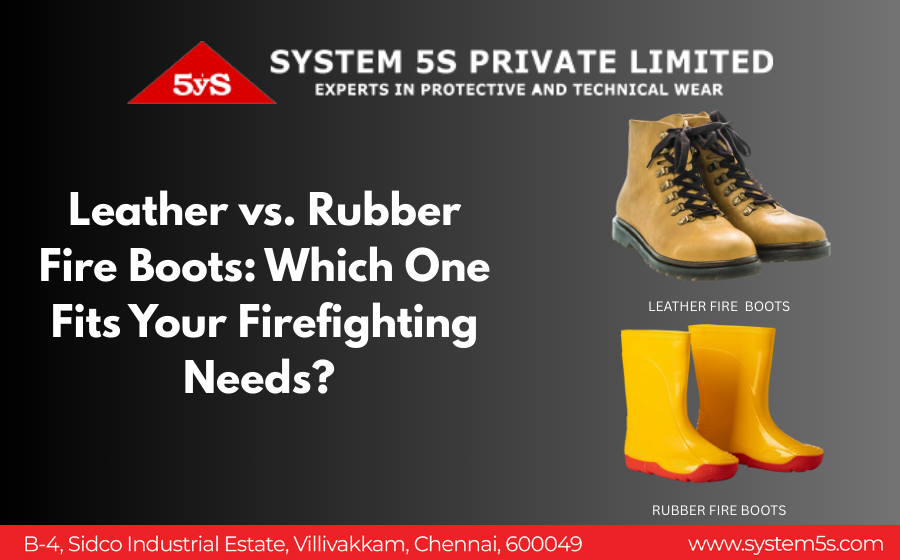
When it comes to firefighting footwear, both leather and rubber boots have their places – it just depends on your needs. Leather boots (like System5S’s Holik Lukov) are typically lighter and more comfortable, conforming to your foot and providing excellent ankle support. They breathe better and often feel like an “athletic” fit, reducing fatigue on long shifts. Rubber boots (such as System5S’s Harvik 9687L) are heavier but offer 100% waterproof protection and superb chemical/oil resistance. Rubber boots can handle wet or muddy conditions and are easy to hose off.

Comparing Leather vs. Rubber Firefighting Boots:

FeatureLeather Boots (e.g. Holik Lukov)Rubber Boots (e.g. Harvik 9687L)
Comfort & FitGenerally lighter (2–3 lbs lighter than rubber). Molds to the foot, offering snug fit and ankle support. Better breathability (less sweating).Heavier and more cumbersome. Bulkier feel can increase effort (each pound adds ~5 lbs to your load). No ankle conformity.
DurabilityVery durable if cared for; high-quality leather resists heat and abrasion. Requires conditioning/oiling to prevent cracks.Extremely durable in harsh conditions: fully vulcanized rubber won’t rot or corrode, and stands up to flame, acids, oils, and punctures.
ProtectionProvides strong mechanical protection (steel toes, puncture plates) and heat resistance. Slip-resistant and sturdy, ideal for structural fires.Naturally flame-retardant and waterproof. Steel toes and midsoles protect against impacts and punctures. Often rated for electrical hazards (up to 18–35 kV) and chemicals.
FlexibilityMore flexible – leather bends and flexes as you move, allowing easier kneeling or climbing.Stiffer by nature (more rigid soles), which may feel awkward when crouching or sprinting.
MaintenanceNeeds regular cleaning and leather treatment (wax/oil). Surprisingly, studies show leather retains fewer contaminants after cleaning than rubber, meaning a good wash can remove most toxic residues.Easy to clean with hose or wipes (fully waterproof). However, research indicates rubber can trap chemicals in its matrix, retaining more toxins after decon than leather. No special conditioning needed.
Best Use CasesFavored for structural firefighting (building fires) where agility and comfort matter. Also good for ice or cold because leather can absorb sweat away from feet.Excellent for all-weather or industrial firefighting (oil, chemical, wildland). Waterproof rubber keeps feet dry in rain or foam, and resists caustic substances. Cheaper initial cost makes rubber boots a budget-friendly option for general rescue and bush fires.

In short, leather boots shine in comfort and lighter weight, while rubber boots excel in wet/chemical environments and tough durability. The “better” choice depends on your fire scenario: structural firefighters often prefer leather for mobility, whereas industrial or wildland teams may choose rubber for its water- and chemical-proof qualities.

Which Certifications Matter Most in Fire Fighting Boots?

Buying certified boots ensures you’re getting real protection. The key certifications to look for are:

  • NFPA (US Standard): In the U.S., NFPA 1971 is the gold standard for structural firefighting boots. Boots meeting NFPA 1971 have been vigorously tested for heat resistance, thermal insulation, liquid penetration, cut/puncture resistance, electrical insulation, and more. An NFPA label means the boots exceed basic OSHA safety requirements.
  • CE / EN 15090 (European Standard): In Europe, look for a CE mark with the EN 15090 standard printed. EN 15090:2012 (Type 1 or 2) tests boots for flame and heat resistance, slip, and mechanical hazards. A CE logo indicates the product meets EU PPE regulations. (Often Asian manufacturers also test to EN or similar ISO standards.)
  • BIS / ISI Mark (Indian Standards): In India, the Bureau of Indian Standards issues the ISI diamond mark for safety footwear (e.g. IS 15298 for industrial safety shoes). An ISI stamp on a boot shows it complies with Indian requirements for strength, penetration resistance, electrical insulation, etc. (System5S boots are manufactured under BIS-certified processes and ISO quality systems.)
  • Other Marks (ANSI/ASTM, UL): Some boots list ASTM/CSA or OSHA compliance. System5S also references international standards like ASTM and CSA for impact/compression. In general, any recognized mark (UL or ANSI for NFPA, or EN codes) is a good sign.

Why Certifications Matter: Certified boots are lab-tested to protect you from exactly the hazards you’ll face. For example, NFPA certification guarantees that in real fires they will resist flaming liquids, punctures, high heat and shock. Without certification, “fireproof” claims are just marketing. Always check for a tag or stamp that lists the standard (e.g. “EN 15090:2012” or “NFPA 1971”) – it’s often sewn inside the tongue or box.

How Do I Know if My Fire Boots Are Certified?

Inspect the boot itself. Certified footwear typically has a label on the inside of the boot or on the box. Look for logos or codes like CE/EN numbers, NFPA/UL, or the ISI diamond. For instance, an EN-certified boot will have a CE mark and “EN 15090” printed, and a NFPA-certified boot will often carry “UL” or “NFPA 1971” on its label. System5S boots include these on their product tags: the Harvik and Holik models, for example, show EN 15090:2012 compliance. In India, check for the ISI/BIS diamond mark and an IS code on the tongue. If in doubt, check the manufacturer’s spec sheet or ask the supplier to verify the certifications.

System5S’s Top Fire Boot Picks

As a trusted fire-safety brand since 1990, System5S offers boots that meet all the above criteria. Here are some recommended models for different needs:

  • Harvik 9687L (Rubber Boot)All-Weather/Industrial. Fully vulcanized rubber construction with reinforced sole. Certified to EN 15090:2012 and ANSI/ASTM standards, it’s waterproof, oil- and chemical-resistant, antistatic and features a steel toe cap. Harvik 9687L boots keep feet dry in rain or foam, are cold-insulated for winter, and carry Hi-Vis accents for safety. (Because it’s rubber, this boot is usually more affordable.)
  • Holik Lukov (Leather Boot)Structural/Rescue. Premium grain cowhide leather upper with a waterproof treatment. Meets EN 15090:2012 requirements and has a quick-release side zipper for easy on/off. Inside is a steel midsole and a PU/steel toe cap for maximum impact and puncture protection, plus slip-resistant abrasion-proof soles. The Holik Lukov delivers the classic “firefighter boot” feel – lighter weight than rubber, great ankle support, and comfortable lining.
  • Harvik 9726 (Dielectric Rubber Boot)Electric Arc/High Voltage. Specialized heavy-duty rubber boot certified up to 18kV (wet) or 35kV (dry). Vulcanized rubber upper, reinforced heel and shank, and a steel toe. Ideal for electrical/fire brigade or industrial sites where arc-flash or high-voltage hazards exist.
  • Budget Pick: For cost-conscious buyers, Harvik 9687L rubber boots provide certified protection at a lower price point.
  • Premium Pick: For top-end gear, the leather Holik Lukov or similar high-visibility leather boots give maximum comfort and traditional styling, meeting or exceeding all NFPA/EN standards.
  • All-Weather Pick: Choose rubber boots like Harvik 9687L or the waterproof Harvik 9726 above – they’re guaranteed to keep your feet dry in rain, snow or chemical-laden environments.

System5S manufactures and supplies each boot with quality assurance: ISO 9001:2015 quality control, in-house testing, and BIS-approved facilities ensure you’re getting genuine certified gear.

Ready to protect your team? Browse System5S’s full range of certified firefighter boots and gear with confidence, your safety depends on it!


Genuine vs. Fake Fire Fighting Certificates

Genuine vs Fake Fire Fighting Certificates

Purchasing firefighting boots and helmets is about protecting lives, there’s no room for compromise on safety. However, a new risk has emerged: fake safety certification documents circulating in the market. Imagine investing in critical personal protective equipment (PPE) for your fire crew, only to discover the “Module B” certificate, the EU Type Examination approval, it came with is bogus. Unfortunately, this scenario is real, and it can put firefighters in danger and organizations at legal risk. This blog post will raise awareness about the risks of fake Module B certificates for firefighting boots and helmets, explain how to spot them, and highlight the vital role of Notified Bodies in genuine PPE certification. We’ll also show an example of a fake certificate versus a real one, and conclude with recommendations of verified helmet models from System5S that you can trust.

What is Module B Certification and Why Does It Matter?

In the European Union, high-level PPE such as structural fire helmets and boots must comply with Regulation (EU) 2016/425. This includes undergoing a Module B: EU Type Examination, where an independent lab checks the product meets all safety standards before it can be CE marked. The Module B certificate is essentially the “EU Type Examination Certificate” issued after a helmet, boot, or other PPE passes rigorous testing for example, against standards like EN 443 for firefighting helmets or EN 15090 for firefighting boots. This certificate is not just a piece of paper, it’s proof that the equipment will perform as expected in life-threatening situations.

Notified Bodies play a key regulatory role here. A Notified Body is an organization accredited and authorized by EU authorities to test and certify PPE. They are assigned a unique four-digit ID and are listed on official EU databases as competent to certify specific types of equipment. For instance, CSI S.p.A. in Italy (Notified Body No. 0497) is one such accredited body; it is notified for PPE including head protection and even has accredited labs for helmet standards like EN 443. Only a genuine Notified Body can issue a valid Module B EU Type Examination certificate. The Notified Body’s name and ID number will appear on the certificate and often next to the CE mark on the product. Their job is to ensure the product truly meets all safety requirements, an essential safeguard for firefighters who rely on this gear.

The Dangers of Fake Certificates in PPE

Why would anyone present a fake certificate? Unfortunately, some manufacturers or distributors try to cut corners by bypassing expensive and time-consuming testing. They might produce a counterfeit certificate to falsely claim compliance, hoping procurement officers won’t spot the fraud. This is more than just a paperwork issue, it’s a serious danger. Supplying fake PPE can be life-threatening, as the equipment likely has not been properly tested and “often does not perform as it should,” compromising users’ safety and exposing your organization to harm or liability. In the context of firefighting, a helmet with a fake certificate might not actually resist heat or impact as required, or a boot might fail to protect against punctures or flame. The people wearing this gear would have a false sense of security while actually being at risk.

From a legal and ethical standpoint, using PPE with fabricated certification can lead to severe consequences. It’s illegal to sell or use non-compliant PPE in many jurisdictions. If an accident occurs and the equipment is found to lack genuine certification, the organization could face investigations, lawsuits, or penalties. Moreover, trust is eroded, firefighters and staff expect that the gear provided to them meets the standards printed on it. As a safety decision-maker, the last situation you want is to explain that an injured firefighter’s helmet was never truly certified.

Red Flags: How to Spot a Fake Module B Certificate

Fake certificates can be convincing at first glance, but they always have tell-tale signs if you know what to look for. Here are some warning signs and verification tips to help procurement officers and safety managers identify a fraudulent “CE certificate” for PPE:

  • Check the Certificate Title: A legitimate Module B certificate will explicitly be titled “EU Type Examination Certificate” or “EC Type-Examination Certificate” under older wording. Be wary of documents that use incorrect titles like “Certificate of Conformity” instead. For example, an authentic EU certificate for PPE states it is a type-examination certificate, whereas a fake might misuse terms and not follow the official format.
  • Verify the Issuing Authority: Look at who issued the certificate. The issuer must be an EU-recognized Notified Body, complete with a name and a four-digit Notified Body number. Cross-check that name/number on the EU’s official list of Notified Bodies such as the NANDO database. If the certificate issuer is not found on the list, or if no NB number is given, you’re dealing with an invalid certificate. For instance, one company called Beide (UK) Product Service Ltd has issued “CE certificates” for PPE, but it was never actually a Notified Body authorized for EU certification. In fact, industry warnings have highlighted that Beide (UK) was not listed by the UK authorities as an official Notified Body. Any certificate from such an entity has no legal validity for CE marking.
  • Issuer’s Location and Brexit Considerations: Pay attention to the country of the supposed Notified Body. Post-Brexit, certificates from UK-based entities are no longer accepted for EU CE marking, UK bodies lost their Notified status for CE on 1 January 2021. This means if you see a certificate issued by a UK company and it’s not an EU27 or EEA Notified Body, it’s not valid for CE in the EU. A genuine EU Type Examination must come from a Notified Body based in the EU or an officially recognized country under EU agreements. Any “CE certificate” from a UK company dated after 2020 is a red flag by default.
  • Look for Detailed Content and Consistency: Real certificates are detailed and professional. They will include the PPE’s specific product model, a description, the applicable standards e.g. EN 443, EN 15090, it was tested against, the date of issue, and signatures or stamps of the Notified Body. Many also include the NB’s terms and conditions or reference numbers. Fake documents often have vague or incomplete information. Watch out for inconsistent fonts, missing pages, or poor formatting. If the certificate doesn’t clearly identify the product or the standards, or if it lacks a signature and date, something is likely amiss. Always compare with a known genuine certificate format if possible.
  • Confirm through Official Channels: When in doubt, do not hesitate to verify the certificate directly. You can contact the purported Notified Body most have directories or will confirm if a certificate number is real or check if the manufacturer has an EU Declaration of Conformity that references the same certificate. Notified Bodies and regulators encourage buyers to verify authenticity when something looks off. It’s a small effort that could prevent a big disaster.

By keeping these points in mind, procurement teams can catch many fake certificates before any purchase is made. Now, let’s look at a real-world example of a fake vs. a genuine certificate to solidify these concepts.

Fake vs. Genuine Certification: An Example

To illustrate the differences, consider the case of a firefighting helmet being sold with what appears to be a CE certificate. Below we have two certificate documents side by side, one is fake and one is authentic. This example highlights exactly the kinds of discrepancies mentioned.

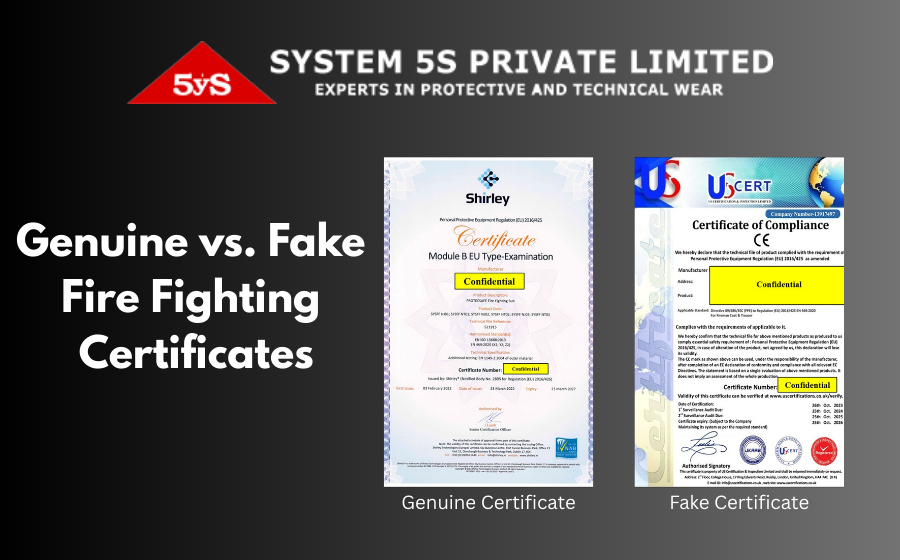
An example of a fake Module B certificate presented as a “Certificate of Conformity” for a firefighting helmet. The issuer listed is “Beide (UK) Product Service Limited”,  which is not an EU Notified Body. Such a document has no legal standing under the PPE Regulation. The use of a misleading title Certificate of Conformity instead of the proper term, and the fact that the provider is a UK-based company post-Brexit, are clear indicators of a fraudulent certificate. In short, any PPE “approval” paper from this source is invalid for CE marking.

A genuine EU Type Examination Certificate for a firefighting helmet, issued by CSI S.p.A. Notified Body No. 0497 in Italy. Notice the correct title on the document: “EU Type Examination Certificate” in the native language and English, referencing the EU PPE Regulation. It clearly shows the Notified Body’s name and ID (0497) and details of the certified product helmet model, standards, etc. CSI S.p.A. is an accredited Notified Body authorized to issue such certificates, so this certificate is valid evidence that the helmet meets the required safety standards. The contrast between this and the fake document is evident, from the issuer’s legitimacy to the document formatting, underscoring why buyers must remain vigilant.

In the fake certificate example, the combination of a non-authorized issuer and an incorrect certificate format was a dead giveaway. By contrast, the real certificate from CSI S.p.A. uses proper terminology and comes from a known, EU-recognized certifier. This difference is crucial: a firefighter helmet with the CSI certificate has truly been tested to EN 443 and other relevant standards, whereas a helmet with a “Beide (UK)” paper may not have been properly tested at all. The fake paperwork can be generated in minutes; proving a helmet’s resilience to flames and impacts cannot. Always demand the right certification.

Stay Safe with Verified PPE

Fake Module B certificates are a hidden threat in the PPE supply chain, but with awareness and due diligence, you can avoid falling victim. Always verify the credentials of any safety document presented to you. Remember: the EU Type Examination Certificate is your assurance that an independent Notified Body has approved the product. If anything about the certificate seems odd, the title, the issuer, the details, investigate further. It’s better to pause a purchase than to risk firefighters’ lives on untested gear.

At System5S, we are committed to providing only fully compliant, certified PPE to our clients. We work with reputable manufacturers and ensure all our firefighting helmets and boots come with genuine CE certificates from accredited Notified Bodies. For example, our premier helmet models, the PAB Fire Compact and PAB Fire 05, are certified to the latest standards and come with documentation you can trust. You can explore these helmets here: Fireman Helmet PAB Fire Compact and Fireman Helmet PAB Fire 05. Both helmets have undergone EU type examinations by legitimate Notified Bodies like CSI, so you can have peace of mind about their protective performance.

Don’t take certificates at face value, take a closer look. By being informed and cautious, procurement officers and safety managers can ensure that every boot and helmet they buy will stand up to the job when it matters most. Safety documentation is only as good as the authority behind it. Choose verified products and suppliers who prioritize compliance. Lives may literally depend on it, and there’s nothing more important in our industry than making sure our heroes have equipment that’s been proven safe and effective. Stay alert, stay informed, and keep your teams safe with truly certified gear.

Watch our awareness video: Identification of FAKE v/s GENUINE Fire Fighting helmet certificates

Learn how to spot fake PPE certifications and ensure the safety of your team.


A Day in the Life of a Firefighter: Our Gear in Action

A Day in the life of a fire fighter

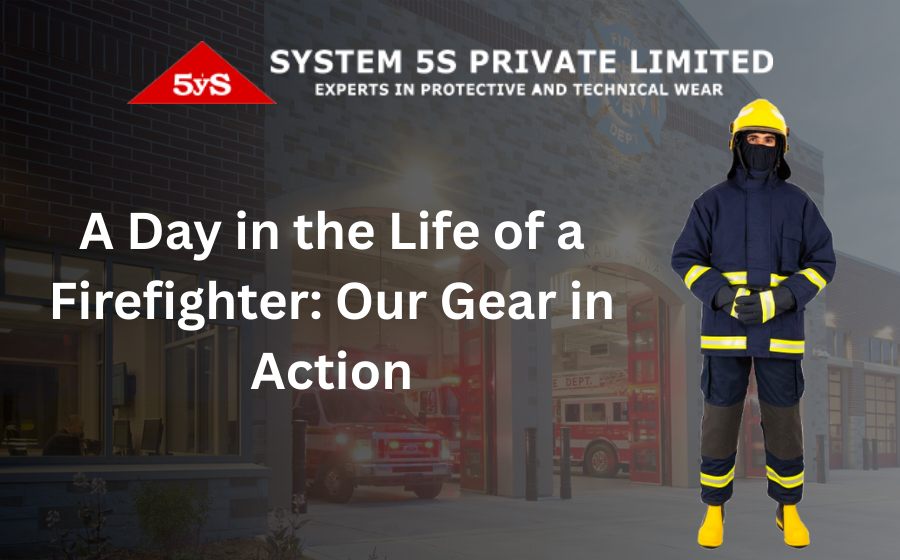
A firefighter wearing full turnout gear similar to the System5S ProtecSafe Model 1. The gear’s reflective triple trim improves visibility in low light, and the multi-layer construction protects against heat, flames, and moisture.

A firefighter’s day can turn from calm to chaos in an instant. Meet Arya, a veteran firefighter gearing up for another shift. As dawn breaks, Arya pulls on the System5S ProtecSafe Model 1 turnout gear, a second skin of protection that will be her lifeline through every blaze and rescue. From the heavy boots to the high-collared jacket, her gear adds roughly 45–75 pounds (20–34 kg) of weight, yet it’s engineered for mobility and comfort so she can move with speed when lives are on the line. Each layer of the suit has a purpose: the Nomex® outer shell defends against flames and abrasion, the moisture barrier keeps water out but lets sweat escape, and the thermal liner insulates against intense heat.

Morning Alarm: Battling a Blazing Inferno

Just past 9:00 AM, a piercing alarm bell shatters the quiet of the fire station. “Residential structure fire, multiple calls,” the dispatcher reports. Within seconds, Arya and her crew are in their engine, racing toward a billowing column of black smoke. En route, she secures her breathing apparatus and glove seals, mentally preparing for the challenge ahead. Pulling up to a two-story house engulfed in flames, they’re greeted by an intense wave of heat. Fire is HOT, ceiling temperatures inside can soar to over 815°C during a flashover, enough to melt ordinary clothing. But Arya trusts her ProtecSafe Model 1 gear; its multi-layer construction is certified to rigorous EN 469 standards, meaning it can withstand these furnace-like conditions.

Entering the burning home is like walking into midnight at noon. Thick smoke turns day into darkness, and the temperature near the ceiling is searing. Arya stays low, crawling on the super-heated floor towards the source of the fire. She can feel the oppressive heat even through her gear, but the suit’s thermal barrier is doing its job, slowing the transfer of heat and helping prevent burns by insulating her from the 600°F+ air at head height. Burning embers fall and hiss on her coat, yet the outer shell of Nomex® doesn’t ignite, shielding her from direct flame contact. As she advances down a hallway, splintered debris and shattered glass litter the floor. Thanks to the reinforced knee pads and built-in padding of her Model 1 trousers, she can crawl through wreckage with less pain or risk of cuts. Each movement has been anticipated by the gear’s designers, articulated elbows and knees bend naturally, and an ergonomic cut in the suit lets her stretch high or crouch low without feeling restrained. Despite the heavy workload, Arya’s focus never wavers from the mission: searching for anyone trapped and pushing back the fire.

Deep in the house, the fire’s roar is deafening and the heat is staggering, but Arya’s training and gear keep her going. She locates an unconscious victim in a back bedroom. Immediately, she and her partner lift the person and carry them out. The ProtecSafe Model 1 gear’s mobility proves crucial here, even with added weight in her arms, her coat and pants flex and move with her rather than against her. Outside, other crew members attack the flames with high-pressure hoses. Steam erupts as water hits the inferno, engulfing Arya in a cloud of scalding vapor. Yet she remains protected: the suit’s PTFE moisture barrier blocks the water and hot steam from penetrating through to her skin. This barrier not only keeps external water out but also allows her perspiration to escape, preventing the dreadful combination of heat and humidity inside her gear that could lead to heat stress. Arya briefly feels the cool splash of hose water on her gear’s surface, but underneath she stays dry, no steam burns today. In these critical moments, protection and comfort go hand-in-hand. The fire is finally knocked down, and Arya emerges from the structure with the saved resident, both of them alive. Her gear is smeared with soot, the reflective strips now shining in the daylight as they catch the sun. It’s a scene of hard-won victory: exhausted firefighters, a life saved, and turnout gear that has withstood another trial by fire.

Afternoon Rescue: The Highway Emergency

After the flames are out and the crew has caught their breath, the day’s unpredictability strikes again. By mid-afternoon, Arya is dispatched to a freeway accident: multiple vehicles, possible fuel leak, people trapped. She dons her gear for the second time, still slightly smoky from the morning fire, and heads out. On the highway, cars are strewn at odd angles and a semi-truck smolders, having caught fire from the collision. Arya’s team secures the scene and quickly approaches a crushed sedan where a driver is pinned inside. Flames have been extinguished, but gasoline from a ruptured tank pools on the asphalt, mixed with coolant and battery acid from the wreck. It’s a hazardous stew of chemicals – exactly the kind of “common liquids” firefighter gear must guard against. As Arya kneels to assess the patient, she’s grateful for her suit’s impermeable moisture barrier once more. It repels water, fuel, and even corrosive fluids like battery acid, preventing these liquids from soaking through and harming her. This means she can focus on the delicate task at hand without worrying that her knees or gloves are being drenched in toxins.

Working in tandem with an extrication team, Arya helps stabilize the vehicle. She swings an axe to clear a jammed door and uses a Halligan bar to pry open a crumpled panel. These tools are heavy, but her turnout gear’s ergonomic design distributes weight and strain evenly. The flexible panels in the jacket shoulders and gusseted underarms ensure she can swing and lift without the suit binding up. Even the sturdy boots and gloves, though thick, allow enough dexterity and traction to maneuver on slick pavement and shattered glass. Every piece of the ProtecSafe Model 1 ensemble is built to balance protection with performance – and now that balance is being tested. Arya climbs halfway into the wrecked car, shards of glass scraping along her reinforced sleeves and knees harmlessly. The outer shell fabric resists cuts and tears, keeping her skin safe from sharp metal edges. Inside the tight confines of the car, she contorts to free the injured driver’s legs. Her coat doesn’t snag thanks to covered zippers and close-fitting cuffs, and the trousers’ suspenders keep them securely in place as she shifts position. It’s hot, grimy work, but she doesn’t feel the afternoon sun as much – the gear’s bright reflective trim makes her highly visible to passing drivers and teammates, and its breathable layers keep her from overheating even with adrenaline and temperature both rising.

After careful effort, the team extricates the driver and hands them off to paramedics. Only once the victim is safe does Arya pause to catch her breath. She’s drenched in sweat now, but the moisture-wicking liner of her gear has been drawing perspiration away from her body the whole time, helping regulate her body hea. When she finally pulls off her helmet and hood, her face is flushed but unburned – not a single singe, even though moments ago she was pressed against hot metal and asphalt. Standing up from the wreck, Arya does a quick self-assessment: her gear is dirty and scuffed, smelling of smoke and gasoline, yet every fastener held tight and every layer did its job. Reliability is not just a claim in a brochure; today it meant she could crawl into a crumpled car surrounded by fire and fuel and come out unscathed.

Evening: Catching Our Breath

Back at the station in the early evening, a tired calm settles in. Arya hangs her jacket and pants on a rack in the apparatus bay, inspecting them as she always does after a call. The morning’s inferno and the afternoon’s rescue have left their marks – ash on the sleeves, a new scratch on the knee pad, but the ProtecSafe Model 1 gear shows no sign of failing. The reinforced stitching and quality materials have held up to the punishment. As she wipes the reflective stripes clean for the next run, Arya reflects on how much trust she places in this equipment. In the past 12 hours, her turnout suit has been blasted by fire, soaked by hose water, exposed to chemicals, and strained by constant motion. Yet she never had to second-guess her protection. Even during rare down-time at the station, when the crew grabs a quick meal or a moment of rest, Arya often keeps her pants on with suspenders loose, ready for the next alarm. The comfort of the ergonomic design means she isn’t desperate to peel the gear off immediately, it breathes enough and sits light enough on her body that she can remain prepared without feeling tortured by the weight. Over coffee, the firefighters swap stories of the day’s calls, a mix of relief and pride in their voices. They joke about the soot on Arya’s face and the scuffs on her “Model 1” armor, but everyone acknowledges how crucial that gear was in making their dangerous jobs just a little bit safer.

Outside, dusk is falling. Arya steps out to the station yard and spends a few minutes doing what many firefighters do in quiet moments: checking her gear once more. She runs a hand over the triple-layered fabric of her jacket, feeling the rugged outer shell that took the brunt of heat and debris today. Beneath it, unseen, lies the moisture barrier that kept her dry and the thermal liner that kept her safe from burn injuries. It strikes her that most people will never know the tech and engineering that goes into this suit – and that’s okay. What matters is that she knows it, and she trusts it with her life.

Gear You Can Trust, When It Matters Most

As midnight approaches, Arya’s shift winds down. It’s been a long day of adrenaline surges, physical exertion, and emotional highs and lows. Yet she remains standing strong, thanks in no small part to the gear that protected her through every challenge. The System5S ProtecSafe Model 1 turnout gear isn’t just a uniform, it’s a resilient shield and a reliable partner in the fight. Its thermal resistance meant Arya could push deeper into that burning house without succumbing to the heat. Its moisture barrier kept her dry and safe from both firehoses and hazardous fluids. Its ergonomic, well-thought-out design ensured she maintained agility and endurance even after hours of wear. Today, the gear endured flashover-level heat, torrents of water, and jagged wreckage, and it stayed intact, keeping Arya safe so she could focus on saving others.

When Arya finally heads home, she is bone-tired and smelling of smoke, but her spirit is fulfilled. She was there for her community in its worst moments, and she’s going home safely. Her turnout gear, now awaiting a thorough cleaning and inspection, will be ready for the next call, just as she will. This day in the life of a firefighter has highlighted not only the heroism, grit, and compassion of frontline responders, but also the quiet heroism of the equipment that has their back. The ProtecSafe Model 1 gear exemplified what it’s designed to do: provide unwavering protection, mobility, and comfort in the most extreme conditions. In a profession where unpredictability is the norm, one thing is certain, reliable gear saves lives. And for firefighters like Arya, knowing that their equipment will perform under pressure is a source of confidence that allows them to keep charging into the flames, day after day, to protect the rest of us.

By showcasing a full day of challenges and triumphs, we see our gear in action and our heroes in their element, proving that with courage in the heart and the right gear on the body, no fire is too fierce and no rescue is out of reach.


Why a Safety Audit Is Your Most Important Tool

Safety Audit

In high-risk fields like firefighting, what’s the most powerful tool to protect your team? It isn’t a high-tech gadget or a shiny new truck; it’s the safety audit. Regular safety audits are far more than bureaucratic checklists; they are proactive life-savers. By systematically reviewing equipment, procedures, and training, audits uncover hidden hazards and ensure that everything is up to standard before an accident forces the issue. In an environment where the smallest oversight can mean the difference between life and death, a well-executed safety audit becomes the firefighter’s best friend.

The Lifesaving Purpose of Regular Safety Audits

Safety audits in firefighting and other high-risk industries serve a critical, dual purpose: preventing emergencies and ensuring compliance. These audits act like a comprehensive health check for your department or business. They pinpoint fire hazards, equipment deficiencies, and areas not meeting regulations, reducing risks and lowering the chances of fire incidents. In other words, an audit shines a light on any weakness in your defenses, whether it’s an expired fire extinguisher, a worn-out protective suit, or a lapse in training, so you can address it before it causes harm. Regular audits also enforce discipline; knowing that an inspection is coming keeps everyone vigilant and maintains a high baseline of safety day-to-day.

Just as importantly, safety audits ensure you’re meeting legal and industry standards, which protects your organization from penalties and liability. Fire departments and companies are often required by law or policy to adhere to strict safety regulations. Auditors will check that you comply with fire codes, personal protective equipment (PPE) standards, and operational protocols. Consistent audits help verify compliance with evolving safety regulations and standards, reducing the likelihood of violations that could lead to fines or legal consequences. In short, passing your audits means you’re not only keeping people safe but also staying on the right side of the law and your governing agencies. It’s a win-win situation: a safer workplace with less risk of tragic accidents, and a solid record that boosts your credibility and peace of mind.

Compliance with Standards: EN 469, EN 13688, IS 16890 and More

A key focus of any safety audit is whether your gear and practices meet established safety standards. In firefighting, there are several crucial PPE standards that auditors (and your own safety officers) will have in sight. EN 469:2020, for example, is a widely recognized European standard that specifies performance requirements for firefighters’ protective clothing, particularly the ability to withstand flame exposure, radiant heat, water penetration, and to allow breathability. In practical terms, EN 469:2020 ensures a firefighter’s suit can protect against extreme heat and flames while keeping water out and letting sweat escape – all vital factors when fighting a blaze.

Another important standard is EN 13688:2013, which is a general specification for protective clothing covering aspects like ergonomics, sizing, and innocuousness of materials. While EN 469 focuses on thermal and liquid protection performance, EN 13688 makes sure the protective gear is designed with the wearer’s comfort and health in mind (for example, correct sizing and non-toxic materials). Any turnout gear certified to EN 469 should also comply with EN 13688 by default, guaranteeing that the gear is not only protective but also wearable and properly labeled. Auditors will look for compliance with these harmonized standards as a baseline requirement for quality and safety.

Meanwhile, IS 16890:2018 is the Indian standard (by the Bureau of Indian Standards) for firefighter protective clothing, aligning closely with the international benchmarks. This standard outlines the minimum performance requirements for protective clothing designed to safeguard users against hazards from structural fires, ensuring the gear can endure the rigorous challenges firefighters face. In regions where IS 16890 is mandated, an audit will definitely check for BIS certification on your gear. Failing to have IS 16890-certified suits when required isn’t just a technicality, it can jeopardize firefighter safety and put the department at risk of non-compliance sanctions.

Safety audits help tie all these standards together by verifying that every helmet, jacket, trouser, glove, and boot in service meets the appropriate norms. If your department’s gear is certified to EN 469:2020, EN 13688:2013, and IS 16890:2018, you’re likely to sail through the PPE portion of an audit. For instance, a suit that carries an EN 469:2020 certification effectively tells the auditor, “This gear has been tested for flame resistance, heat transfer, water protection, and breathability – it’s up to the task.” Using certified equipment removes any doubt about baseline safety performance. On the flip side, if gear is uncertified or outdated, auditors will flag it and rightly so, as a serious risk. In that sense, investing in compliant gear is inseparable from audit readiness. It sets you up to “pass with flying colors” on paper, but more importantly, it means your team is genuinely protected to the highest standards when the heat is on.

Passing Audits with High-Quality Gear: The System5S Advantage

Having top-tier firefighting gear can make the difference between a stressful, problematic audit and a smooth one that reinforces your department’s confidence. This is where System5S’s firefighting suits and equipment provide a huge advantage. System5S is a premier manufacturer of turnout gear known for its rigorous quality standards and certifications. In fact, System5S was one of the first in India to produce firefighting suits compliant with EN 469 back in 2003, and in 2021 it became the first to achieve the new IS 16890:2018 BIS certification for protective firefighting clothing. This track record means when you choose System5S gear, you’re partnering with a company that has been leading the way in safety compliance for decades.

From entry-level models to elite suits like the Promax FX, every System5S turnout suit is engineered with audit-winning features in mind. The company emphasizes meticulous design and rigorous testing, and their suits meet the stringent safety standards demanded by firefighters and first responders worldwide, ensuring optimal performance in critical situations. In practice, that means System5S gear is already built to check all the boxes an auditor is looking for. For example, the Promax FX suit is tested and certified to EN 469:2020, EN 13688:2013, and IS 16890:2018, covering the top international and national standards for firefighter protection. When an auditor sees those labels and certificates, it immediately signals that the gear has passed thorough laboratory tests for flame engulfment, heat transmission, water ingress, and more – the same tests the audit is concerned with.

But it’s not just about certificates on paper. System5S suits are designed to perform in the real world in ways that auditors appreciate and firefighters rely on. The brand’s lineup (including models like Protecsafe, Fire Defenc, Kar Endure, Eco, and the flagship Promax FX) all share a commitment to unmatched protection and comfort in high-intensity firefighting scenarios. This means features that make gear not only safer but also more functional and durable during actual operations. When your gear performs well on the fireground – resisting flames, repelling water, staying intact – it naturally performs well in an audit. Inspectors can tell when a suit is well-constructed and properly maintained; heavy-duty stitching, robust closures, and intact reflective trim are all visible indicators of quality. By equipping your team with System5S gear, you’re stacking the deck in favor of a positive audit outcome. You’re effectively saying, “Our department takes safety seriously, and here’s the proof – look at the gear we invest in.”

System5S’s Promax FX turnout suit exemplifies audit-ready gear. Its high-visibility reflective striping, multi-layer Nomex®/Kevlar® construction, and certified flame resistance ensure it meets stringent safety standards while keeping firefighters safe and comfortable on the job.

Key Features of System5S Firefighting Suits That Impress Auditors

To understand how System5S gear helps departments pass audits with flying colors, consider some of the key features built into their firefighting suits. These features directly address the criteria that safety standards (and therefore audits) evaluate, from flame resistance to wearer ergonomics:

  • Exceptional Flame Resistance: System5S suits use outer shells made of inherently flame-retardant fabrics like Nomex® IIIA, which provide exceptional durability and fire protection. Even the threads and zippers are fire-resistant, so the gear won’t fail when exposed to high heat or direct flame. This means during an audit, you can demonstrate that your jackets and trousers are constructed to withstand flashover-level temperatures without igniting or degrading, as required by EN 469.
  • Moisture & Thermal Barriers: Every suit features a multi-layer design with a waterproof yet breathable moisture barrier (often Nomex®/Kevlar® fabric laminated to a PTFE membrane) and an insulating thermal liner quilted with fire-resistant fibers. These layers keep water, chemicals, and steam from penetrating to the skin, while allowing sweat vapor out to prevent heat stress. At the same time, the thermal barrier provides a crucial buffer against ambient heat and hot surfaces. Auditors will note that gear like the Promax FX has superior moisture resistance, breathability, and thermal insulation – all attributes that standards like EN 469 and IS 16890 specifically test for.
  • High-Visibility Reflective Trim: To improve firefighter safety in low-visibility conditions, System5S turnout suits come with generous amounts of retroreflective tape (e.g. 3M™ Scotchlite™ in silver and fluorescent yellow) sewn onto the coats and pants. For instance, the Promax FX jacket has multiple reflective bands around the chest, back, sleeves, and a full 360° around the lower hem, and the trousers have reflective bands around the legs. This high-visibility trim is not just for show – it’s often required by safety regulations (EN 469’s Annex B even specifies minimum areas for reflective material). During an audit, the presence of clean, intact reflective markings on your gear demonstrates compliance with visibility requirements and shows that your team will be easily seen through smoke and darkness.
  • Ergonomic, Durable Design: System5S gear is built with firefighter comfort and functionality in mind, which indirectly boosts safety. Features like ergonomic collars and wristlets (to seal out heat and adjust to the individual), adjustable elasticized waists with suspenders, and articulated elbow and knee reinforcements (often using Kevlar® padding) all ensure that the firefighter can move freely and stay protected in action. There are ample pockets (including radio pockets and internal pockets) to carry essential tools, and robust closure systems using anti-panic zippers with storm flaps and Velcro® to keep the gear securely fastened under stress. Auditors pay attention to these details – a suit that fits well, is easy to don and doff, and remains secure during operations indicates a high level of preparedness. Plus, strong stitching and reinforced high-wear areas (shoulders, knees, cuffs) show that the gear can withstand the rigors of firefighting without failing, aligning with the durability aspect of standards like IS 16890.
  • Certified Compliance: Perhaps the most straightforward feature is that System5S suits come with all the necessary certifications. Gear like the Promax FX arrives with test reports and labels confirming adherence to EN 469:2020 for firefighting performance, EN 13688:2013 for general protective clothing requirements, and IS 16890:2018 for the national standard. This multi-certification provides immediate assurance to any safety auditor (or fire chief) that the product has been vetted by accredited labs and meets or exceeds the required benchmarks. Essentially, the gear’s documentation does part of the audit work for you – there’s no guesswork about whether it’s up to code. Using such certified, high-quality gear means your department can confidently answer any auditor’s questions about PPE with, “Yes, our suits are fully compliant and here is the proof.”

By showcasing these features during safety audits – whether through documentation or simply the condition of the gear itself – your department sends a clear message that firefighter safety is a top priority and that you’ve invested in equipment that leaves nothing to chance.

Beyond Compliance: Saving Lives, Building Confidence, and Reducing Liability

Ultimately, the true value of a safety audit isn’t just earning a thumbs-up from the inspector – it’s what that approval represents. A successful audit reflects a deeper reality: that your team is safer, better prepared, and properly equipped to face dangerous situations. When you invest in certified, high-quality gear and rigorous audits, you’re investing in your firefighters’ lives and well-being. Modern firefighting suits that meet standards dramatically reduce the chance of injury and give firefighters the confidence to perform their duties effectively. Knowing that one’s gear will hold up under extreme conditions allows firefighters to focus on the mission rather than worrying about personal safety. This boost in morale and trust can lead to a more cohesive and efficient team, where everyone from the newest recruit to the fire chief feels assured that they have the right tools for the job.

There are also very real financial and legal incentives for prioritizing safety audits and top-tier gear. A department that regularly fails safety audits or neglects equipment upkeep is a ticking time bomb for liability. In the unfortunate event of a firefighter injury or fatality, investigations will quickly reveal if outdated or non-compliant gear was a contributing factor. Failure to provide proper PPE is considered negligence, and if an injury or death occurs because substandard or insufficient gear was in use, the department or business can face serious legal consequences. By contrast, if you’ve done your due diligence – conducting audits, training your personnel, and equipping them with certified gear like System5S turnout suits – you’ve not only reduced the likelihood of accidents, you’ve also shielded your organization from claims of carelessness. Insurers and oversight bodies recognize when a department is proactive about safety; this can mean lower insurance premiums, fewer penalties, and a stronger reputation in the community.

Think of high-quality PPE and audits as two sides of the same coin: the gear provides the capability to survive hazards, and the audit verifies that everything is in place and functioning as expected. Experts note that regular audits and inspections confirm that workplaces adhere to regulations and that safety gear functions as intended, providing peace of mind to everyone involved. When an emergency strikes – a flashover in a building, a hazardous chemical spill, a wildland fire on the city’s edge – that peace of mind translates into tangible advantages. Your team can go in knowing their gear has been tested, their training is up to date, and every reasonable precaution has been taken to allow them to come out safely. And if things go wrong despite all efforts, you can stand by the fact that you followed best practices and used the best equipment available.

In conclusion, a safety audit is your most important tool because it is the compass that keeps your safety program on track. It will point out where you need to improve, and it will validate what you’re doing right. But the compass is only useful if you’re willing to follow it. By acting on audit findings and equipping your firefighters with gear that meets standards like EN 469:2020 and IS 16890:2018, you create a virtuous cycle of safety improvements. Departments that embrace this approach often find that not only do they pass audits, they also experience fewer accidents and close calls. The investment in certified, high-quality gear pays off in lives saved and injuries avoided – outcomes that far outweigh any upfront costs. It also boosts team confidence and cohesion; everyone feels safer and more valued when they see tangible proof that their organization puts safety first.

In the high-stakes world of firefighting, there is no substitute for preparedness. Regular safety audits paired with top-notch equipment maintenance and upgrades ensure that when the alarm bell rings, your team is ready and protected. They ensure that compliance isn’t just a paperwork exercise, but a living culture of safety. So, make safety audits your ally. Treat them as non-negotiable opportunities to learn and improve. And when it comes to the gear you rely on, settle for nothing less than the best. With diligent audits and System5S-quality equipment in your arsenal, you’re not just passing audits with flying colors, you’re keeping your firefighters safe and your organization strong for the challenges to come.


Top Safety Standards Every Electrical Worker Should Know

In industrial settings, working with electricity is dangerous, and even a small mistake can lead to serious injury or worse. Electrical hazards are among the most serious risks in the workplace, so strict safety standards exist to protect workers. In the United States, OSHA and the National Fire Protection Association (NFPA) establish regulations and guidelines to ensure electrical work is done safely. This post highlights the top safety standards every electrical worker should know, from OSHA rules and NFPA 70E to key practices like lockout/tagout, personal protective equipment (PPE), hazard communication, and electrical risk assessment.

OSHA Regulations: The Foundation of Electrical Safety

OSHA sets baseline requirements for electrical safety in the workplace, and its standards are designed to protect workers from hazards like electric shock, electrocution, fires, and explosions. A core OSHA rule is that live electrical parts must be de-energized and locked/tagged out before any maintenance or repair, a step that significantly reduces the risk of arc flash and shock incidents. OSHA also mandates training for all employees exposed to electrical dangers, so they can recognize hazards and use protective measures correctly.

NFPA 70E: Electrical Safety in the Workplace

NFPA 70E is an industry consensus standard that complements OSHA’s rules by explaining how to work safely around electricity. It addresses hazards like electric shock and arc flash, and emphasizes eliminating danger whenever possible. In other words, always turn off the power and create an “electrically safe” condition before working on equipment. NFPA 70E also provides guidance on safe work practices such as proper lockout/tagout procedures and PPE us when working on live electrical equipment is necessary; while NFPA 70E isn’t law, it is widely followed and often used as a benchmark by OSHA.

National Electrical Code (NEC): Safe Electrical Installations

The National Electrical Code (NEC), also known as NFPA 70, focuses on safe electrical design and installation. The NEC’s purpose is to prevent electrical fires and shocks by providing clear standards for wiring, grounding, and equipment installations. Most jurisdictions adopt the NEC into building codes, meaning electrical work must comply with NEC requirements to pass inspections.

Lockout/Tagout (LOTO): Controlling Hazardous Energy

Lockout/Tagout (LOTO) is a critical procedure for safely controlling energy during electrical maintenance or repairs. It involves isolating the power source and locking the circuit breaker or switch in the “off” position, then attaching a tagged warning so no one else turns the power back on. Both OSHA and NFPA 70E enforce strict LOTO requirements: OSHA mandates that equipment be fully de-energized and locked/tagged out before an employee works on it to prevent accidental startup, and NFPA 70E prescribes the same steps, after disconnecting power, the worker places a personal lock and tag to ensure the circuit stays off.

Personal Protective Equipment (PPE): Last Line of Defense

Even with other precautions in place, electrical workers must wear appropriate personal protective equipment as a final layer of defense. Essential electrical PPE includes insulating rubber gloves, flame-resistant (arc-rated) clothing, safety glasses, and face shields. OSHA requires workers to use this protective gear whenever there is a risk of injury from electrical hazards, for example, proper eye and face protection must be worn if there’s danger of an arc flash or explosion. Wearing the right PPE can mean the difference between a minor incident and a serious injury.

Hazard Communication and Signage

Electrical hazards must be clearly communicated to everyone in the area. OSHA requires warning signs or tags on energized equipment and high-voltage areas so that workers and visitors recognize the danger and keep a safe distance.

Electrical Risk Assessment and Planning

Before starting any task, qualified workers should perform an electrical risk assessment to identify potential shock and arc flash hazards and decide on safe work measures. This planning step often leads to actions like using insulated tools and establishing safe boundaries before work begins.

Conclusion

Electrical safety standards are more than checklists, they are essential practices that protect lives. Adhering to OSHA regulations, NFPA 70E guidelines, the NEC, and procedures like lockout/tagout, PPE use, hazard communication, and risk assessment is critical in reducing the risk of injury or fatality on the job.

At System 5S, maintaining a safe and compliant electrical work environment is a top priority. The company is committed to embedding these standards into daily operations and fostering a safety-first culture across its workforce. Regular training, hazard awareness, and a mindset of vigilance are not optional, they’re ongoing responsibilities. By staying informed and accountable, electrical workers help build safer, stronger worksites, something System5S actively supports every day.

System5S Earns India’s First IS 16890:2024 Category 2 Certification in Firefighter Gear

A Milestone in Firefighter Safety

System5S is proud to announce that we have become the first company in India to achieve the BIS IS 16890:2024 certification (Category 2) for our structural firefighting protective clothing. This prestigious certification, granted by the Bureau of Indian Standards (BIS), confirms that our firefighting suits meet the latest and most rigorous national safety standard. For safety officers and industry professionals, this milestone offers clear assurance: System5S gear has been tested, trusted, and officially approved for the harshest firefighting conditions. It’s not just a win for our company, but a step forward for occupational safety across India, underscoring our commitment to protecting those who protect us.

Understanding IS 16890:2024 Category 2 Certification

IS 16890:2024 is the Indian Standard that specifies stringent test methods and minimum performance requirements for firefighting clothing. Within this standard, Category 2 refers specifically to protective clothing designed for intense structural firefighting and close-quarter rescue operations. In practical terms, Category 2 ensembles, often called turnout gear or fire suits, are built to withstand higher levels of heat, flame, and physical stress than Category 1 gear. The standard recognizes that firefighters battling structure fires face extreme convective and radiant heat, and thus Category 2 gear must provide enhanced thermal protection and durability. It even mandates higher mechanical strength like greater tensile and tear resistance so the gear won’t fail under demanding conditions. In short, a Category 2 certification signals that the protective jacket and trousers ensemble has passed all tests for advanced fireground hazards, from flame resistance and heat insulation to seam strength and tear strength. This certification covers the full scope of structural firefighting apparel, ensuring the garment design, multi-layer fabrics, and hardware like reflective tapes and closures, all perform reliably under fire emergency scenarios.

Why Certified Protective Gear Matters

In firefighting, there is no room for compromise on safety. The IS 16890 standard was developed to guarantee that firefighter clothing provides life-saving performance when it counts. Achieving BIS certification means our gear was rigorously tested in BIS-approved laboratories against critical benchmarks, flame engulfment tests, thermal heating trials, water penetration, fabric strength, and more, and met or exceeded every requirement. This level of scrutiny is essential because firefighters depend on their gear to guard them from flashover-level heat, flames, and sharp debris. By choosing certified, tested workwear, safety officers ensure their teams wear equipment that has been proven to resist ignition, insulate from extreme heat, and endure the physical demands of rescue work. Moreover, BIS certification isn’t just a mark of quality, it’s also now a national regulatory requirement. Under the Bureau of Indian Standards’ quality control orders, compliance with IS 16890 standards is mandatory for all firefighter uniforms sold in India. In other words, certification isn’t optional; it’s a legal and moral obligation to uphold safety. System5S’s newly certified Category 2 gear gives organizations peace of mind that they are not only meeting these compliance standards but going above and beyond them.

System5S: A Trusted Leader in Fire Safety Apparel

For System5S, this achievement is the latest chapter in a long-standing commitment to safety innovation and compliance. We have a proud history of pioneering high-performance protective wear, in fact, we introduced the first made-in-India firefighting suit certified to international standards (EN 469) as far back as 2003. Ever since, we’ve built our reputation by exceeding safety standards and investing in quality. Being the first in India to earn the IS 16890:2024 Category 2 certification reflects our proactive approach: we anticipated the stricter 2024 standard and upgraded our products and testing protocols ahead of time. System5S is also unique in having in-house testing facilities for firefighting gear, which means we rigorously test each new design for flame retardancy, thermal insulation, and strength before it even goes for BIS certification. Our turnout gear is crafted with state-of-the-art, multi-layer fabrics and ergonomic design, and is certified not only to BIS’s IS 16890 but also to leading international benchmarks like EN 469, ensuring world-class protection for the wearer. This dual adherence to Indian and global standards is what sets System5S apart, we don’t just comply with regulations, we drive them forward. Every jacket, trouser, and piece of safety apparel we produce is a testament to our mission of protecting life through uncompromised quality.

Committed to Occupational Safety and Compliance

As safety officers know well, true leadership in safety is demonstrated by action and accountability. System5S’s Category 2 certification is more than a plaque on the wall, it’s a promise that we will continue to uphold the highest safety norms in every product. We work closely with BIS and other regulatory bodies, staying ahead of updates to ensure our gear always meets or exceeds current standards. Our team continually trains in the latest compliance requirements and testing methodologies, reinforcing a culture of safety and continuous improvement. In an industry where standards can be the difference between life and death, System5S stands out as a brand that doesn’t cut corners. We believe that when workers’ lives are on the line, whether firefighters, industrial emergency responders, or any brave professionals, only the best-tested and certified PPE is acceptable. This philosophy of uncompromising safety and compliance is at the core of every decision we make. By choosing System5S, safety professionals are aligning with a partner who shares their dedication to protecting people and meeting all regulatory obligations.

Join Us in Advancing Firefighter Safety

This historic BIS certification for our firefighting suits is an invitation to all stakeholders in the safety community to reach out and collaborate. If you are a safety officer, fire department leader, or organizational buyer who prioritizes certified protection for your team, we welcome you to experience the System5S difference. Let’s work together to equip your firefighters with gear that has proven its merit on every count, thermal protection, durability, comfort, and compliance. Contact System5S today for inquiries, product demonstrations, or partnership opportunities. We are ready to support you in raising the bar for safety, whether it’s by providing top-of-the-line fire safety apparel or collaborating on training and compliance initiatives. Choosing certified PPE saves lives and with System5S as your partner in fire safety apparel, you choose a trusted leader who is as committed to your team’s safety as you are. Together, let’s continue to champion a safer, smarter, and more compliant future in fire emergency preparedness.

Welding Hazards and the Need for PPE

Welding is an inherently high-risk task. Welders face extreme radiant and convective heat, flying sparks, and molten-metal splatter that can burn skin and ignite clothing. The welding arc emits intense ultraviolet (UV) and infrared radiation; even brief exposure can cause “arc eye” and severe skin burns. Noise, welding fumes and the weight of heavy equipment add to the danger. Proper PPE – flame-resistant coveralls, jackets, leather gloves, aprons, boots and eye/face gear – forms the frontline defence, shielding workers from burns, spatter, UV/IR exposure, cuts and other injuries.

Standards-Driven Protection:

a)    IS 16655: Protective clothing for Welders

b)    IS 15748: Protective clothing for personnel exposed to heat & flame

Safety standards define how PPE must perform in welding environments. For example, EN ISO 11611 specifies safety requirements for welding garments, protecting the wearer from Welding splatters, brief flame contact, and radiant heat. Likewise, EN ISO 11612 covers flame- and heat-resistant clothing, requiring fabrics to resist convective heat, radiant heat and molten metal splashes. (India’s BIS standards, such as IS 16655:2017 for welding PPE and the IS 15748 for safety heat & flame, align with these international norms.) Choosing PPE certified to these standards – and to relevant national codes – is crucial. Certified gear has been rigorously tested to self-extinguish, block UV/IR, and endure the heat and abrasion of welding.

System5S Welding PPE: Suits and Jackets

Flame-resistant welding suits are a core part of System5S’s lineup. For instance, their “Emperor” FR work coverall (Nomex® IIIA fabric) and FR-treated cotton coveralls (300 gsm PROBAN blend) are explicitly designed for heat, flame and welding applications. These one-piece suits are stitched with inherent FR thread and use FR zippers, snaps and Velcro to eliminate ignition points. Many meets ISO 11612/11611 and bear CE marking for industrial flash-fire protection. Key features include multiple secure pockets, concealed closures and reinforced stitching. System5S suits also incorporate comfort design: deep, bi-swing pleated backs and elastic waists or straps for freedom of movement. Optional FR reflective tape increases visibility in low light. Available in sizes up to XXXL (EN 13688) and colours like navy/blue, these coveralls keep welders safe without sacrificing ergonomics.

Gloves, Aprons and Accessories

System5S’s welding kits round out the ensemble with hand and body protection. They offer heavy-duty welding gloves – typically long-cuffed split with Kevlar palm – that resist sparks and abrasive wear. For example, their top-grain Kevlar palm gauntlet gloves are highly abrasion-resistant and designed for dexterity. Elasticized wrists and gauntlet cuffs ensure a snug, secure fit. Welding aprons and sleeves are also available to protect the torso and limbs from spatter. While specific models aren’t listed here, such aprons typically meet EN ISO 11612 & IS 15748 for molten-metal splash protection & EN ISO 11611 & IS 16655 for Welding allied work protection.

On the feet, System5S stocks safety boots (e.g. the HARVIK 9687 boot) tested to EN ISO 20345:2004 and EN 50321. These boots are slip-resistant, fuel- and heat-resistant, and electrically insulated (tested up to 5 kV wet) to protect against both molten metal and electrical hazards.

For eyes and face, System5S includes welding helmets and FR balaclavas, as well as EN 166-certified goggles. Their eyewear (3M Virtua) features anti-fog/anti-scratch hard coat lenses with 99.9% UV protection. These goggles (and matching face shields) block welding arc UV/IR and flying debris. Together with earplugs for noise and FR hoods for head/neck coverage, the full kit “works as hard as you do” to keep welders safe.

Certified, Durable and Ergonomic Design

All System5S welding PPE is built for industry. The company highlights CE certification and ISO 9001:2015 quality assurance on its flame-resistant suits, meaning each garment meets strict EU/ISO or BIS performance criteria (e.g. EN ISO 11611/11612 for welding/heat). System5S also holds quality certifications (ISO 9001, BIS licencing) and conducts in-house BIS testing. These credentials give procurement managers confidence in compliance.

Durability is engineered in: heavy-duty fabrics (Nomex®/Kevlar blends or FR cotton), triple-stitch seams, reinforced knees/elbows, and robust hardware ensure long service life. For example, System5S coveralls use heavy FR thread and feature extra Nomex® layers at knees and concealed plackets over zippers. Suits are wash-tested (e.g. 50 washes) to ensure lasting performance. Ergonomic details – elasticized waists, bi-swing backs, articulated knees and stretch panels – help wearers move freely even in bulkier FR gear. Together, these elements reduce fatigue and encourage consistent PPE use.

Value for Industry Buyers

For plant managers and safety officers, System5S welding PPE represents value and peace of mind. The gear’s rigorous certifications and high-spec materials justify any cost premium by ensuring liability coverage and minimizing replacements. Ergonomically designed suits and gloves lead to higher worker acceptance and productivity. And because System5S emphasizes quality and compliance BIS LICENSE (CE marked, ISO 9001-certified), buyers know they’re getting gear that truly performs under extreme welding conditions. In short, System5S’s flame-resistant welding suits, gloves, aprons and accessories are engineered to protect welders from every hazard – heat, sparks, UV, molten metal and more – so your team can weld without worry.