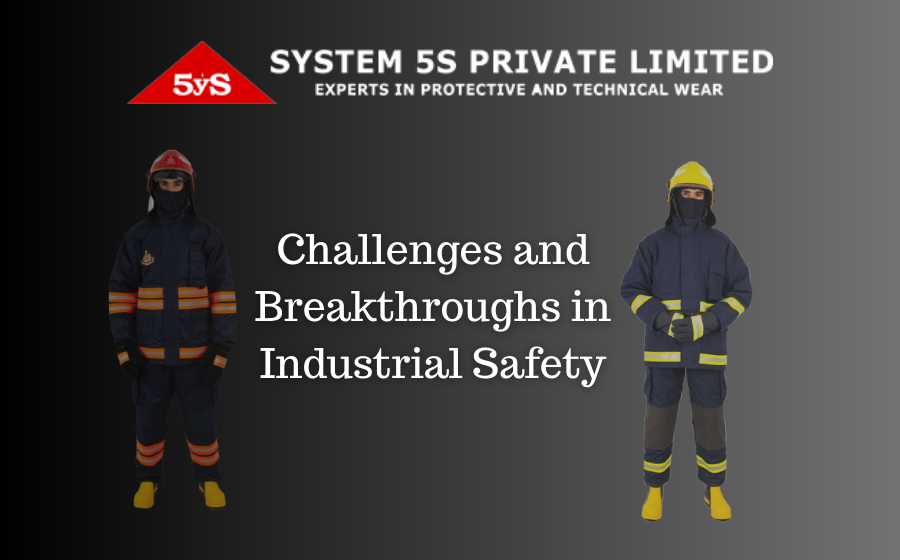
Industrial workplaces like oil & gas fields, manufacturing plants, chemical processing units, electrical utilities, and firefighting operations are among the most hazardous environments. In these settings, safety isn’t optional – it’s a life-or-death priority. Personal protective equipment (PPE) such as flame-resistant clothing, full-body coveralls, PPE kits, helmets, and specialized suits form the last line of defense between workers and deadly risks. Yet despite decades of progress, significant challenges remain in keeping workers safe, even as new innovations promise to redefine industrial safety. This article explores the key safety challenges in these high-risk industries, recent breakthroughs in safety gear and standards, how System5S’s solutions are helping address these issues, and a forward look at the future of industrial safety.
Key Industrial Safety Challenges
Even with strict regulations and advanced equipment, industries continue to grapple with common safety challenges. Some of the most pressing issues include:
- Inadequate or Improper Protective Gear: In many incidents, injuries occur because the provided PPE is insufficient for the hazard or not used correctly. For example, using non-flame-resistant clothing in an oil & gas facility or lacking arc-rated suits in electrical work can lead to severe burns. Modern hazards like arc flashes were historically underestimated, prompting standards (e.g. NFPA 70E) to emphasize proper hazard analysis and rated gear for electrical tasks. Ensuring the right PPE is available – and that it meets updated standards – is an ongoing challenge for employers.
- Compliance Gaps and Safety Culture: A safety program is only as effective as its implementation. Unfortunately, getting workers to consistently wear and maintain PPE is a widespread problem. Over 80% of safety professionals report they “often” struggle to get employees to use required PPE. The reasons range from discomfort and heat to a perception that the gear isn’t necessary. In one study, 72% of workers who skipped PPE said they “just don’t want to wear it,” with about half believing it impedes their work. Such non-compliance leaves dangerous gaps in protection. Building a strong safety culture – through training, leadership example, and more comfortable gear – is critical to closing this gap.
- Evolving Hazards: Industrial hazards are not static; they evolve with changes in technology, processes, and even climate. New chemicals and materials in manufacturing may introduce unforeseen health risks, while increased electrification and higher-energy systems bring greater arc flash and electrical shock dangers. Oil & gas and construction workers now face intensifying heat stress as climate change drives extreme temperatures. Traditional safety standards were not designed for some of these emerging threats, forcing companies and regulators to adapt on the fly. For instance, rising global temperatures are projected to increase workplace injuries (about 1% more injuries per 1°C rise) as well as reduce productivity. Industries must continuously update risk assessments and emergency plans to account for such evolving hazards.
Breakthroughs and Innovations in Safety Gear and Standards
A worker tests flame-resistant protective gear under direct flame. Advances in material science and design have greatly improved the performance of modern PPE.
The good news is that industrial safety technology is advancing rapidly. In recent years, there have been significant breakthroughs in both protective gear and the standards governing their use:
- Advanced Materials for PPE: Manufacturers are leveraging cutting-edge material science to create gear that offers superior protection with less bulk. High-performance flame-resistant fabrics (like aramid fibers such as Nomex® or Kevlar®) and even nanotechnology-infused textiles now provide robust barriers against heat and flame. These materials don’t ignite easily and can self-extinguish, dramatically reducing burn injuries. In electrical safety, modern arc flash suits use multilayer composite fabrics that can withstand the intense thermal energy of an arc blast while remaining relatively lightweight. This continuous improvement in material engineering means today’s PPE can meet or exceed strict standards while also lasting longer under harsh conditions.
- Focus on Comfort and Ergonomics: A major theme in recent PPE innovation is making safety gear more wearable. Uncomfortable gear often ends up unworn gear, so designers have introduced breathable fabrics, lighter composites, and ergonomic fits to encourage compliance. There’s been a paradigm shift toward PPE that not only protects but is also user-friendly and even stylish. For example, flame-resistant workwear now comes in softer, moisture-wicking fabrics and modern designs that workers don’t mind wearing all day. Even bulky items like hazmat suits and firefighting turnout gear are being reimagined for better mobility and ventilation without compromising protection. By prioritizing wearer comfort and ease of use, these innovations tackle one root cause of safety issues – PPE avoidance – thereby improving overall safety performance.
- Improved Head Protection (Beyond the Hard Hat): Safety standards are evolving as research highlights new ways to protect workers. A clear example is the shift in head protection. After a century of reliance on the traditional hard hat, industry leaders and regulators are moving toward modern safety helmets that offer 360-degree impact protection. In 2023, OSHA even began equipping its inspectors with these advanced helmets, similar to those used in climbing and biking, which have internal foam liners and chin straps for greater stability. These helmets protect not only from top-down impacts but also lateral blows and falls, greatly reducing the risk of head injuries on sites. This change signals how breakthrough designs are being recognized and adopted into safety norms.
- Smart PPE and Tech Integration: The convergence of digital technology with safety gear is an exciting frontier. “Smart” PPE innovations include wearables with embedded sensors, RFID tags, and wireless connectivity. These devices can monitor environmental conditions (temperature, toxic gas levels, noise), track the worker’s vital signs or motion, and provide real-time alerts if a hazard is detected. For instance, smart flame-resistant clothing under development can warn a worker if heat or chemical exposure is approaching dangerous levels. Emerging standards are beginning to factor in such technologies – the latest NFPA 70E guidelines discuss using sensor-embedded electrical PPE to monitor equipment health and worker safety. This integration of IoT (Internet of Things) and AI with PPE enables a proactive approach: instead of just protecting against known risks, PPE can help predict and prevent accidents. From helmets with built-in communication and GPS, to PPE that can automatically report usage and needed replacements, technology-driven safety gear is transforming how industries manage risk.
- Stronger Standards and Compliance: Alongside gear innovation, safety standards continue to be updated to raise the bar. Regulatory bodies and industry groups worldwide (like OSHA, NFPA, ISO, and others) regularly revise safety guidelines in light of new research and incident data. In electrical safety, for example, NFPA 70E’s 2024 update refined how employers assess arc flash hazards and expanded guidance on PPE maintenance and training. New international standards for flame-resistant clothing (such as ISO 11612 and NFPA 2112) have been widely adopted, ensuring that PPE like coveralls or jackets meet minimum thermal protection levels. Enforcement is also getting stricter – many companies now require third-party certified gear and conduct regular safety audits. This continuous improvement of standards – often spurred by innovation and lessons learned from accidents – means that industries are gradually moving toward safer operations as best practices evolve.
How System5S Solutions Address Safety Challenges
As a leading safety and workwear provider, System5S has been at the forefront of tackling these industrial safety challenges. The company, founded in 1990, has a core mission to “keep people safe in dangerous workplaces” and focuses on workwear and body protection across multiple high-risk sectors. Here’s how System5S’s products and approach align with the needs of modern industrial safety:
- Comprehensive Protective Gear: System5S offers a wide range of certified PPE tailored to various industries – from firefighting turnout suits and flame-retardant coveralls to electrical arc flash suits and safety accessories. Each category is designed with the specific hazard in mind. For example, their firefighting gear (turnout jacket and trousers) is constructed from high-quality flame-resistant materials and equipped with advanced features to ensure durability, heat resistance, and mobility for firefighters. Their electrical arc flash suits are engineered to withstand the intense heat and energy of arc incidents, providing reliable head-to-toe protection for electrical workers. By covering fire, heat, flame, chemical splash, molten metal, and electric arc hazards, System5S’s product lineup directly addresses the gamut of risks in oil & gas, chemical, manufacturing, and utility jobs.
- Certified Quality and Standards Leadership: A commitment to safety standards is in System5S’s DNA. The company has the distinction of achieving several “firsts” in India for safety certification – it was the first in the country to obtain the EN 469 certification for firefighting suits (back in 2003) and the first to receive a quality assessment certificate from a European Notified Body for both firefighting and arc flash suits. System5S was also the first in India to earn the BIS (Bureau of Indian Standards) certification for firefighter protective clothing. These credentials aren’t just plaques on a wall; they demonstrate that gear meets rigorous international safety benchmarks. For customers, it means confidence that products like flame-resistant coveralls or helmets will perform as expected under extreme conditions. Moreover, System5S maintains in-house testing facilities to continually verify and improve product performance. This quality-focused approach ensures that as standards evolve (or hazards change), System5S’s PPE will remain compliant and effective, bridging the compliance gap for employers worried about meeting the latest regulations.
- Innovation and User-Centric Design: Understanding that unused PPE offers no protection, System5S places emphasis on the comfort and usability of its safety gear. The company has introduced workwear that not only defends against hazards but is also comfortable for long shifts – for instance, using inherently flame-retardant fabrics that are lighter and breathable, or designing suits with better fits. System5S is also capable of customizing solutions for unique workplace needs. If a particular facility faces an unusual hazard or requires a custom-fit gear for certain personnel, System5S can adapt its designs to meet those specific challenges. By working closely with clients, they ensure the provided PPE is actually used correctly and consistently, thereby directly addressing the compliance and adequacy issues. In essence, System5S’s solution strategy mirrors the industry’s broader breakthroughs: use the best materials and technology available, adhere to (or exceed) safety standards, and focus on practical usability so that protective equipment truly protects as intended.
The Future of Industrial Safety
Looking ahead, industrial safety is on the cusp of even more transformative changes. The ultimate goal across industries is zero harm, and achieving this will likely involve a combination of smarter technology, stronger culture, and better design of work itself. We can expect PPE to become increasingly “smart” and connected – imagine more widespread use of wearables that monitor a worker’s environment and health in real time, automatically shutting down equipment or sending alerts at the first sign of danger. The convergence of safety and technology holds great promise: embedded sensors, AI-driven risk analysis, and wireless communication could soon enable protective gear to actively prevent accidents, not just shield against them.
In parallel, future safety gear will continue to get lighter, more comfortable, and more eco-friendly. Researchers are already exploring sustainable PPE, such as biodegradable or recycled flame-resistant fabrics, to reduce the environmental footprint of safety equipment. Standards will also keep evolving; we may see new regulations addressing emerging risks like nanomaterial handling or battery energy storage, and more integration of climate resilience into safety planning. All these challenges and advancements represent opportunities to create novel safety measures and strategies that provide seamless, effective protection for workers.
In conclusion, the industries that System5S serves are dynamic and often dangerous, but they are also driving innovation in safety. By staying ahead of the curve on technology and standards, and by focusing on quality and user needs, companies like System5S are helping ensure that every worker – whether in a refinery, on a factory floor, up a power line, or in a burning building – can count on coming home safe. The journey to safer industrial workplaces is ongoing, but with collective effort and continuous improvement in our safety gear and practices, each year brings us a step closer to that goal.