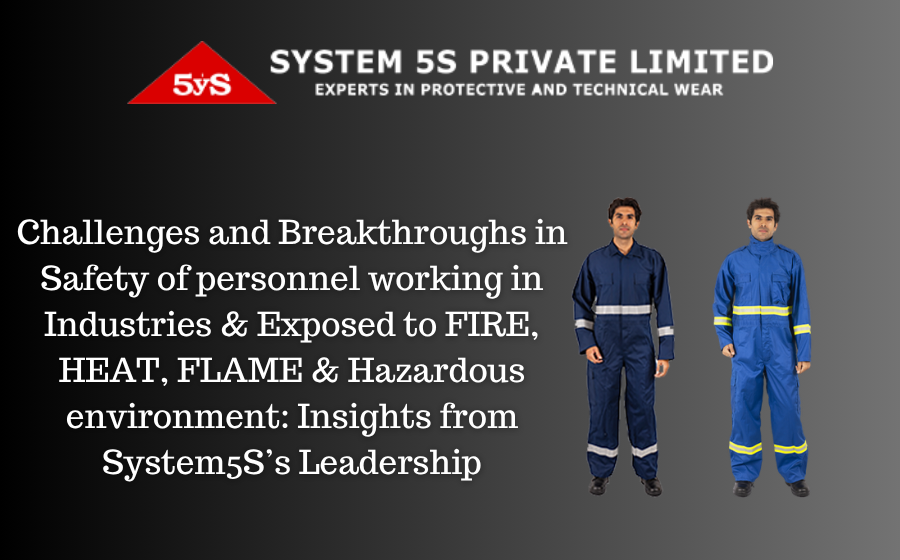
Industrial workplaces from oil & gas fields and manufacturing plants to chemical processing units, power utilities, and firefighting operations are among the most hazardous environments. In these settings, safety isn’t optional; it’s a non-negotiable, life-or-death priority. Personal protective equipment (PPE) like flame-resistant clothing, full-body coveralls, helmets, and specialized suits form the last line of defense between workers and deadly risks. Yet despite decades of progress in safety protocols, significant challenges persist even as new innovations promise to redefine industrial safety of personnel.
The Evolving Demands of High-Risk Industrial Environments
Modern industries face ever-evolving threats. As technology advances and external conditions shift, the nature of workplace hazards grows more complex. Key challenges which Fire & safety leaders grapple with include:
- Extreme Heat and Fire Hazards: Many sectors expose workers to intense heat, open flames, arc flashes, and explosions. Without proper thermal protection. For instance, flame-resistant suits or arc-rated apparel, even brief exposure can cause severe burns or worse. Using the wrong gear (e.g. non-FR clothing in an oil & gas facility, or non-arc-rated clothing for electrical work) remains a common issue that has led to tragic outcomes. Ensuring every worker has PPE suited to the specific fire and heat hazards they face is an ongoing challenge, especially as new high-energy processes increase the risk of arc flash and flash fires.
- Hazardous Chemicals and Materials: Industrial processes often involve corrosive chemicals, toxic gases, or volatile materials. Chemical resistance in PPE is critical, a standard coverall won’t suffice when handling acids or solvents. From chemical processing plants to pharmaceutical labs, workers need specialized suits, gloves, and respirators that can withstand splashes or prolonged exposure to dangerous substances. Selecting the right chemical protective gear (and training workers in its use) is crucial to prevent skin burns, poisoning, or respiratory harm.
- Durability in Harsh Conditions: Industrial PPE must endure harsh environments, from abrasive conditions in mining and construction to extreme weather outdoors. Gear that degrades, tears, or fails under pressure can leave workers vulnerable at the worst moment. For example, firefighting gear or aluminised proximity suits face repeated high-temperature exposures and must remain reliable. Durability and quality manufacturing are thus not just cost issues but safety issues: PPE should maintain its protective qualities through the rigors of daily use and rough conditions. Procurement heads increasingly demand evidence that protective equipment can last longer under such stress while still meeting safety performance criteria.
- Compliance and Safety Culture: Even the best equipment only protects if actually worn and used correctly. Unfortunately, ensuring workers consistently wear PPE is a persistent struggle. Surveys show over 75% of safety professionals report difficulty getting employees to wear required PPE at least some of the time. The reasons range from discomfort and heat to a perception that the gear isn’t really necessary. In one study, many workers simply “don’t like how it feels or looks,” or think they can get by without it. Such non-compliance creates dangerous gaps in protection. Building a strong safety culture through training, leadership by example, and providing more comfortable, better-fitting gear is critical to closing this gap. It’s no surprise that user comfort has become a key focus area: if PPE is lightweight, breathable, and ergonomic, workers are far more likely to wear it consistently rather than bypass it due to discomfort.
Breakthroughs in PPE: Innovation in Materials and Design
The good news for safety decision-makers is that PPE technology is advancing rapidly. In recent years, significant breakthroughs in materials and design have made modern protective gear more effective and user-friendly than ever:
- High-Performance Materials: Manufacturers are leveraging cutting-edge material science to develop PPE that offers superior protection with less bulk. Aramid fibers like Nomex® and Kevlar®, along with new blends and even nanotechnology-infused fabrics, provide robust barriers against heat and flame. These materials are engineered not to ignite easily and to self-extinguish, dramatically reducing burn injuries. For example, today’s firefighting suits and flame-resistant workwear often use multilayer composites that can withstand direct flames or the thermal energy of an arc blast while remaining relatively lightweight. The continuous improvements in fabric engineering mean PPE can meet or exceed strict standards (such as NFPA 2112 for flash fire or ISO 11612 for thermal resistance) while also lasting longer under tough conditions. Similarly, chemical protective fabrics have evolved to resist a broader range of hazardous substances, giving workers better all-round protection in chemical plants and hazmat situations.
- Design for Comfort and Ergonomics: A major theme in next-gen PPE is making safety gear more wearable. Uncomfortable gear often ends up unworn, so innovation has focused on reducing weight, improving fit, and enhancing breathability. We’ve seen a paradigm shift toward PPE that not only protects but is also user-friendly and even stylish. Flame-resistant clothing, for instance, now comes in softer, moisture-wicking fabrics with modern cuts that workers don’t mind wearing throughout a long shift. Bulky items like hazmat suits and firefighting turnout gear are being reimagined with better ventilation and flexibility, allowing for easier movement without compromising protection. By prioritizing wearer comfort and ease of use, these innovations directly tackle one root cause of non-compliance, PPE avoidance, thereby improving overall safety performance. For procurement heads, this means that investing in higher-comfort PPE can lead to better workforce compliance and fewer accidents in the long run.
- Smart PPE and Tech Integration: The convergence of digital technology with PPE is an exciting frontier transforming how we think about safety. “Smart” PPE includes wearables with embedded sensors, RFID tags, and wireless connectivity. These high-tech gears can monitor environmental conditions (e.g. temperature, toxic gas levels, noise) and even a worker’s vital signs or motion, providing real-time alerts if a hazard threshold is crossed. For example, experimental smart flame-resistant suits can warn a worker if ambient heat or chemical exposure is approaching dangerous levels. In electrical safety, some arc flash PPE now comes with sensor technology to monitor equipment and worker safety in real time. This IoT-driven approach turns PPE from passive protection into active prevention, instead of only shielding against known risks, the equipment itself can help predict and prevent accidents. While still an emerging area, it’s a space to watch: future procurement specifications may include smart features, especially in mission-critical operations. Even today, items like helmets with built-in communication systems and GPS trackers are becoming available, enhancing both safety and coordination during emergency responses.
- Stronger Standards and Regulatory Compliance: Alongside gear innovation, safety standards and regulations continue to evolve, raising the bar for PPE performance. International and national bodies (OSHA, NFPA, ISO, BIS, etc.) regularly update guidelines as new research and incident data emerge. For instance, updates to NFPA 70E (for electrical safety) in 2024 refined how employers must assess arc flash hazards and provide expanded guidance on PPE maintenance and training. New standards like updated ISO 11612 or India’s BIS norms for firefighter suits ensure that modern PPE, whether coveralls, jackets, gloves, or helmets has minimum protection levels for heat and flame. Enforcement is also getting stricter; many companies now require third-party certified gear and conduct regular safety audits. For procurement leaders, this trend underlines the importance of sourcing certified PPE that complies with the latest standards. Choosing suppliers who not only meet current standards but actively stay ahead of them (by design and testing) can help an organization remain compliant and avoid the risk of outdated protection.
Collaborative Progress: Government Partnerships Driving Innovation
Innovation in industrial safety isn’t happening in silos – it’s often the result of collaboration between industry leaders and government initiatives. A prime example is India’s National Technical Textiles Mission (NTTM), a government program aimed at advancing technical textile solutions (including advanced PPE). Under an NTTM-supported project, System5S partnered with the Northern India Textile Research Association (NITRA) to develop a new indigenous specialized firefighting suit.
Government initiatives globally also play a role in shaping safety trends. From grants for PPE innovation to updated regulations that mandate higher protection, these partnerships and policies push the industry forward. System5S’s active collaboration with programs like NTTM underscores its thought leadership and commitment to not just meet existing needs but anticipate future ones.
What Procurement Heads Should Consider When Sourcing PPE
For procurement leaders and industry decision-makers, sourcing PPE is a responsibility that goes beyond finding the lowest bidder. The safety of your workforce and the compliance standing of your organization hinge on making the right choices. Here are key considerations to keep in mind when evaluating PPE suppliers and products today:
- Certification and Compliance: Always verify that the PPE has relevant international and national standards for your industry hazards. Whether it’s an IS 16890 (or) EN 469-certified firefighting suit or an arc flash suit compliant with NFPA 70E, certified gear provides assurance that the product has been independently tested under rigorous conditions. System5S, for example, was the first in India to achieve EN 469 certification for firefighter suits (back in 2003) and the first to earn BIS certification for firefighter protective clothing. Such credentials demonstrate a manufacturer’s commitment to safety benchmarks. Using certified PPE not only keeps workers safe but also helps your company meet BIS, EN, NFPA, OSHA or local regulatory requirements during audits.
- Fit-for-Purpose Protection: Ensure the equipment is tailored to the specific hazards of your environment. This means conducting a thorough risk assessment and then selecting gear that is designed for those risks. For instance, if your facility faces flash fire or explosion risks, opt for flame-retardant coveralls rated to NFPA 2112 or ISO 11612 or IS 15748 equivalent. If electrical hazards are present, secure arc-rated suits and face shields for the appropriate calorie (energy) levels. In sectors like petrochemicals or pharmaceuticals, source chemical splash suits or vapor-tight hazmat suits as needed. Leading providers like System5S cover a wide spectrum of protective categories, from firefighting turnout gear and aluminized heat-shielding suits to flame-resistant workwear, arc flash suits, and chemical-resistant coveralls, each designed with the specific hazard in mind. Don’t adopt a one-size-fits-all approach; match the PPE to the hazard for maximum safety.
- Quality and Durability: Look for evidence of quality manufacturing and long-term durability. Industrial PPE must withstand tough conditions without performance degradation. Check if the supplier has robust quality control and testing in place MODULE D quality assessment certificate as compliance to quality requirements of PPE category III as per EU guidelines & regulation EU 2016/425 (For example, System5S maintains in-house testing facilities to rigorously evaluate their firefighting and flame-resistant workwear, ensuring each batch meets safety criteria) Also consider materials and construction: multi-layer garments with reinforced stitching, high-heat resistant thread, quality zippers/closures, and durable outer fabrics will last longer in the field. Durable PPE may have a higher upfront cost, but it delivers value by not needing frequent replacement and by reliably protecting workers day in and day out. It’s worth asking suppliers for test reports or client case studies that demonstrate how their gear holds up over time in environments similar to yours.
- Comfort and Ergonomics: Worker acceptance of PPE is a critical factor in real-world safety, so prioritize gear that is comfortable and ergonomic. Features like breathable fabrics, moisture-wicking liners, lighter weight composites, and better fitting designs can dramatically improve wearability. When workers can move freely and don’t overheat or feel encumbered, they are far more likely to keep their PPE on for the duration of the job. In practical terms, this might mean choosing a coverall with vented panels for a foundry worker in a hot environment, or opting for a newer style of safety helmet with a chin strap and foam liner (which many workers find more secure and comfortable than old hard hats). Many of today’s innovations from FR workwear that feels like everyday clothing to firefighting suits with flexible, articulated joints are aimed at reducing the discomfort barrier. As a procurement head, soliciting feedback from the end-users (the employees) during trials can be invaluable. Comfort shouldn’t be seen as a luxury; it’s directly linked to compliance and safety outcomes.
- Supplier Expertise and Support: Consider the supplier’s track record and partnership approach. PPE is not just a product but part of an overall safety system. Does the supplier offer training resources, fit testing, or guidance on PPE management? Are they innovating and updating their product lines in line with the latest risks and standards? System5S, for instance, has over three decades of experience and has consistently been at the forefront, from pioneering certified firefighting suits in India to collaborating on advanced textile R&D projects. They also offer customized solutions for unique workplace needs, recognizing that one facility’s challenges may not be identical to another’s. Partnering with such a knowledge-driven vendor can be an asset; you gain access to their expertise, whether it’s choosing the right ensemble for a new hazard or ensuring your gear remains compliant as standards evolve. Moreover, a reliable supplier will stand by the quality of their gear and assist in after-sales support (maintenance tips, inspection schedules, replacement parts for gear like respirators or suits, etc.). In short, look for a safety partner, not just a seller.
By weighing these considerations, procurement leaders can make informed decisions that protect workers and add value to their organizations. The goal is to ensure you’re not only buying equipment but also buying into safety outcomes reducing accidents, improving worker confidence, and meeting your legal and ethical obligations.
Looking Ahead: Safety Leadership and Continuous Innovation
Industrial safety is an ongoing journey, not a destination. The evolving nature of high-risk work means that both challenges and solutions will continue to arise. What’s clear is that achieving the ultimate goal of “zero harm” will require a combination of smarter technology, stronger safety cultures, and proactive design of work itself. On the horizon, we can expect PPE to become even more high-tech – with wider use of integrated sensors, AI-driven risk analytics, and connected safety management systems. Imagine protective gear that not only shields you from a hazard but also instantly communicates exposure data to a central system, triggering preemptive action (for example, shutting down a machine if a worker’s suit senses a gas leak or extreme heat). Such proactive safety measures are likely to be part of the next wave of industrial safety programs.
At the same time, the basics will always matter: comfort, durability, and reliability. We’ll see further materials research yielding lighter yet stronger fabrics, perhaps even sustainable PPE (like biodegradable or recyclable protective materials) as environmental considerations grow. Standards will evolve to address emerging risks – for instance, new battery energy storage facilities or nanomaterial manufacturing might spur tailored guidelines and PPE designs specific to those hazards. Climate change may also influence PPE, as gear is developed to cope with more extreme heat, cold, or weather events. All these changes represent both challenges and opportunities for safety leaders to continuously improve how we protect the workforce.
Through all this, System5S intends to continue leading from the front. As a premier safety and workwear provider, the company’s philosophy is rooted in anticipating industry needs and exceeding standards – a fact evidenced by its history of “firsts” in certifications and its ongoing R&D collaborations. System5S’s leadership understands that protecting lives is a mission-critical responsibility. That’s why every product is conceived and tested to be “mission-critical” itself – something you can absolutely count on when the moment of truth comes. Their firefighting suits, aluminized suits, arc flash suits and other PPE offerings are all tested, certified, and proven in the field. By staying ahead of the curve on technology and standards, and never losing focus on quality and user needs, System5S is helping ensure that every worker – whether in a refinery, on a factory floor, atop a power line, or in the heat of a blazing fire – can rely on coming home safe.
Industrial environments may be high-risk and ever-changing, but with the right approach, “high-risk” doesn’t have to mean “unsafe.” The challenges are real, but so are the breakthroughs. By fostering innovation, embracing collaboration (between companies, governments, and standard-setters), and keeping the end-user at the center of safety solutions, we are making tangible progress toward safer workplaces. For procurement heads and safety decision-makers, the charge is clear, stay informed, insist on the best, and partner with those who share your commitment to safety excellence. System5S stands with you in this mission, continuing to develop and deliver protective solutions that are built to protect, built to last, and built to enable every brave worker to carry out their duties with confidence.
In the journey toward zero harm, every improvement in PPE and safety practice is a step forward. With industry leaders like System5S driving innovation and upholding rigorous standards, the future of industrial safety looks brighter and safer than ever before.