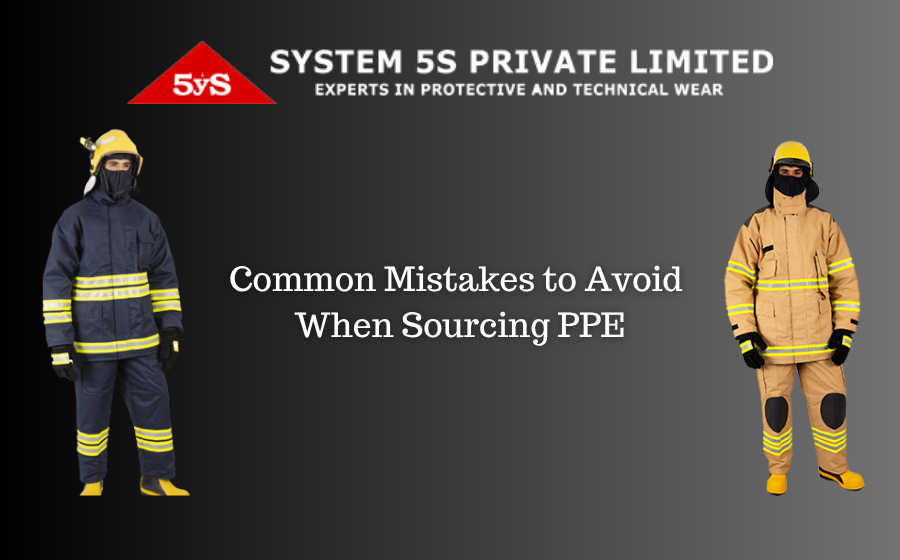
Firefighters rely on specialized PPE ensembles to face extreme hazards; sourcing the right gear is literally a life-and-death decision.
Procurement managers in the firefighting industry understand that purchasing Personal Protective Equipment (PPE) isn’t just a routine task, it’s a critical safety responsibility. Every helmet, turnout coat, glove, or breathing apparatus you source must perform under punishing conditions. Even experienced procurement professionals, however, can fall prey to certain pitfalls that compromise firefighter safety and operational readiness. Below, we outline five common mistakes to avoid when sourcing firefighting PPE, along with the technical and operational consequences of these missteps. By recognizing and addressing these issues, you can ensure your teams are protected by certified, high-performance gear that meets the toughest standards.
Cutting Costs at the Expense of Safety and Compliance
In a budget-driven environment, it’s tempting to prioritize the lowest bid or cheaper equipment options. But saving money upfront means little if the gear fails in the heat of action. Bargain PPE often lacks the high-quality materials, rigorous testing, and certification required to meet real-world firefighting challenges. Gear built on the cheap tends to wear out faster and may not provide adequate thermal or chemical protection. The operational implications are severe: premature gear failure can lead to firefighter injuries, downtime for emergency units, and even legal liabilities if safety standards are not met. Choosing non-compliant or subpar equipment to save money is a false economy, the long-term costs of on-the-job failures, workers’ compensation, and reputational damage will far outweigh the initial savings. Instead, focus on total life-cycle value. Investing in properly certified, robust PPE ensures reliable protection and often proves more cost-effective over time when factoring in durability and reduced injury rates.
Technical Insight: Firefighting gear is subject to intensive certification standards (e.g.IS 16890:2024 in India for structural firefighting ensembles and EN 469 in Europe). These standards mandate performance criteria like flame resistance, thermal insulation, and tear strength. A “great deal” on PPE that hasn’t been certified or tested to these benchmarks is a recipe for disaster. For instance, Firefighting suit that don’t meet thermal protective performance requirements could fail in high-heat environments, exposing firefighters to burns. Always verify that the equipment is certified by accredited labs to the relevant standard before considering cost. Cutting costs by sourcing unverified gear not only endangers lives but could also put your department out of compliance with regulations, a mistake no professional can afford.
Ignoring Firefighting PPE Standards and Certifications
Firefighting presents unique hazards; extreme heat, flashover flames, smoke, toxic chemicals, and structural collapse risks and the PPE is highly specialized to address those dangers. A critical mistake in sourcing is overlooking the industry-specific standards and certifications that govern firefighting equipment. Standards exist for a reason they ensure safety under specific conditions. For example, IS 16890:2024 standards or ISO/EN standards (internationally) detail stringent requirements for helmets, turnout gear, self-contained breathing apparatus (SCBA), etc. Ignoring these benchmarks or assuming “all PPE is created equal” can lead to buying gear that isn’t fit for firefighting purposes.
Operational impact: PPE that doesn’t meet firefighting standards may fail to protect against critical risks. Imagine sourcing gloves not rated for high heat or helmets without proper impact certification firefighters could suffer burns or trauma even in routine operations. Moreover, failure to adhere to standards can jeopardize insurance coverage and regulatory compliance. In many jurisdictions and organizations, it’s mandatory that structural firefighting gear be BIS certified or carry equivalent certification. Safety certifications aren’t optional they are proof that gear meets baseline protection levels, and without them there’s no assurance the equipment will hold up under pressure. Always verify the certification labels and documentation for each PPE item. Look for markings such as “BIS license or EU certified on Firefighting suits, and confirm the certification through the manufacturer or an accredited third-party. Be wary of any product with unclear or missing certification labels, if it doesn’t have the paperwork to back up its safety claims, it doesn’t belong in your firefighters’ hands. Ensuring compliance with current standards also means staying updated; for instance, the BIS recently consolidated and updated several PPE standards into a new IS 16890:2024 standard, adding requirements like category 1 & category 2. A procurement officer must keep abreast of such changes to avoid buying obsolete or non-compliant gear.
One-Size-Fits-All Purchasing (Failing to Address Specific Risks)
Not all firefighting is the same. Structural firefighting, wildland firefighting, technical rescue, and HAZMAT response each demand different protective features. One common procurement mistake is adopting a one-size-fits-all approach failing to conduct a thorough risk assessment and specify PPE that matches the department’s specific operational risks. Skipping this step can result in sourcing gear that is ill-suited for the tasks at hand. For example, buying only heavy structural turnout gear for a department that also handles wildland fires will burden crews with overly insulated, bulky suits in brushfire situations (leading to heat stress and fatigue). Conversely, issuing lightweight wildland PPE for interior structure fire attacks would dangerously under-protect firefighters from extreme heat. A risk assessment ensures the department has explored all specific dangers in its missions and can outfit responders with appropriate PPE. Selection, Care, and Maintenance of Protective Ensembles actually mandates performing a risk assessment as part of PPE selection, considering factors like the types of duties, frequency of use, local climate, and special hazards. Ignoring this process is not just a technical oversight but also a liability; OSHA regulations require employers to assess workplace hazards and select PPE accordingly.
Operational implications: Sourcing PPE without aligning to specific risks can leave critical gaps in protection. If your department responds to chemical spills but your gear isn’t rated for chemical resistance, or if you face electrical fire hazards without arc-flash rated apparel, the consequences can be severe equipment failure or firefighter injury. Additionally, generic procurement without risk-based specifications often leads to purchasing on price alone (low-bid), which might saddle you with gear that doesn’t meet the true performance needs of your firefighters. To avoid this, engage in a formal needs assessment. Document the environments and incident types your teams face high-rise building fires, wildland-urban interface fires, vehicle extrications, etc. and use that data to develop detailed PPE specifications. This process justifies why certain gear (maybe higher thermal rating, specialized coatings, or integrated safety features) is non-negotiable. It helps procurement defend the decision to select a bid that meets the spec over a cheaper bid that doesn’t. The result is a tailored PPE ensemble (from helmets and coats down to boots and SCBA) optimized for the jobs your firefighters do, ensuring they are neither under-protected nor over-encumbered.
Neglecting Proper Fit and Ergonomics
Even the most advanced protective gear can be rendered ineffective if it doesn’t fit the firefighter correctly. Neglecting to ensure proper fit, sizing, and ergonomics is a mistake that affects both safety and performance. PPE that fits poorly whether too loose, too tight, or simply uncomfortable won’t get used properly. As one safety guide put it, “Gear that doesn’t fit right won’t get used. It’s that simple.” When helmets cause pain, firefighters tend to remove or loosen them; oversized gloves reduce grip and dexterity; a poorly fitted SCBA facepiece can compromise the seal, letting toxic smoke seep in. The outcome is either non-compliance (firefighters bypassing or adjusting critical gear) or diminished capability (slower, less effective response due to awkward equipment). Both are dangerous.
Technical considerations: Firefighting PPE must accommodate a range of motion (crawling, climbing ladders, swinging tools) and diverse body types. Today’s fire service is increasingly diverse, and procurement must account for gender-specific and size-specific PPE gear cut for female firefighters, a full range of coat and pants sizes (including tall/short variations), and properly fitting harness straps or SCBA mounts. BIS & EN standards have begun addressing fit. From a practical standpoint, always request size samples or sizing kits from vendors and involve firefighters in fit trials before finalizing an order. When PPE fits well and is comfortable, firefighters can wear it longer and more correctly, which directly leads to safer operations. Conversely, sourcing PPE without considering fit will invite misuse or non-use undermining the entire investment. A procurement manager should treat sizing and ergonomic design as equally important as material specs. This means working closely with suppliers that offer custom sizing or a wide size range, and possibly budgeting for alterations. In summary: fit equal function. Ensuring a proper fit is not a vanity concern but a life-safety imperative that boosts compliance and effectiveness on the fireground.
Skipping Due Diligence on Suppliers and Quality Assurance
The final major pitfall is failing to thoroughly vet your suppliers and the quality of the products they provide. Procurement officers must look beyond brochures and sales pitches; not all vendors or PPE products are equally reliable. A common mistake is assuming a CE or BIS label is enough without investigating the manufacturer’s track record or the authenticity of the certification. Choose reliable, reputable brands and suppliers with a proven history in firefighting PPE for greater protection. Cutting corners here could mean ending up with counterfeit or low-quality gear that was falsely marketed as compliant. Unfortunately, there have been instances of “PPE” flooding the market (especially during high-demand periods) that do not truly meet standards.
Another aspect of due diligence is checking for product recalls or known defects. Safety equipment companies and regulatory bodies occasionally issue recalls (e.g., helmet suspension failures, SCBA malfunctions, turnout gear fabric defects). Always research if the specific model of PPE has any history of recalls or safety notices, and confirm that you’re getting the latest, improved version if so. Additionally, consider the quality assurance processes: Does the vendor batch-test their gear? Are there warranties and clear maintenance guidelines? A reliable supplier will be transparent about test results, certification bodies, and care instructions.
Operational implications: By skipping this homework, you risk deploying gear that might fail at a critical moment, perhaps a hose of a self-contained breathing apparatus that tears under pressure, or a thermal liner in a coat that degrades prematurely. The safety and liability stakes are enormous if a firefighter is hurt due to gear failure that could have been predicted by a known issue. On a more routine level, working with a subpar supplier can lead to inconsistent supply, delayed deliveries, or lack of support for replacements and repairs all affecting your team’s readiness. Best practice is to treat PPE sourcing as a partnership. Vet suppliers for certifications (e.g., ISO 9001 quality management + Module D Quality assessment system certificate as per PPE regulation EU 2016|425), seek references from other fire departments, and even do field testing of sample gear. Many procurement managers involve end-users in evaluating demo units; this overlaps with Mistake #4 by gathering firefighter feedback on gear comfort and function, but it also serves as a quality check on the product’s real-world performance. In short, do your due diligence: verify every claim and credential, and prioritize vendors who are known for quality and service. If something seems too good (or too cheap) to be true, it likely is and it has no place in your PPE inventory.
Final Thoughts
Sourcing firefighting PPE is not an area to compromise or “learn by error.” The mistakes outlined above from chasing the lowest price at the expense of safety, to neglecting standards, ignoring risk-specific needs, overlooking fit, and skimping on supplier vetting all have serious technical and operational repercussions. As a seasoned procurement professional, you can avoid these pitfalls by implementing rigorous specifications, staying current with industry standards, involving your firefighting crews in the evaluation process, and holding your suppliers to the highest quality benchmarks. The ultimate goal is simple: equip every firefighter with gear that will unquestionably perform when their life (and others’) depends on it.
At System5S, we understand these challenges deeply. With decades of expertise in supplying certified, high-performance PPE solutions for firefighting teams, we have built our reputation on quality, compliance, and reliability. Whether you need structural fire suits that meet the latest IS 16890:2024 category 1 (or) IS 16890:2024 category 2 (or) EN 469:2020 standard, flame-resistant workwear, advanced arc flash suits, or guidance on the right PPE for your specific risks, our team is here to help. Don’t leave your crew’s safety to chance partner with a provider that ticks all the boxes. Contact System5S today to discover how our expert-driven approach and top-tier PPE products can support your department’s mission. Equip your firefighters with confidence, knowing their gear is as dependable as the heroes who wear it.

