Welding Hazards and the Need for PPE

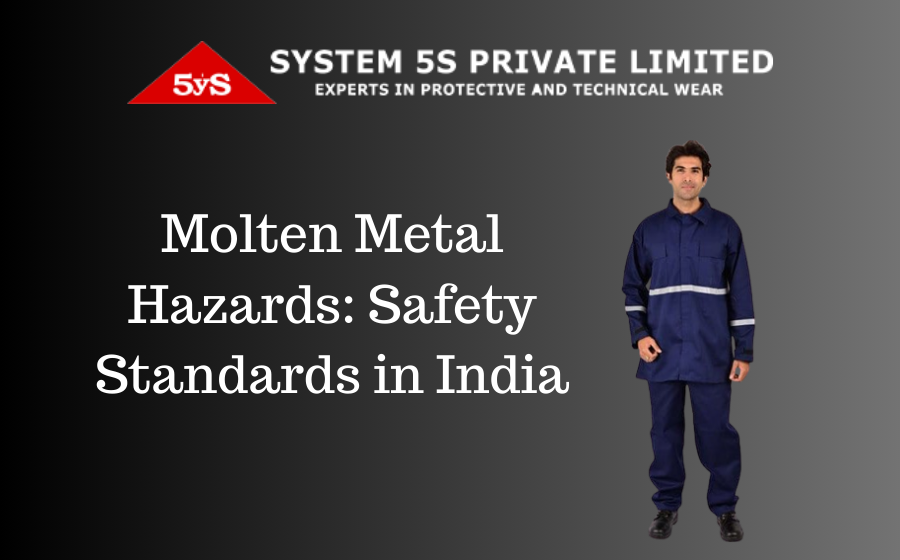
Welding is an inherently high-risk task. Welders face extreme radiant and convective heat, flying sparks, and molten-metal splatter that can burn skin and ignite clothing. The welding arc emits intense ultraviolet (UV) and infrared radiation; even brief exposure can cause “arc eye” and severe skin burns. Noise, welding fumes and the weight of heavy equipment add to the danger. Proper PPE – flame-resistant coveralls, jackets, leather gloves, aprons, boots and eye/face gear – forms the frontline defence, shielding workers from burns, spatter, UV/IR exposure, cuts and other injuries.

Standards-Driven Protection:

a)    IS 16655: Protective clothing for Welders

b)    IS 15748: Protective clothing for personnel exposed to heat & flame

Safety standards define how PPE must perform in welding environments. For example, EN ISO 11611 specifies safety requirements for welding garments, protecting the wearer from Welding splatters, brief flame contact, and radiant heat. Likewise, EN ISO 11612 covers flame- and heat-resistant clothing, requiring fabrics to resist convective heat, radiant heat and molten metal splashes. (India’s BIS standards, such as IS 16655:2017 for welding PPE and the IS 15748 for safety heat & flame, align with these international norms.) Choosing PPE certified to these standards – and to relevant national codes – is crucial. Certified gear has been rigorously tested to self-extinguish, block UV/IR, and endure the heat and abrasion of welding.

System5S Welding PPE: Suits and Jackets

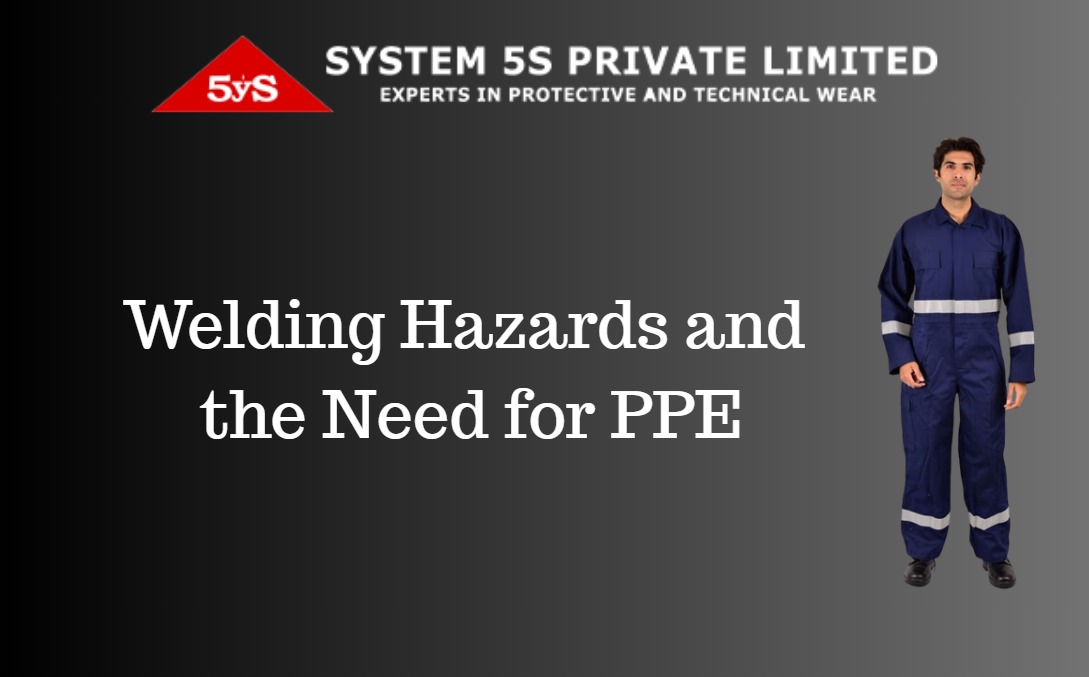
Flame-resistant welding suits are a core part of System5S’s lineup. For instance, their “Emperor” FR work coverall (Nomex® IIIA fabric) and FR-treated cotton coveralls (300 gsm PROBAN blend) are explicitly designed for heat, flame and welding applications. These one-piece suits are stitched with inherent FR thread and use FR zippers, snaps and Velcro to eliminate ignition points. Many meets ISO 11612/11611 and bear CE marking for industrial flash-fire protection. Key features include multiple secure pockets, concealed closures and reinforced stitching. System5S suits also incorporate comfort design: deep, bi-swing pleated backs and elastic waists or straps for freedom of movement. Optional FR reflective tape increases visibility in low light. Available in sizes up to XXXL (EN 13688) and colours like navy/blue, these coveralls keep welders safe without sacrificing ergonomics.

Gloves, Aprons and Accessories

System5S’s welding kits round out the ensemble with hand and body protection. They offer heavy-duty welding gloves – typically long-cuffed split with Kevlar palm – that resist sparks and abrasive wear. For example, their top-grain Kevlar palm gauntlet gloves are highly abrasion-resistant and designed for dexterity. Elasticized wrists and gauntlet cuffs ensure a snug, secure fit. Welding aprons and sleeves are also available to protect the torso and limbs from spatter. While specific models aren’t listed here, such aprons typically meet EN ISO 11612 & IS 15748 for molten-metal splash protection & EN ISO 11611 & IS 16655 for Welding allied work protection.

On the feet, System5S stocks safety boots (e.g. the HARVIK 9687 boot) tested to EN ISO 20345:2004 and EN 50321. These boots are slip-resistant, fuel- and heat-resistant, and electrically insulated (tested up to 5 kV wet) to protect against both molten metal and electrical hazards.

For eyes and face, System5S includes welding helmets and FR balaclavas, as well as EN 166-certified goggles. Their eyewear (3M Virtua) features anti-fog/anti-scratch hard coat lenses with 99.9% UV protection. These goggles (and matching face shields) block welding arc UV/IR and flying debris. Together with earplugs for noise and FR hoods for head/neck coverage, the full kit “works as hard as you do” to keep welders safe.

Certified, Durable and Ergonomic Design

All System5S welding PPE is built for industry. The company highlights CE certification and ISO 9001:2015 quality assurance on its flame-resistant suits, meaning each garment meets strict EU/ISO or BIS performance criteria (e.g. EN ISO 11611/11612 for welding/heat). System5S also holds quality certifications (ISO 9001, BIS licencing) and conducts in-house BIS testing. These credentials give procurement managers confidence in compliance.

Durability is engineered in: heavy-duty fabrics (Nomex®/Kevlar blends or FR cotton), triple-stitch seams, reinforced knees/elbows, and robust hardware ensure long service life. For example, System5S coveralls use heavy FR thread and feature extra Nomex® layers at knees and concealed plackets over zippers. Suits are wash-tested (e.g. 50 washes) to ensure lasting performance. Ergonomic details – elasticized waists, bi-swing backs, articulated knees and stretch panels – help wearers move freely even in bulkier FR gear. Together, these elements reduce fatigue and encourage consistent PPE use.

Value for Industry Buyers

For plant managers and safety officers, System5S welding PPE represents value and peace of mind. The gear’s rigorous certifications and high-spec materials justify any cost premium by ensuring liability coverage and minimizing replacements. Ergonomically designed suits and gloves lead to higher worker acceptance and productivity. And because System5S emphasizes quality and compliance BIS LICENSE (CE marked, ISO 9001-certified), buyers know they’re getting gear that truly performs under extreme welding conditions. In short, System5S’s flame-resistant welding suits, gloves, aprons and accessories are engineered to protect welders from every hazard – heat, sparks, UV, molten metal and more – so your team can weld without worry.

System5S Secures DRDO-CFEES Technology License to Manufacture Wildland Firefighting Suit & Gloves

Strengthening Firefighter Safety Through Indigenous Innovation

System5S is proud to announce a significant milestone in our journey toward enhancing firefighter protection and safety. We have become the first company in India to receive the Licensing Agreement for Transfer of Technology (LAToT) from the Centre for Fire, Explosive and Environment Safety (CFEES), a premier laboratory under the Defence Research & Development Organisation (DRDO).

This agreement grants us the license to manufacture and market Wildland Firefighting Suits and Gloves advanced protective gear designed specifically for combating fires in forests, grasslands, farms, and other open terrains.

About the Collaboration

The LAToT between DRDO-CFEES and System5S marks a new era of indigenous innovation in personal protective equipment (PPE). By transferring this cutting-edge technology to System5S, DRDO ensures that frontline firefighting teams across India will have access to world-class, locally manufactured gear that meets international safety standards.

This partnership aligns with India’s growing focus on self-reliance (Atmanirbhar Bharat) in critical safety technologies, while also opening avenues for global exports.

Key Features of the Wildland Firefighting Suit & Gloves

  • Flame Resistance & Thermal Protection – Engineered to withstand extreme heat, open flames, and radiant energy.
  • Lightweight & Breathable Fabric – Designed for extended wear in outdoor firefighting operations without compromising comfort.
  • Ergonomic Design for High Mobility – Allows firefighters to move freely and perform effectively in challenging terrains.
  • International Safety Compliance – Built to meet stringent global standards for firefighting PPE.

Why This Development is Important

Wildland fires, whether in forests, farmlands, or mountainous regions, present unique and dangerous challenges. Unlike urban firefighting, these scenarios often require firefighters to:

  • Cover large areas on foot in unpredictable wind and weather conditions.
  • Operate for extended durations without immediate access to resources.
  • Endure prolonged heat exposure, which can quickly lead to exhaustion or heat-related injuries.

In such environments, standard firefighting gear is often too heavy, bulky, or poorly ventilated, creating risks for heat stress and reduced mobility.

The Wildland Firefighting Suit and Gloves from System5S solve these issues by combining lightweight comfort with maximum thermal protection, enabling firefighters to stay mobile, safe, and effective during long-duration fire suppression missions.

The Significance of the LAToT for India

  1. First of its Kind in India – This is the first time indigenous technology for wildland firefighting gear has been licensed for manufacturing, ensuring faster deployment and reduced dependency on imports.
  2. Boost to Indigenous R&D – The collaboration showcases India’s capability to innovate advanced firefighting solutions locally through DRDO’s research excellence.
  3. Support for Firefighter Safety – Equipping firefighters with specialized gear tailored for wildland scenarios will drastically reduce injury risks and improve operational efficiency.
  4. Potential for Global Reach – With manufacturing capabilities in place, India can emerge as a supplier of world-class firefighting PPE to countries facing similar environmental and wildfire challenges.

Applications

The Wildland Firefighting Suit and Gloves are designed for:

  • Forest firefighting operations
  • Farmland fire management
  • Grassland and scrubland fire suppression
  • Mountain and hillside firefighting
  • Outdoor emergency response in extreme heat environments

System5S: A Legacy of Safety Innovation

For over three decades, System5S has been at the forefront of industrial safety and protective gear innovation. From firefighting suits and aluminized proximity gear to arc flash and chemical-resistant clothing, our products have been trusted by industries and firefighting teams across India and beyond.

This latest partnership with DRDO-CFEES reinforces our mission: to protect those who protect us. By bringing this indigenous technology to production, we’re taking another step toward zero harm in firefighting operations.

Looking Ahead

The LAToT for Wildland Firefighting Suits and Gloves is more than just a manufacturing license, it’s a commitment to saving lives, protecting property, and advancing India’s self-reliance in critical safety technologies.

System5S will be working closely with firefighting agencies, forest departments, and safety organizations to ensure that this gear reaches every frontline hero who needs it.

Common Mistakes to Avoid When Sourcing PPE

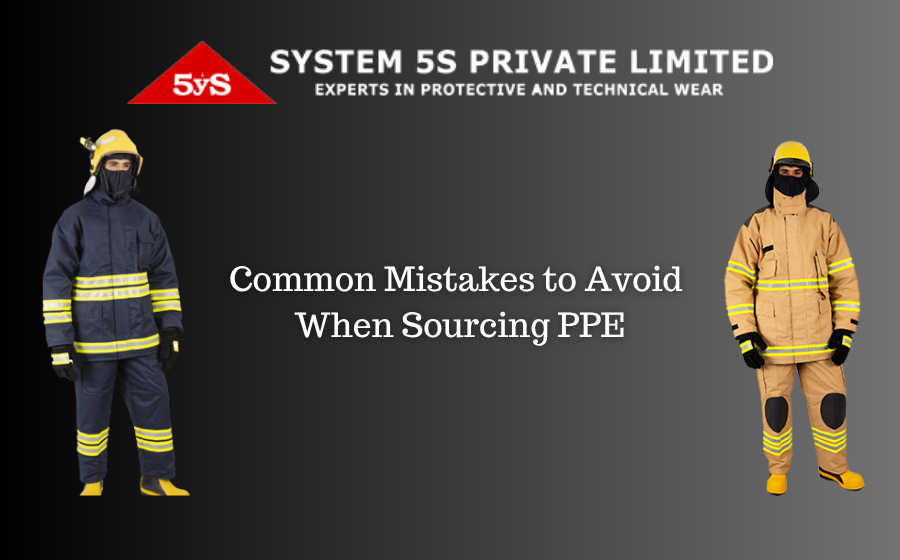
Firefighters rely on specialized PPE ensembles to face extreme hazards; sourcing the right gear is literally a life-and-death decision.

Procurement managers in the firefighting industry understand that purchasing Personal Protective Equipment (PPE) isn’t just a routine task, it’s a critical safety responsibility. Every helmet, turnout coat, glove, or breathing apparatus you source must perform under punishing conditions. Even experienced procurement professionals, however, can fall prey to certain pitfalls that compromise firefighter safety and operational readiness. Below, we outline five common mistakes to avoid when sourcing firefighting PPE, along with the technical and operational consequences of these missteps. By recognizing and addressing these issues, you can ensure your teams are protected by certified, high-performance gear that meets the toughest standards.

Cutting Costs at the Expense of Safety and Compliance

In a budget-driven environment, it’s tempting to prioritize the lowest bid or cheaper equipment options. But saving money upfront means little if the gear fails in the heat of action. Bargain PPE often lacks the high-quality materials, rigorous testing, and certification required to meet real-world firefighting challenges. Gear built on the cheap tends to wear out faster and may not provide adequate thermal or chemical protection. The operational implications are severe: premature gear failure can lead to firefighter injuries, downtime for emergency units, and even legal liabilities if safety standards are not met. Choosing non-compliant or subpar equipment to save money is a false economy, the long-term costs of on-the-job failures, workers’ compensation, and reputational damage will far outweigh the initial savings. Instead, focus on total life-cycle value. Investing in properly certified, robust PPE ensures reliable protection and often proves more cost-effective over time when factoring in durability and reduced injury rates.

Technical Insight: Firefighting gear is subject to intensive certification standards (e.g.IS 16890:2024 in India for structural firefighting ensembles and EN 469 in Europe). These standards mandate performance criteria like flame resistance, thermal insulation, and tear strength. A “great deal” on PPE that hasn’t been certified or tested to these benchmarks is a recipe for disaster. For instance, Firefighting suit that don’t meet thermal protective performance requirements could fail in high-heat environments, exposing firefighters to burns. Always verify that the equipment is certified by accredited labs to the relevant standard before considering cost. Cutting costs by sourcing unverified gear not only endangers lives but could also put your department out of compliance with regulations, a mistake no professional can afford.

Ignoring Firefighting PPE Standards and Certifications

Firefighting presents unique hazards; extreme heat, flashover flames, smoke, toxic chemicals, and structural collapse risks and the PPE is highly specialized to address those dangers. A critical mistake in sourcing is overlooking the industry-specific standards and certifications that govern firefighting equipment. Standards exist for a reason they ensure safety under specific conditions. For example, IS 16890:2024 standards or ISO/EN standards (internationally) detail stringent requirements for helmets, turnout gear, self-contained breathing apparatus (SCBA), etc. Ignoring these benchmarks or assuming “all PPE is created equal” can lead to buying gear that isn’t fit for firefighting purposes.

Operational impact: PPE that doesn’t meet firefighting standards may fail to protect against critical risks. Imagine sourcing gloves not rated for high heat or helmets without proper impact certification firefighters could suffer burns or trauma even in routine operations. Moreover, failure to adhere to standards can jeopardize insurance coverage and regulatory compliance. In many jurisdictions and organizations, it’s mandatory that structural firefighting gear be BIS certified or carry equivalent certification. Safety certifications aren’t optional they are proof that gear meets baseline protection levels, and without them there’s no assurance the equipment will hold up under pressure. Always verify the certification labels and documentation for each PPE item. Look for markings such as “BIS license or EU certified on Firefighting suits, and confirm the certification through the manufacturer or an accredited third-party. Be wary of any product with unclear or missing certification labels, if it doesn’t have the paperwork to back up its safety claims, it doesn’t belong in your firefighters’ hands. Ensuring compliance with current standards also means staying updated; for instance, the BIS recently consolidated and updated several PPE standards into a new IS 16890:2024 standard, adding requirements like category 1 & category 2. A procurement officer must keep abreast of such changes to avoid buying obsolete or non-compliant gear.

One-Size-Fits-All Purchasing (Failing to Address Specific Risks)

Not all firefighting is the same. Structural firefighting, wildland firefighting, technical rescue, and HAZMAT response each demand different protective features. One common procurement mistake is adopting a one-size-fits-all approach failing to conduct a thorough risk assessment and specify PPE that matches the department’s specific operational risks. Skipping this step can result in sourcing gear that is ill-suited for the tasks at hand. For example, buying only heavy structural turnout gear for a department that also handles wildland fires will burden crews with overly insulated, bulky suits in brushfire situations (leading to heat stress and fatigue). Conversely, issuing lightweight wildland PPE for interior structure fire attacks would dangerously under-protect firefighters from extreme heat. A risk assessment ensures the department has explored all specific dangers in its missions and can outfit responders with appropriate PPE. Selection, Care, and Maintenance of Protective Ensembles actually mandates performing a risk assessment as part of PPE selection, considering factors like the types of duties, frequency of use, local climate, and special hazards. Ignoring this process is not just a technical oversight but also a liability; OSHA regulations require employers to assess workplace hazards and select PPE accordingly.

Operational implications: Sourcing PPE without aligning to specific risks can leave critical gaps in protection. If your department responds to chemical spills but your gear isn’t rated for chemical resistance, or if you face electrical fire hazards without arc-flash rated apparel, the consequences can be severe equipment failure or firefighter injury. Additionally, generic procurement without risk-based specifications often leads to purchasing on price alone (low-bid), which might saddle you with gear that doesn’t meet the true performance needs of your firefighters. To avoid this, engage in a formal needs assessment. Document the environments and incident types your teams face high-rise building fires, wildland-urban interface fires, vehicle extrications, etc. and use that data to develop detailed PPE specifications. This process justifies why certain gear (maybe higher thermal rating, specialized coatings, or integrated safety features) is non-negotiable. It helps procurement defend the decision to select a bid that meets the spec over a cheaper bid that doesn’t. The result is a tailored PPE ensemble (from helmets and coats down to boots and SCBA) optimized for the jobs your firefighters do, ensuring they are neither under-protected nor over-encumbered.

Neglecting Proper Fit and Ergonomics

Even the most advanced protective gear can be rendered ineffective if it doesn’t fit the firefighter correctly. Neglecting to ensure proper fit, sizing, and ergonomics is a mistake that affects both safety and performance. PPE that fits poorly whether too loose, too tight, or simply uncomfortable won’t get used properly. As one safety guide put it, “Gear that doesn’t fit right won’t get used. It’s that simple.” When helmets cause pain, firefighters tend to remove or loosen them; oversized gloves reduce grip and dexterity; a poorly fitted SCBA facepiece can compromise the seal, letting toxic smoke seep in. The outcome is either non-compliance (firefighters bypassing or adjusting critical gear) or diminished capability (slower, less effective response due to awkward equipment). Both are dangerous.

Technical considerations: Firefighting PPE must accommodate a range of motion (crawling, climbing ladders, swinging tools) and diverse body types. Today’s fire service is increasingly diverse, and procurement must account for gender-specific and size-specific PPE gear cut for female firefighters, a full range of coat and pants sizes (including tall/short variations), and properly fitting harness straps or SCBA mounts. BIS & EN standards have begun addressing fit. From a practical standpoint, always request size samples or sizing kits from vendors and involve firefighters in fit trials before finalizing an order. When PPE fits well and is comfortable, firefighters can wear it longer and more correctly, which directly leads to safer operations. Conversely, sourcing PPE without considering fit will invite misuse or non-use undermining the entire investment. A procurement manager should treat sizing and ergonomic design as equally important as material specs. This means working closely with suppliers that offer custom sizing or a wide size range, and possibly budgeting for alterations. In summary: fit equal function. Ensuring a proper fit is not a vanity concern but a life-safety imperative that boosts compliance and effectiveness on the fireground.

Skipping Due Diligence on Suppliers and Quality Assurance

The final major pitfall is failing to thoroughly vet your suppliers and the quality of the products they provide. Procurement officers must look beyond brochures and sales pitches; not all vendors or PPE products are equally reliable. A common mistake is assuming a CE or BIS label is enough without investigating the manufacturer’s track record or the authenticity of the certification. Choose reliable, reputable brands and suppliers with a proven history in firefighting PPE for greater protection. Cutting corners here could mean ending up with counterfeit or low-quality gear that was falsely marketed as compliant. Unfortunately, there have been instances of “PPE” flooding the market (especially during high-demand periods) that do not truly meet standards.

Another aspect of due diligence is checking for product recalls or known defects. Safety equipment companies and regulatory bodies occasionally issue recalls (e.g., helmet suspension failures, SCBA malfunctions, turnout gear fabric defects). Always research if the specific model of PPE has any history of recalls or safety notices, and confirm that you’re getting the latest, improved version if so. Additionally, consider the quality assurance processes: Does the vendor batch-test their gear? Are there warranties and clear maintenance guidelines? A reliable supplier will be transparent about test results, certification bodies, and care instructions.

Operational implications: By skipping this homework, you risk deploying gear that might fail at a critical moment, perhaps a hose of a self-contained breathing apparatus that tears under pressure, or a thermal liner in a coat that degrades prematurely. The safety and liability stakes are enormous if a firefighter is hurt due to gear failure that could have been predicted by a known issue. On a more routine level, working with a subpar supplier can lead to inconsistent supply, delayed deliveries, or lack of support for replacements and repairs all affecting your team’s readiness. Best practice is to treat PPE sourcing as a partnership. Vet suppliers for certifications (e.g., ISO 9001 quality management + Module D Quality assessment system certificate as per PPE regulation EU 2016|425), seek references from other fire departments, and even do field testing of sample gear. Many procurement managers involve end-users in evaluating demo units; this overlaps with Mistake #4 by gathering firefighter feedback on gear comfort and function, but it also serves as a quality check on the product’s real-world performance. In short, do your due diligence: verify every claim and credential, and prioritize vendors who are known for quality and service. If something seems too good (or too cheap) to be true, it likely is and it has no place in your PPE inventory.

Final Thoughts

Sourcing firefighting PPE is not an area to compromise or “learn by error.” The mistakes outlined above from chasing the lowest price at the expense of safety, to neglecting standards, ignoring risk-specific needs, overlooking fit, and skimping on supplier vetting all have serious technical and operational repercussions. As a seasoned procurement professional, you can avoid these pitfalls by implementing rigorous specifications, staying current with industry standards, involving your firefighting crews in the evaluation process, and holding your suppliers to the highest quality benchmarks. The ultimate goal is simple: equip every firefighter with gear that will unquestionably perform when their life (and others’) depends on it.

At System5S, we understand these challenges deeply. With decades of expertise in supplying certified, high-performance PPE solutions for firefighting teams, we have built our reputation on quality, compliance, and reliability. Whether you need structural fire suits that meet the latest IS 16890:2024 category 1 (or) IS 16890:2024 category 2 (or) EN 469:2020 standard, flame-resistant workwear, advanced arc flash suits, or guidance on the right PPE for your specific risks, our team is here to help. Don’t leave your crew’s safety to chance partner with a provider that ticks all the boxes. Contact System5S today to discover how our expert-driven approach and top-tier PPE products can support your department’s mission. Equip your firefighters with confidence, knowing their gear is as dependable as the heroes who wear it.

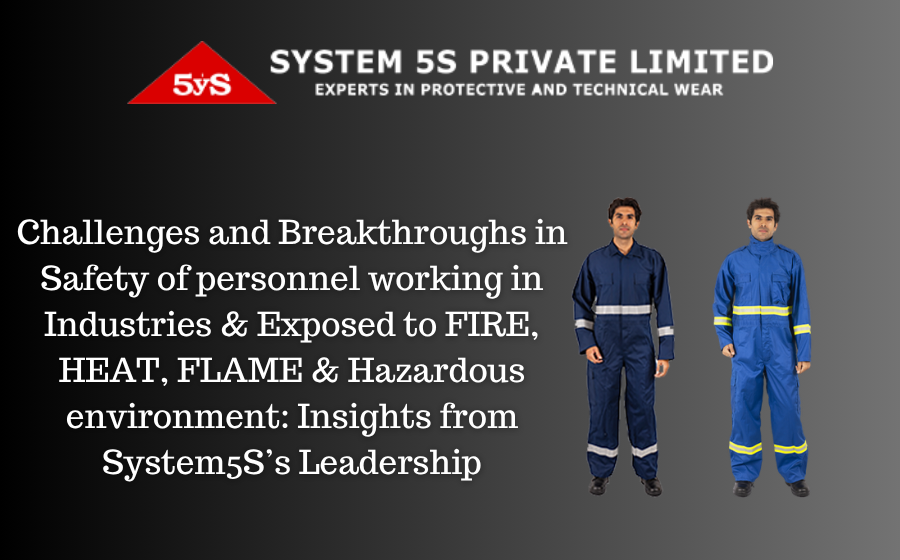
Challenges and Breakthroughs in Safety of personnel working in Industries & Exposed to FIRE, HEAT, FLAME & Hazardous environment: Insights from System5S’s Leadership

Industrial workplaces from oil & gas fields and manufacturing plants to chemical processing units, power utilities, and firefighting operations are among the most hazardous environments. In these settings, safety isn’t optional; it’s a non-negotiable, life-or-death priority. Personal protective equipment (PPE) like flame-resistant clothing, full-body coveralls, helmets, and specialized suits form the last line of defense between workers and deadly risks. Yet despite decades of progress in safety protocols, significant challenges persist even as new innovations promise to redefine industrial safety of personnel.

The Evolving Demands of High-Risk Industrial Environments

Modern industries face ever-evolving threats. As technology advances and external conditions shift, the nature of workplace hazards grows more complex. Key challenges which Fire & safety leaders grapple with include:

  • Extreme Heat and Fire Hazards: Many sectors expose workers to intense heat, open flames, arc flashes, and explosions. Without proper thermal protection. For instance, flame-resistant suits or arc-rated apparel, even brief exposure can cause severe burns or worse. Using the wrong gear (e.g. non-FR clothing in an oil & gas facility, or non-arc-rated clothing for electrical work) remains a common issue that has led to tragic outcomes. Ensuring every worker has PPE suited to the specific fire and heat hazards they face is an ongoing challenge, especially as new high-energy processes increase the risk of arc flash and flash fires.
  • Hazardous Chemicals and Materials: Industrial processes often involve corrosive chemicals, toxic gases, or volatile materials. Chemical resistance in PPE is critical, a standard coverall won’t suffice when handling acids or solvents. From chemical processing plants to pharmaceutical labs, workers need specialized suits, gloves, and respirators that can withstand splashes or prolonged exposure to dangerous substances. Selecting the right chemical protective gear (and training workers in its use) is crucial to prevent skin burns, poisoning, or respiratory harm.
  • Durability in Harsh Conditions: Industrial PPE must endure harsh environments, from abrasive conditions in mining and construction to extreme weather outdoors. Gear that degrades, tears, or fails under pressure can leave workers vulnerable at the worst moment. For example, firefighting gear or aluminised proximity suits face repeated high-temperature exposures and must remain reliable. Durability and quality manufacturing are thus not just cost issues but safety issues: PPE should maintain its protective qualities through the rigors of daily use and rough conditions. Procurement heads increasingly demand evidence that protective equipment can last longer under such stress while still meeting safety performance criteria.
  • Compliance and Safety Culture: Even the best equipment only protects if actually worn and used correctly. Unfortunately, ensuring workers consistently wear PPE is a persistent struggle. Surveys show over 75% of safety professionals report difficulty getting employees to wear required PPE at least some of the time. The reasons range from discomfort and heat to a perception that the gear isn’t really necessary. In one study, many workers simply “don’t like how it feels or looks,” or think they can get by without it. Such non-compliance creates dangerous gaps in protection. Building a strong safety culture through training, leadership by example, and providing more comfortable, better-fitting gear is critical to closing this gap. It’s no surprise that user comfort has become a key focus area: if PPE is lightweight, breathable, and ergonomic, workers are far more likely to wear it consistently rather than bypass it due to discomfort.

Breakthroughs in PPE: Innovation in Materials and Design

The good news for safety decision-makers is that PPE technology is advancing rapidly. In recent years, significant breakthroughs in materials and design have made modern protective gear more effective and user-friendly than ever:

  • High-Performance Materials: Manufacturers are leveraging cutting-edge material science to develop PPE that offers superior protection with less bulk. Aramid fibers like Nomex® and Kevlar®, along with new blends and even nanotechnology-infused fabrics, provide robust barriers against heat and flame. These materials are engineered not to ignite easily and to self-extinguish, dramatically reducing burn injuries. For example, today’s firefighting suits and flame-resistant workwear often use multilayer composites that can withstand direct flames or the thermal energy of an arc blast while remaining relatively lightweight. The continuous improvements in fabric engineering mean PPE can meet or exceed strict standards (such as NFPA 2112 for flash fire or ISO 11612 for thermal resistance) while also lasting longer under tough conditions. Similarly, chemical protective fabrics have evolved to resist a broader range of hazardous substances, giving workers better all-round protection in chemical plants and hazmat situations.
  • Design for Comfort and Ergonomics: A major theme in next-gen PPE is making safety gear more wearable. Uncomfortable gear often ends up unworn, so innovation has focused on reducing weight, improving fit, and enhancing breathability. We’ve seen a paradigm shift toward PPE that not only protects but is also user-friendly and even stylish. Flame-resistant clothing, for instance, now comes in softer, moisture-wicking fabrics with modern cuts that workers don’t mind wearing throughout a long shift. Bulky items like hazmat suits and firefighting turnout gear are being reimagined with better ventilation and flexibility, allowing for easier movement without compromising protection. By prioritizing wearer comfort and ease of use, these innovations directly tackle one root cause of non-compliance, PPE avoidance, thereby improving overall safety performance. For procurement heads, this means that investing in higher-comfort PPE can lead to better workforce compliance and fewer accidents in the long run.
  • Smart PPE and Tech Integration: The convergence of digital technology with PPE is an exciting frontier transforming how we think about safety. “Smart” PPE includes wearables with embedded sensors, RFID tags, and wireless connectivity. These high-tech gears can monitor environmental conditions (e.g. temperature, toxic gas levels, noise) and even a worker’s vital signs or motion, providing real-time alerts if a hazard threshold is crossed. For example, experimental smart flame-resistant suits can warn a worker if ambient heat or chemical exposure is approaching dangerous levels. In electrical safety, some arc flash PPE now comes with sensor technology to monitor equipment and worker safety in real time. This IoT-driven approach turns PPE from passive protection into active prevention, instead of only shielding against known risks, the equipment itself can help predict and prevent accidents. While still an emerging area, it’s a space to watch: future procurement specifications may include smart features, especially in mission-critical operations. Even today, items like helmets with built-in communication systems and GPS trackers are becoming available, enhancing both safety and coordination during emergency responses.
  • Stronger Standards and Regulatory Compliance: Alongside gear innovation, safety standards and regulations continue to evolve, raising the bar for PPE performance. International and national bodies (OSHA, NFPA, ISO, BIS, etc.) regularly update guidelines as new research and incident data emerge. For instance, updates to NFPA 70E (for electrical safety) in 2024 refined how employers must assess arc flash hazards and provide expanded guidance on PPE maintenance and training. New standards like updated ISO 11612 or India’s BIS norms for firefighter suits ensure that modern PPE, whether coveralls, jackets, gloves, or helmets has minimum protection levels for heat and flame. Enforcement is also getting stricter; many companies now require third-party certified gear and conduct regular safety audits. For procurement leaders, this trend underlines the importance of sourcing certified PPE that complies with the latest standards. Choosing suppliers who not only meet current standards but actively stay ahead of them (by design and testing) can help an organization remain compliant and avoid the risk of outdated protection.

Collaborative Progress: Government Partnerships Driving Innovation

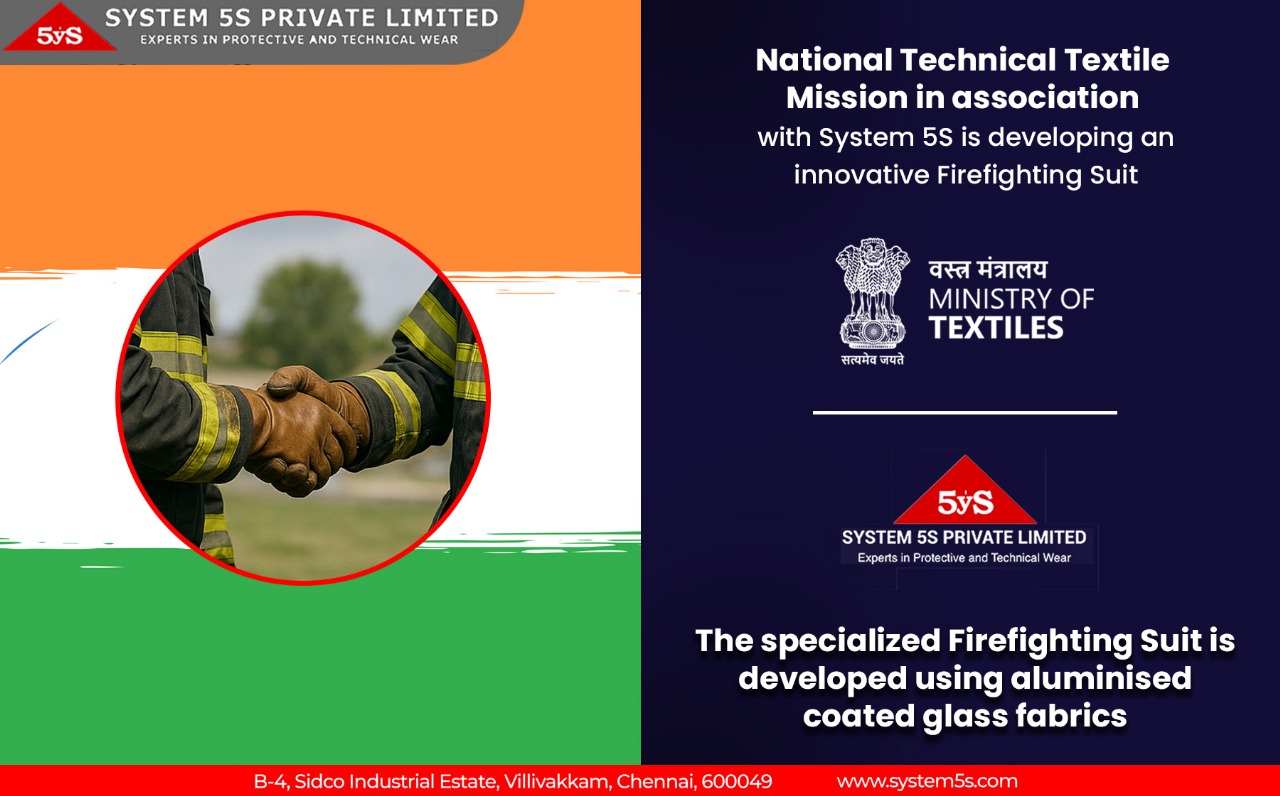
Innovation in industrial safety isn’t happening in silos – it’s often the result of collaboration between industry leaders and government initiatives. A prime example is India’s National Technical Textiles Mission (NTTM), a government program aimed at advancing technical textile solutions (including advanced PPE). Under an NTTM-supported project, System5S partnered with the Northern India Textile Research Association (NITRA) to develop a new indigenous specialized firefighting suit.

Government initiatives globally also play a role in shaping safety trends. From grants for PPE innovation to updated regulations that mandate higher protection, these partnerships and policies push the industry forward. System5S’s active collaboration with programs like NTTM underscores its thought leadership and commitment to not just meet existing needs but anticipate future ones.

What Procurement Heads Should Consider When Sourcing PPE

For procurement leaders and industry decision-makers, sourcing PPE is a responsibility that goes beyond finding the lowest bidder. The safety of your workforce and the compliance standing of your organization hinge on making the right choices. Here are key considerations to keep in mind when evaluating PPE suppliers and products today:

  1. Certification and Compliance: Always verify that the PPE has relevant international and national standards for your industry hazards. Whether it’s an IS 16890 (or) EN 469-certified firefighting suit or an arc flash suit compliant with NFPA 70E, certified gear provides assurance that the product has been independently tested under rigorous conditions. System5S, for example, was the first in India to achieve EN 469 certification for firefighter suits (back in 2003) and the first to earn BIS certification for firefighter protective clothing. Such credentials demonstrate a manufacturer’s commitment to safety benchmarks. Using certified PPE not only keeps workers safe but also helps your company meet BIS, EN, NFPA, OSHA or local regulatory requirements during audits.
  2. Fit-for-Purpose Protection: Ensure the equipment is tailored to the specific hazards of your environment. This means conducting a thorough risk assessment and then selecting gear that is designed for those risks. For instance, if your facility faces flash fire or explosion risks, opt for flame-retardant coveralls rated to NFPA 2112 or ISO 11612 or IS 15748 equivalent. If electrical hazards are present, secure arc-rated suits and face shields for the appropriate calorie (energy) levels. In sectors like petrochemicals or pharmaceuticals, source chemical splash suits or vapor-tight hazmat suits as needed. Leading providers like System5S cover a wide spectrum of protective categories, from firefighting turnout gear and aluminized heat-shielding suits to flame-resistant workwear, arc flash suits, and chemical-resistant coveralls,  each designed with the specific hazard in mind. Don’t adopt a one-size-fits-all approach; match the PPE to the hazard for maximum safety.
  3. Quality and Durability: Look for evidence of quality manufacturing and long-term durability. Industrial PPE must withstand tough conditions without performance degradation. Check if the supplier has robust quality control and testing in place MODULE D quality assessment certificate as compliance to quality requirements of PPE category III as per EU guidelines & regulation EU 2016/425 (For example, System5S maintains in-house testing facilities to rigorously evaluate their firefighting and flame-resistant workwear, ensuring each batch meets safety criteria) Also consider materials and construction: multi-layer garments with reinforced stitching, high-heat resistant thread, quality zippers/closures, and durable outer fabrics will last longer in the field. Durable PPE may have a higher upfront cost, but it delivers value by not needing frequent replacement and by reliably protecting workers day in and day out. It’s worth asking suppliers for test reports or client case studies that demonstrate how their gear holds up over time in environments similar to yours.
  4. Comfort and Ergonomics: Worker acceptance of PPE is a critical factor in real-world safety, so prioritize gear that is comfortable and ergonomic. Features like breathable fabrics, moisture-wicking liners, lighter weight composites, and better fitting designs can dramatically improve wearability. When workers can move freely and don’t overheat or feel encumbered, they are far more likely to keep their PPE on for the duration of the job. In practical terms, this might mean choosing a coverall with vented panels for a foundry worker in a hot environment, or opting for a newer style of safety helmet with a chin strap and foam liner (which many workers find more secure and comfortable than old hard hats). Many of today’s innovations from FR workwear that feels like everyday clothing to firefighting suits with flexible, articulated joints are aimed at reducing the discomfort barrier. As a procurement head, soliciting feedback from the end-users (the employees) during trials can be invaluable. Comfort shouldn’t be seen as a luxury; it’s directly linked to compliance and safety outcomes.
  5. Supplier Expertise and Support: Consider the supplier’s track record and partnership approach. PPE is not just a product but part of an overall safety system. Does the supplier offer training resources, fit testing, or guidance on PPE management? Are they innovating and updating their product lines in line with the latest risks and standards? System5S, for instance, has over three decades of experience and has consistently been at the forefront, from pioneering certified firefighting suits in India to collaborating on advanced textile R&D projects. They also offer customized solutions for unique workplace needs, recognizing that one facility’s challenges may not be identical to another’s. Partnering with such a knowledge-driven vendor can be an asset; you gain access to their expertise, whether it’s choosing the right ensemble for a new hazard or ensuring your gear remains compliant as standards evolve. Moreover, a reliable supplier will stand by the quality of their gear and assist in after-sales support (maintenance tips, inspection schedules, replacement parts for gear like respirators or suits, etc.). In short, look for a safety partner, not just a seller.

By weighing these considerations, procurement leaders can make informed decisions that protect workers and add value to their organizations. The goal is to ensure you’re not only buying equipment but also buying into safety outcomes reducing accidents, improving worker confidence, and meeting your legal and ethical obligations.

Looking Ahead: Safety Leadership and Continuous Innovation

Industrial safety is an ongoing journey, not a destination. The evolving nature of high-risk work means that both challenges and solutions will continue to arise. What’s clear is that achieving the ultimate goal of “zero harm” will require a combination of smarter technology, stronger safety cultures, and proactive design of work itself. On the horizon, we can expect PPE to become even more high-tech – with wider use of integrated sensors, AI-driven risk analytics, and connected safety management systems. Imagine protective gear that not only shields you from a hazard but also instantly communicates exposure data to a central system, triggering preemptive action (for example, shutting down a machine if a worker’s suit senses a gas leak or extreme heat). Such proactive safety measures are likely to be part of the next wave of industrial safety programs.

At the same time, the basics will always matter: comfort, durability, and reliability. We’ll see further materials research yielding lighter yet stronger fabrics, perhaps even sustainable PPE (like biodegradable or recyclable protective materials) as environmental considerations grow. Standards will evolve to address emerging risks – for instance, new battery energy storage facilities or nanomaterial manufacturing might spur tailored guidelines and PPE designs specific to those hazards. Climate change may also influence PPE, as gear is developed to cope with more extreme heat, cold, or weather events. All these changes represent both challenges and opportunities for safety leaders to continuously improve how we protect the workforce.

Through all this, System5S intends to continue leading from the front. As a premier safety and workwear provider, the company’s philosophy is rooted in anticipating industry needs and exceeding standards – a fact evidenced by its history of “firsts” in certifications and its ongoing R&D collaborations. System5S’s leadership understands that protecting lives is a mission-critical responsibility. That’s why every product is conceived and tested to be “mission-critical” itself – something you can absolutely count on when the moment of truth comes. Their firefighting suits, aluminized suits, arc flash suits and other PPE offerings are all tested, certified, and proven in the field. By staying ahead of the curve on technology and standards, and never losing focus on quality and user needs, System5S is helping ensure that every worker – whether in a refinery, on a factory floor, atop a power line, or in the heat of a blazing fire – can rely on coming home safe.

Industrial environments may be high-risk and ever-changing, but with the right approach, “high-risk” doesn’t have to mean “unsafe.” The challenges are real, but so are the breakthroughs. By fostering innovation, embracing collaboration (between companies, governments, and standard-setters), and keeping the end-user at the center of safety solutions, we are making tangible progress toward safer workplaces. For procurement heads and safety decision-makers, the charge is clear, stay informed, insist on the best, and partner with those who share your commitment to safety excellence. System5S stands with you in this mission, continuing to develop and deliver protective solutions that are built to protect, built to last, and built to enable every brave worker to carry out their duties with confidence.

In the journey toward zero harm, every improvement in PPE and safety practice is a step forward. With industry leaders like System5S driving innovation and upholding rigorous standards, the future of industrial safety looks brighter and safer than ever before.

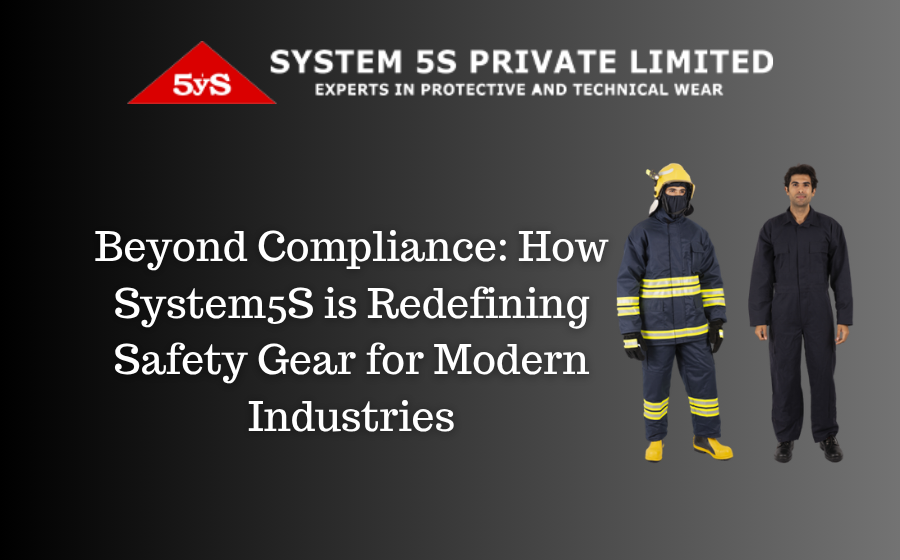
Beyond Compliance: How System5S is Redefining Safety Gear for Modern Industries

Safety officers know that simply meeting the bare minimum of safety regulations isn’t enough in today’s high-risk industrial environments. Modern workplaces demand personal protective equipment (PPE) that not only ticks the compliance boxes but also delivers superior performance, comfort, and innovation. This is where System5S – a veteran safety gear manufacturer founded in 1990 – stands out. System5S has made it their mission “to keep people safe in dangerous workplaces,” crafting everything from firefighting suits to flame-resistant clothing and electrical arc flash gear without ever compromising on quality. In this post, we’ll explore how System5S goes beyond compliance, providing thoughtful, high-performance safety gear tailored to the evolving needs of modern industries.

Beyond Compliance: Exceeding Safety Standards from Day One

For System5S, compliance with safety standards is just the starting point – they aim to exceed those standards. The company boasts several industry firsts in India that underscore its leadership in quality and safety. For example, System5S was the first Indian company to achieve the EN 469 certification for firefighting suits (back in 2003) and the first to earn the BIS (Bureau of Indian Standards) certification for firefighter protective clothing. These achievements aren’t just trophies; they demonstrate that every piece of gear meets rigorous international benchmarks. In fact, every System5S product is certified to national and international standards, giving safety officers confidence that the gear will perform under extreme conditions. The company even maintains in-house testing facilities to push quality control further. By self-testing their firefighting and flame-retardant suits against stringent criteria, System5S ensures its equipment doesn’t just meet compliance – it often sets new standards for safety and reliability. This commitment to quality means when you choose System5S gear, you’re not merely checking a compliance box; you’re investing in PPE that’s been proven to go above and beyond basic requirements.

High-Performance Materials and Innovative Design

One way System5S redefines safety gear is through cutting-edge materials and design innovations. The company uses advanced technical fabrics and composites to achieve high levels of protection without the trade-offs of excessive weight or bulk. For instance, System5S leverages inherently flame-retardant aramid fibers like DuPont Nomex® (under a licensed partnership) and aluminized fiberglass layers to create PPE that shields against fire and radiant heat while remaining relatively lightweight. These high-performance materials enable gear such as flame-resistant coveralls and arc flash suits to withstand intense hazards – like flash fires or electrical arc blasts – without being as cumbersome as older-style gear. The innovation doesn’t stop at materials; multi-layer constructions and high-tech coatings are carefully engineered for each hazard. An example is System5S’s electrical arc flash suits, which use multilayer insulation and face shields to dissipate the thermal energy of an arc blast, protecting workers from extreme heat and light while still allowing freedom of movement. For ultra high-heat scenarios, like metal foundries or aircraft firefighting, System5S produces aluminized fire-entry suits that reflect radiant heat and insulate the wearer – enabling brief but critical interventions in environments that would be unsurvivable with normal gear. All these products are a result of continuous innovation aimed at maximizing protection and performance.

System5S integrates advanced fabrics and design in its safety gear, such as flame-resistant firefighting attire and arc-rated suits, to protect workers against extreme fire and electrical hazards. High-tech materials like Nomex® and aluminized coatings deliver top-tier flame and heat resistance without adding unnecessary bulk. Thoughtful design features ensure that even high-risk gear (like arc flash or fire-entry suits) remains as lightweight and flexible as possible for the wearer.

Beyond materials, System5S’s design philosophy also embraces the future of safety technology. The company recognizes that the next frontier of PPE involves blending digital tech with protective gear. So-called “smart PPE” – gear with embedded sensors, RFID chips, or wireless connectivity – is an exciting development in industrial safety. Imagine coveralls that can monitor temperature or toxic gas levels in real time, or helmets that track a worker’s vitals and detect dangerous heat exposure. System5S stays abreast of these trends, understanding that integrating IoT and AI with safety gear can enable a proactive approach to worker protection. By anticipating these digital safety integrations, System5S is positioning its product line to evolve with industry 4.0: not only shielding workers from known hazards, but potentially helping predict and prevent accidents before they happen. This forward-looking approach to innovation ensures that System5S gear isn’t just compliant for today’s standards – it’s adaptable for the safety challenges of tomorrow.

Ergonomic and Worker-Centric Gear Design

Providing top-notch protection is only half the battle – PPE also needs to be wearable and practical. System5S understands that if safety gear is uncomfortable or hinders workers, it often ends up unused (or used incorrectly). That’s why the company places a strong emphasis on ergonomic, user-centric design. Jackets, suits, gloves, and other gear are cut and constructed to allow mobility and comfort, under the principle that “if PPE isn’t wearable, it isn’t truly effective.” The design teams at System5S incorporate features like articulated seams, under-arm gussets, and adjustable closures so that workers can move freely even while wearing heavy-duty protective suits.

Worker comfort is further addressed through breathable and moisture-wicking fabrics. For example, System5S’s firefighting turnout suits include ventilation panels and moisture-wicking linings to reduce heat stress for firefighters during long, grueling operations. Similarly, their flame-retardant workwear is made to be lightweight and breathable while still meeting strict fire protection standards. By using lighter, inherently flame-resistant fabrics and modern tailoring, the company ensures that even all-day PPE (like a refinery worker’s coverall or a welder’s jacket) doesn’t become a burden. The result is gear that workers don’t mind wearing, which directly improves compliance and safety on the job. System5S even offers custom-fitted and bespoke solutions for clients with unique needs. If a particular job site hazard requires a special design tweak or if certain workers need tailored sizing, System5S can adapt its products to fit those exact requirements. This level of thoughtfulness – putting the end user’s comfort and safety first – helps foster a strong safety culture. Employees are more likely to consistently wear PPE that fits well, feels reasonably comfortable, and suits their specific tasks. In the end, a worker-centric approach to design means safety gear that actually gets worn, delivering the protection it was designed to provide.

Comprehensive Gear Range for Modern Industrial Needs

Modern industries present a wide spectrum of hazards, and System5S has developed an equally broad range of safety gear to match. One of the company’s strengths is its comprehensive product lineup, which allows safety officers to source most of their protective equipment from a single trusted provider. System5S offers certified, high-performance gear for virtually every major category of industrial risk. Some of the key categories and examples include:

  • Flame-Resistant Workwear: Durable coveralls and uniforms made from flame-retardant fabrics that won’t ignite or melt. These are ideal for oil & gas, manufacturing, and welding environments where sparks and open flames are constant risks. Despite their high protection (meeting standards like IS 15742 for flame spread), they remain lightweight, breathable, and flexible for all-day wear.
  • Electrical Arc Flash Suits: Specialized suits rated to protect electricians and engineers from arc flash incidents. System5S’s arc flash ensembles include multilayer insulation and a full hood with a face shield, guarding against the intense heat and blinding light of an arc blast. Importantly, they are ergonomically designed so that even a heavy arc suit allows a worker to move freely and get the job done safely. These suits comply with international norms (comparable to NFPA 70E categories) to keep electrical teams both safe and compliant on high-voltage tasks.
  • Molten Metal & Welding Protection: System5S offers protective clothing for foundry work (against molten iron or aluminum splashes) and complete welding PPE kits. Foundry gear includes aprons, jackets, leggings, and gloves made from specialized materials that shed molten metal to prevent severe burns. Welding jackets, gauntlet gloves, and face shields not only resist flame but also block harmful UV radiation from welding arcs. Thoughtful design touches – like flexible gussets for arm movement and fire-resistant leather reinforcement in high-wear areas – give welders the dexterity and comfort they need without sacrificing safety.

This extensive range means safety officers can equip their workforce for every scenario – from blazing fires to sterile cleanrooms – with gear all coming from the same philosophy of quality and innovation. System5S’s ability to provide head-to-toe protection (helmets, gloves, suits, boots, and accessories) across diverse hazard profiles makes procurement simpler and ensures compatibility of gear within an ensemble. No matter the industry – be it firefighting, oil & gas, electrical utilities, construction, or manufacturing – System5S likely has a solution on hand that not only meets the relevant safety regulations, but is thoughtfully engineered for the real-world conditions those jobs entail.

A Safety Partner for Evolving Industrial Demands

Perhaps the most defining aspect of System5S’s approach is that it aligns with the evolving needs and expectations of today’s industrial workplaces. Hazards are changing with new technologies, higher energy systems, and even climate factors, and worker expectations for safety and comfort have risen. System5S keeps pace with these changes through a combination of experience and innovation. With over 30 years in the field, they have deep expertise in what can go wrong on a factory floor or at a job site – and how protective gear needs to perform when it matters most. At the same time, they are continually researching and investing in new materials, designs, and smart features to address emerging risks and improve user experience. In practice, this means System5S gear not only meets current regulations but often anticipates where standards are heading. For instance, as international norms update to demand better heat stress reduction or multi-hazard protection in PPE, System5S is already incorporating those elements (like ventilation in suits, or dual-certified garments that cover multiple risks) into their products. The company’s philosophy is encapsulated in the idea that every worker “deserves protection that meets high standards of quality” – not just the minimum required, but the highest level that modern technology and design can provide.

For safety officers responsible for equipment procurement and workplace safety planning, partnering with a supplier like System5S offers peace of mind. It means gaining a collaborator who is as dedicated to “keeping people safe” as you are. System5S doesn’t just drop off a shipment of PPE and walk away; they support clients with guidance on proper use, care, and maintenance of the gear, knowing that true safety is achieved through equipment and education. By moving beyond compliance and focusing on high-performance, user-friendly safety gear, System5S helps organizations cultivate a culture where workers are both well-protected and empowered to work confidently. In an era where safety is rightly seen as integral to operational excellence, System5S is redefining what PPE can be – not just a regulatory requirement, but a strategic asset that enables a safer, more productive workforce.

In conclusion, System5S exemplifies how going beyond compliance can raise the bar for industrial safety gear. Their blend of certified quality, advanced materials, ergonomic design, and forward-looking innovation delivers PPE that aligns with the needs of modern industries and the expectations of today’s workforce. For safety officers, this means better outcomes on the ground: gear that workers actually wear, protection that stands up to real hazards, and a partner that keeps you prepared for whatever challenges the future holds. In the journey toward safer workplaces, System5S invites you to look past mere compliance and join them in redefining safety gear as a driver of confidence, performance, and peace of mind on the job.

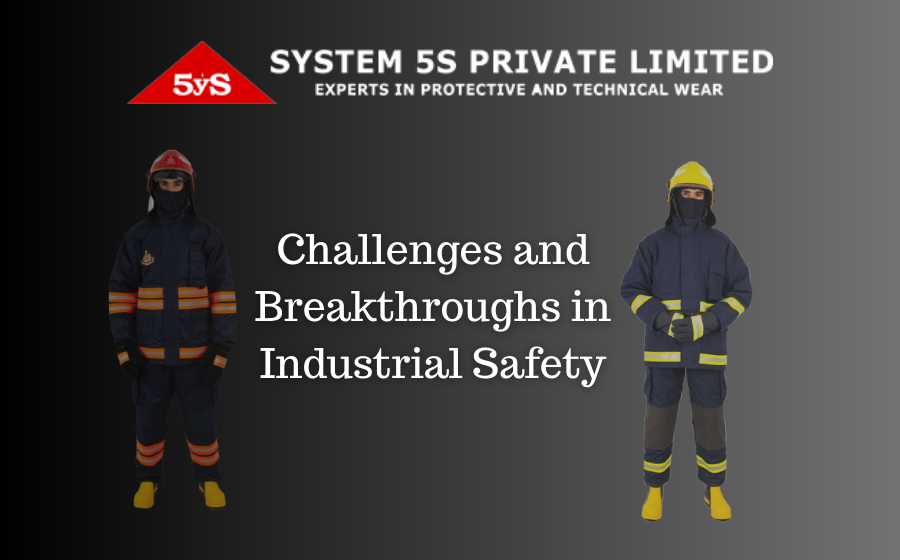
Challenges and Breakthroughs in Industrial Safety

Industrial workplaces like oil & gas fields, manufacturing plants, chemical processing units, electrical utilities, and firefighting operations are among the most hazardous environments. In these settings, safety isn’t optional – it’s a life-or-death priority. Personal protective equipment (PPE) such as flame-resistant clothing, full-body coveralls, PPE kits, helmets, and specialized suits form the last line of defense between workers and deadly risks. Yet despite decades of progress, significant challenges remain in keeping workers safe, even as new innovations promise to redefine industrial safety. This article explores the key safety challenges in these high-risk industries, recent breakthroughs in safety gear and standards, how System5S’s solutions are helping address these issues, and a forward look at the future of industrial safety.

Key Industrial Safety Challenges

Even with strict regulations and advanced equipment, industries continue to grapple with common safety challenges. Some of the most pressing issues include:

  • Inadequate or Improper Protective Gear: In many incidents, injuries occur because the provided PPE is insufficient for the hazard or not used correctly. For example, using non-flame-resistant clothing in an oil & gas facility or lacking arc-rated suits in electrical work can lead to severe burns. Modern hazards like arc flashes were historically underestimated, prompting standards (e.g. NFPA 70E) to emphasize proper hazard analysis and rated gear for electrical tasks. Ensuring the right PPE is available – and that it meets updated standards – is an ongoing challenge for employers.
  • Compliance Gaps and Safety Culture: A safety program is only as effective as its implementation. Unfortunately, getting workers to consistently wear and maintain PPE is a widespread problem. Over 80% of safety professionals report they “often” struggle to get employees to use required PPE. The reasons range from discomfort and heat to a perception that the gear isn’t necessary. In one study, 72% of workers who skipped PPE said they “just don’t want to wear it,” with about half believing it impedes their work. Such non-compliance leaves dangerous gaps in protection. Building a strong safety culture – through training, leadership example, and more comfortable gear – is critical to closing this gap.
  • Evolving Hazards: Industrial hazards are not static; they evolve with changes in technology, processes, and even climate. New chemicals and materials in manufacturing may introduce unforeseen health risks, while increased electrification and higher-energy systems bring greater arc flash and electrical shock dangers. Oil & gas and construction workers now face intensifying heat stress as climate change drives extreme temperatures. Traditional safety standards were not designed for some of these emerging threats, forcing companies and regulators to adapt on the fly. For instance, rising global temperatures are projected to increase workplace injuries (about 1% more injuries per 1°C rise) as well as reduce productivity. Industries must continuously update risk assessments and emergency plans to account for such evolving hazards.

Breakthroughs and Innovations in Safety Gear and Standards

A worker tests flame-resistant protective gear under direct flame. Advances in material science and design have greatly improved the performance of modern PPE.

The good news is that industrial safety technology is advancing rapidly. In recent years, there have been significant breakthroughs in both protective gear and the standards governing their use:

  • Advanced Materials for PPE: Manufacturers are leveraging cutting-edge material science to create gear that offers superior protection with less bulk. High-performance flame-resistant fabrics (like aramid fibers such as Nomex® or Kevlar®) and even nanotechnology-infused textiles now provide robust barriers against heat and flame. These materials don’t ignite easily and can self-extinguish, dramatically reducing burn injuries. In electrical safety, modern arc flash suits use multilayer composite fabrics that can withstand the intense thermal energy of an arc blast while remaining relatively lightweight. This continuous improvement in material engineering means today’s PPE can meet or exceed strict standards while also lasting longer under harsh conditions.
  • Focus on Comfort and Ergonomics: A major theme in recent PPE innovation is making safety gear more wearable. Uncomfortable gear often ends up unworn gear, so designers have introduced breathable fabrics, lighter composites, and ergonomic fits to encourage compliance. There’s been a paradigm shift toward PPE that not only protects but is also user-friendly and even stylish. For example, flame-resistant workwear now comes in softer, moisture-wicking fabrics and modern designs that workers don’t mind wearing all day. Even bulky items like hazmat suits and firefighting turnout gear are being reimagined for better mobility and ventilation without compromising protection. By prioritizing wearer comfort and ease of use, these innovations tackle one root cause of safety issues – PPE avoidance – thereby improving overall safety performance.
  • Improved Head Protection (Beyond the Hard Hat): Safety standards are evolving as research highlights new ways to protect workers. A clear example is the shift in head protection. After a century of reliance on the traditional hard hat, industry leaders and regulators are moving toward modern safety helmets that offer 360-degree impact protection. In 2023, OSHA even began equipping its inspectors with these advanced helmets, similar to those used in climbing and biking, which have internal foam liners and chin straps for greater stability. These helmets protect not only from top-down impacts but also lateral blows and falls, greatly reducing the risk of head injuries on sites. This change signals how breakthrough designs are being recognized and adopted into safety norms.
  • Smart PPE and Tech Integration: The convergence of digital technology with safety gear is an exciting frontier. “Smart” PPE innovations include wearables with embedded sensors, RFID tags, and wireless connectivity. These devices can monitor environmental conditions (temperature, toxic gas levels, noise), track the worker’s vital signs or motion, and provide real-time alerts if a hazard is detected. For instance, smart flame-resistant clothing under development can warn a worker if heat or chemical exposure is approaching dangerous levels. Emerging standards are beginning to factor in such technologies – the latest NFPA 70E guidelines discuss using sensor-embedded electrical PPE to monitor equipment health and worker safety. This integration of IoT (Internet of Things) and AI with PPE enables a proactive approach: instead of just protecting against known risks, PPE can help predict and prevent accidents. From helmets with built-in communication and GPS, to PPE that can automatically report usage and needed replacements, technology-driven safety gear is transforming how industries manage risk.
  • Stronger Standards and Compliance: Alongside gear innovation, safety standards continue to be updated to raise the bar. Regulatory bodies and industry groups worldwide (like OSHA, NFPA, ISO, and others) regularly revise safety guidelines in light of new research and incident data. In electrical safety, for example, NFPA 70E’s 2024 update refined how employers assess arc flash hazards and expanded guidance on PPE maintenance and training. New international standards for flame-resistant clothing (such as ISO 11612 and NFPA 2112) have been widely adopted, ensuring that PPE like coveralls or jackets meet minimum thermal protection levels. Enforcement is also getting stricter – many companies now require third-party certified gear and conduct regular safety audits. This continuous improvement of standards – often spurred by innovation and lessons learned from accidents – means that industries are gradually moving toward safer operations as best practices evolve.

How System5S Solutions Address Safety Challenges

As a leading safety and workwear provider, System5S has been at the forefront of tackling these industrial safety challenges. The company, founded in 1990, has a core mission to “keep people safe in dangerous workplaces” and focuses on workwear and body protection across multiple high-risk sectors. Here’s how System5S’s products and approach align with the needs of modern industrial safety:

  • Comprehensive Protective Gear: System5S offers a wide range of certified PPE tailored to various industries – from firefighting turnout suits and flame-retardant coveralls to electrical arc flash suits and safety accessories. Each category is designed with the specific hazard in mind. For example, their firefighting gear (turnout jacket and trousers) is constructed from high-quality flame-resistant materials and equipped with advanced features to ensure durability, heat resistance, and mobility for firefighters. Their electrical arc flash suits are engineered to withstand the intense heat and energy of arc incidents, providing reliable head-to-toe protection for electrical workers. By covering fire, heat, flame, chemical splash, molten metal, and electric arc hazards, System5S’s product lineup directly addresses the gamut of risks in oil & gas, chemical, manufacturing, and utility jobs.
  • Certified Quality and Standards Leadership: A commitment to safety standards is in System5S’s DNA. The company has the distinction of achieving several “firsts” in India for safety certification – it was the first in the country to obtain the EN 469 certification for firefighting suits (back in 2003) and the first to receive a quality assessment certificate from a European Notified Body for both firefighting and arc flash suits. System5S was also the first in India to earn the BIS (Bureau of Indian Standards) certification for firefighter protective clothing. These credentials aren’t just plaques on a wall; they demonstrate that gear meets rigorous international safety benchmarks. For customers, it means confidence that products like flame-resistant coveralls or helmets will perform as expected under extreme conditions. Moreover, System5S maintains in-house testing facilities to continually verify and improve product performance. This quality-focused approach ensures that as standards evolve (or hazards change), System5S’s PPE will remain compliant and effective, bridging the compliance gap for employers worried about meeting the latest regulations.
  • Innovation and User-Centric Design: Understanding that unused PPE offers no protection, System5S places emphasis on the comfort and usability of its safety gear. The company has introduced workwear that not only defends against hazards but is also comfortable for long shifts – for instance, using inherently flame-retardant fabrics that are lighter and breathable, or designing suits with better fits. System5S is also capable of customizing solutions for unique workplace needs. If a particular facility faces an unusual hazard or requires a custom-fit gear for certain personnel, System5S can adapt its designs to meet those specific challenges. By working closely with clients, they ensure the provided PPE is actually used correctly and consistently, thereby directly addressing the compliance and adequacy issues. In essence, System5S’s solution strategy mirrors the industry’s broader breakthroughs: use the best materials and technology available, adhere to (or exceed) safety standards, and focus on practical usability so that protective equipment truly protects as intended.

The Future of Industrial Safety

Looking ahead, industrial safety is on the cusp of even more transformative changes. The ultimate goal across industries is zero harm, and achieving this will likely involve a combination of smarter technology, stronger culture, and better design of work itself. We can expect PPE to become increasingly “smart” and connected – imagine more widespread use of wearables that monitor a worker’s environment and health in real time, automatically shutting down equipment or sending alerts at the first sign of danger. The convergence of safety and technology holds great promise: embedded sensors, AI-driven risk analysis, and wireless communication could soon enable protective gear to actively prevent accidents, not just shield against them.

In parallel, future safety gear will continue to get lighter, more comfortable, and more eco-friendly. Researchers are already exploring sustainable PPE, such as biodegradable or recycled flame-resistant fabrics, to reduce the environmental footprint of safety equipment. Standards will also keep evolving; we may see new regulations addressing emerging risks like nanomaterial handling or battery energy storage, and more integration of climate resilience into safety planning. All these challenges and advancements represent opportunities to create novel safety measures and strategies that provide seamless, effective protection for workers.

In conclusion, the industries that System5S serves are dynamic and often dangerous, but they are also driving innovation in safety. By staying ahead of the curve on technology and standards, and by focusing on quality and user needs, companies like System5S are helping ensure that every worker – whether in a refinery, on a factory floor, up a power line, or in a burning building – can count on coming home safe. The journey to safer industrial workplaces is ongoing, but with collective effort and continuous improvement in our safety gear and practices, each year brings us a step closer to that goal.

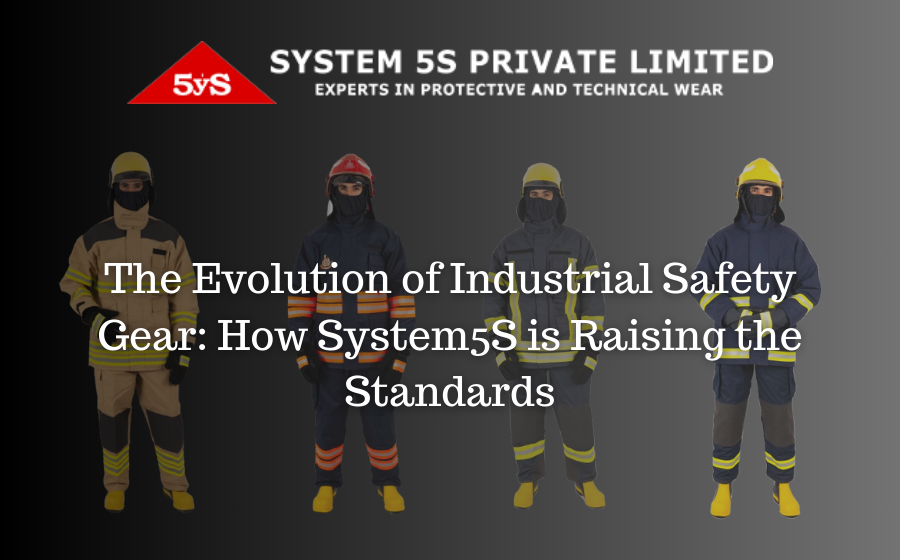
The Evolution of Industrial Safety Gear: How System5S is Raising the Standards

Introduction

Imagine a steel mill a century ago – workers toiled in intense heat, flying sparks with only a heavy apron and basic gloves as protection. Industrial safety gear has come a long way since those days, evolving from rudimentary shields to high-tech workplace safety solutions designed for specific hazards. This evolution isn’t just about technology; it’s about keeping people safe and businesses running smoothly. Today, advanced industrial safety gear like flame-resistant clothing and arc flash suits are not luxuries but necessities in high-risk industries. In this blog, we’ll explore the journey of safety gear, the limitations of traditional protection, and how System5S is leading the charge with cutting Edge innovative solutions. By understanding the past and embracing modern advancements, industrial leaders can ensure safer work environments and raise the standards for safety across the board.

A Brief History of Industrial Safety Gear

Protective equipment for workers is not a new idea – even in medieval times, blacksmiths wore leather aprons and gloves to shield against burns​. However, for much of industrial history, safety gear was primitive at best. Hard hats and basic goggles emerged during the early 20th century, but usage was often optional and standards were virtually non-existent. It wasn’t until the late 1900s, with developments like the OSHA regulations in 1970, that workplace personal protective equipment (PPE) became a formalized priority.

The latter half of the 20th century saw major leaps in protective clothing technology. For example, DuPont introduced Nomex®, an inherently flame-resistant fabric, in the 1960s – a game-changer for firefighting and industrial attire​. Early high-heat protective suits for firefighters in the 1930s actually used asbestos fabric (unbeknownst to them, a dangerous material) to resist flames. Thankfully, those have been replaced by modern high-heat protective suits with aluminised outer layers and insulated linings that reflect heat and guard against fire. By the turn of the millennium, specialized gear existed for nearly every hazard – from chemical-resistant suits to arc flash protection outfits for electrical workers. In short, industrial safety gear has evolved from “one-size-fits-all” afterthoughts into highly engineered, task-specific equipment. This history set the stage for today’s innovators like System5S to push safety standards even further.

From Traditional PPE to Advanced Protection: Why the Evolution?

If traditional PPE saved lives, why did it need to evolve? The truth is that older safety gear, while better than nothing, had serious limitations. Bulky, heavy outfits could restrict comfort and movement, causing fatigue and reducing productivity​. Anyone who’s worn a thick old-style heat-resistant suit in a furnace room can tell you how exhausting and cumbersome it was. Moreover, many traditional gear items offered incomplete protection. A plain cotton coverall might protect from dirt, but it can ignite in a flash fire. Similarly, early electrical work attire provided virtually no guard against arc flashes – a hazard where temperatures can spike to 20,000 °C (four times the sun’s surface) in milliseconds. In essence, as industrial processes grew more complex and dangerous (higher voltages, hotter molten metals, stronger chemicals), “good enough” gear wasn’t good enough anymore.

Another driving force in the evolution of safety gear has been the rising demand for better worker protection and compliance. Business owners recognized that serious workplace accidents are not only tragic for workers but also costly for operations. In India and globally, stricter regulations and standards have emerged to ensure employers provide effective PPE. For instance, the BIS safety gear standards in India now mandate certification for flame-resistant clothing, raising the quality bar industry-wide. Yet, accidents still happen — often because proper gear was not in use. According to government data, about three workers die every day in Indian factories due to lack of basic safety measures, including inadequate PPE. This stark reality has accelerated the call for advanced protection that workers will actually wear and that truly shields them from modern hazards. The evolution of industrial safety gear is driven by one goal: eliminate those preventable injuries and tragedies through better technology, better design, and better implementation.

System5S: Leading Innovation in Protective Workwear

As safety requirements have surged, System5S has been at the forefront of innovating gear that meets these demands. Founded in 1990, System5S brings over 30 years of expertise in protecting workers. In fact, it was among the first companies in India to achieve BIS certification for protective firefighter clothing – a testament to its commitment to quality and compliance. Today, System5S offers a comprehensive range of advanced protective garments to cover every major industrial hazard. Our key product categories include:

  • Flame-Resistant Workwear: Durable flame-resistant clothing built with advanced fabrics that won’t catch fire or melt. These uniforms and coveralls are ideal for oil & gas, manufacturing, and welding environments where sparks or open flames are a constant risk. They meet stringent fire-retardant standards (such as IS 15742 in India for limited flame spread) while remaining breathable,light weight and comfortable for all-day wear.
  • Arc Flash Suits: Specialized suits designed for electricians and engineers facing electrical arc hazards. System5S’s arc-rated ensembles provide arc flash protection for high-voltage tasks, dissipating the intense thermal energy of an arc blast. Features like multilayer insulation and face shields protect against extreme heat and light, while ergonomic tailoring ensures workers can move freely even in a heavy suit. This gear complies with international norms (comparable to NFPA 70E categories) to keep electrical teams safe and compliant.
  • Aluminised Fire Entry Suits: Ultra high-heat protective suits with aluminised outer layers that reflect radiant heat, allowing workers to get close to furnaces, molten metal, and fire for short durations. These high-heat protective suits are commonly used in foundries, steel plants, and aircraft rescue firefighting. System5S’s designs use multiple layers (including moisture barriers and insulation) to shield against temperatures that would be unsurvivable in normal gear. When seconds count, these suits let trained personnel perform critical shutdowns or rescues in extreme heat.
  • Molten Metal Protective Clothing: Foundry and steel mill workers face unique hazards like splashes of molten iron or aluminum. Our molten metal PPE line includes jackets, aprons, leggings and gloves made from specialised heat-resistant, non-stick materials. They are engineered to shed molten metal spatter and resist burns, keeping workers safe from severe burn injuries during smelting, casting, and welding operations.
  • Welding PPE: From welding jackets and bibs to gauntlet gloves and face shields, System5S provides complete welding protection kits. This gear not only offers flame resistance but also guards against UV radiation from the welding arc and flying sparks. Thoughtful design (like under-arm gussets and flexible leather in high-movement areas) gives welders the dexterity they need to work efficiently without compromising on safety.

System5S continually expands its range with industry-specific solutions – whether it’s chemical splash protection, high-visibility reflective workwear, or certified protective clothing in India for niche applications. All products are backed by our technical expertise and a deep understanding of the conditions in which they’ll be used.

What truly sets System5S apart is not just the variety of gear, but the quality and innovation infused into each product. Every item is BIS-certified and compliant with applicable safety standards, giving you confidence that your PPE meets national and international benchmarks. We leverage advanced fabric technology – from inherently flame-retardant aramid fibers (like Nomex®) to aluminized fiberglass composites – to achieve high protection without excess weight. Our designers prioritize ergonomic design, ensuring that jackets, suits, and gloves are cut for mobility and comfort; if PPE isn’t wearable, it isn’t truly effective. And because tough work requires tough gear, System5S apparel supports industrial washing and maintenance routines, meaning the protective properties won’t wash out or wear away easily. This durability in the face of repeated use and cleaning is crucial for both safety and cost-effectiveness. When you choose System5S, you’re not just buying a product – you’re investing in cutting-edge safety performance built on decades of expertise.

Compliance, Maintenance, and Worker Education: The Safety Trio

Even the best equipment needs the right practices to deliver maximum protection. System5S believes that true workplace safety rests on three pillars: compliance, maintenance, and education.

  • Compliance: Using certified protective gear is not optional – it’s a must for legal and moral reasons. Adhering to safety regulations (like BIS standards in India or OSHA/EN norms internationally) ensures that the gear has been tested and proven effective for the intended hazards. Compliance also means selecting the right PPE for the job (flame-resistant clothing for fire risk, arc-rated suits for electrical work, etc.). Companies that stay compliant not only avoid penalties but significantly reduce the likelihood of accidents. It’s about doing right by your workers – every employee deserves protection that meets high standards of quality.
  • Maintenance: Protective equipment can only do its job if it’s kept in good condition. Regular maintenance – from cleaning and industrial washing to inspection and timely replacement – is essential. Dirt, oils, or damage can impair the performance of safety gear (for instance, a tiny tear in an arc flash suit can make it fail under pressure). Employers should implement routine PPE inspections and use proper washing techniques (or services like System5S’s industrial wash support) to prolong the life of the gear. Well-maintained gear not only lasts longer but also gives workers confidence that their helmet, suit, or harness will hold up in a crisis.
  • Worker Education: The most advanced workplace safety solutions won’t help if workers don’t wear or use them correctly. Training and education are the glue that binds everything together. It’s crucial to educate employees on why a specific PPE is needed, how to wear it properly, and when to replace it. Regular safety drills and briefings can reinforce these lessons. Studies have shown that inadequate training in PPE use directly correlates with higher accident rates. Conversely, a workforce that understands the value of their safety gear will be far more likely to use it consistently and correctly. Empower your team through knowledge – make safety an ingrained part of the culture, not just a box to tick.

By focusing on this trio of compliance, maintenance, and education, companies create an environment where advanced safety gear can do what it’s meant to do: protect people effectively. System5S supports clients not just with products, but also guidance on care and training, because we know a holistic approach is key to accident prevention.

Conclusion: Raising the Standards Together

From the early days of basic protection to the era of high-tech flame-resistant clothing and arc flash suits, the evolution of industrial safety gear has been remarkable – and it continues every day. The driving force behind this progress is a shared commitment to worker safety. System5S is proud to be a part of this ongoing journey, raising the standards for what quality safety gear looks like in India and beyond. We combine innovation with deep expertise to deliver gear that not only meets regulations but also earns the trust of the people who rely on them every day.

For industrial business leaders, the message is clear: investing in modern, certified PPE is an investment in your workforce’s well-being and your company’s success. Don’t let outdated gear or practices put your team at risk. Instead, take the proactive step towards a safer future. Explore System5S’s full range of protective gear – from arc flash kits to BIS safety gear for molten metal work – and see how our solutions can be tailored to your needs. We invite you to partner with System5S for a safer work environment where every worker is confidently protected. Together, let’s continue to evolve and uphold the highest safety standards in every factory, foundry, construction site, and plant we serve. Your workforce’s safety is our mission – let’s achieve it together.

India’s Indigenous Firefighting Suit: A Turning Point in Fire Safety Gear Manufacturing

How the National Technical Textiles Mission is shaping the future — and how System5S is leading from the front

When it comes to firefighting, protection is everything. Firefighters put themselves on the frontlines to save lives, often in extreme conditions. The gear they wear isn’t just a uniform — it’s their first line of defense. Until now, India has depended largely on imports for high-performance firefighting suits. But that’s changing.

Under the Government of India’s National Technical Textiles Mission (NTTM), a new milestone has been reached — the development of indigenous firefighting suits made from aluminised coated glass fabrics. These suits are designed to match global standards in performance and safety, marking a powerful step forward in the country’s goal for self-reliance and innovation. As part of this initiative, System5S is collaborating with NTTM to integrate these advanced materials into protective gear, reinforcing a shared commitment to enhancing firefighter safety through Made-in-India solutions.

A Major Leap for Indian Manufacturing

The newly developed firefighting suits are made using aluminised coated glass fabrics, a type of technical textile that offers superior flame resistance, durability, and thermal insulation. These fabrics are critical for protection in high-heat environments like firefighting, and their production within India reflects a growing shift toward Atmanirbhar Bharat (self-reliant India) in the industrial safety sector.

Until recently, such fabrics were typically imported, leading to higher costs and slower delivery timelines. But with the government’s support and growing investments in R&D, these materials can now be produced locally — empowering Indian manufacturers, enhancing job creation, and offering faster access to essential gear for emergency responders.

This isn’t just about saving money. It’s about saving lives.

About the National Technical Textiles Mission (NTTM)

The NTTM is a visionary initiative by the Ministry of Textiles, aimed at positioning India as a global leader in the field of technical textiles. Launched in 2020 with a budget of ₹1,480 crores, the mission is structured around four key pillars:

  • Research and Development

  • Promotion and Market Development

  • Export Promotion

  • Education and Skill Development

Technical textiles are a rapidly growing segment in India — used across multiple sectors such as defense, medical, automotive, construction, and safety. The firefighting suit made from aluminised coated glass fabric is a perfect example of how this mission is translating into real-world applications.

By supporting domestic production of these advanced fabrics, the mission not only strengthens India’s manufacturing backbone but also enhances its readiness for emergency response and disaster management.

How System5S Is Contributing to This Vision

At System5S, we’ve been crafting world-class protective gear since 1990 — long before the term “technical textiles” became mainstream. We understand that in high-risk environments like firefighting, there is zero room for error. That’s why our commitment to innovation, safety, and performance drives everything we do.

Our range of fire safety gear includes:

  • Firefighting Turnout Gear

  • Aluminised Fire Entry Suits

  • Flame-Resistant Workwear

  • Arc Flash Suits

  • Protective Clothing for Molten Metal and Welding

With every product, we combine the latest materials, rigorous quality checks, and custom-built solutions for the most demanding conditions. As India begins to embrace homegrown technical textile solutions, System5S is proud to be part of this shift — helping equip first responders with gear they can trust.

We strongly support initiatives like the NTTM and are actively exploring ways to incorporate locally made aluminised coated fabrics into our future collections.

Why This Move Matters for Safety Leaders and Buyers

For procurement teams, fire departments, and industrial safety heads, this development represents more than just a shift in sourcing. It offers:

  • Improved turnaround times for new gear
  • Reduced dependency on imports

  • Customization possibilities with Indian manufacturers

  • Cost efficiency without compromising quality

  • Strengthened compliance with international safety standards

In the coming years, as Indian innovation continues to grow in this field, safety professionals will have access to a wider range of options, faster delivery, and stronger supply chains. It’s a win for safety, a win for manufacturing, and a win for every firefighter out there doing their job with courage and dedication.

Conclusion

India’s step toward developing its own firefighting suits is a monumental achievement — one that combines vision, innovation, and national pride. At System5S, we are excited to contribute to this mission by delivering gear that’s not only made in India but also made for excellence.

To learn more about our fire safety gear and custom solutions, get in touch with the System5S team today.

Molten Metal Hazards: Safety Standards in India

Molten Metal – A Severe Workplace Hazard

In foundries, steel plants, and metal casting facilities, workers routinely handle molten iron, steel, aluminum, and other metals. A splash or spill of this liquid metal can cause instant and severe burns. Unlike ordinary burns, molten metal sticks to surfaces and clothing, transferring intense heat. Victims may suffer deep burns, and nearby materials can ignite. In some cases, explosive eruptions or splashes can even throw workers off balance. These characteristics make molten metal a top safety concern in metalworking industries.

Common injury scenarios include ladles spilling molten iron, furnace eruptions, or splashes during pouring. Such incidents not only burn any exposed skin but can penetrate normal work clothes. That’s why specialized personal protective equipment (PPE) is critical – regular cotton uniforms would catch fire or melt. Molten metal accidents also often involve multiple workers at once, compounding the seriousness of these events.

Indian Safety Guidelines and Standards for Molten Metal Work

Indian law and standards recognize molten metal as a serious workplace hazard and lay down guidelines to protect workers. The Factories Act, 1948 (and State Factory Rules) requires employers to ensure safety in all industrial processes, including foundries. Specific rules mandate protective gear and precautions for molten metal handling. For example, tasks like “work at a furnace where there is risk to the eyes from molten metal” or “pouring or skimming of molten metal” are explicitly listed as operations that require proper eye and face protection. This means workers doing metal casting or furnace work must be provided with safety goggles or face shields to guard against splashes.

Personal Protective Equipment (PPE) Rules: Indian factories must supply appropriate PPE to all workers exposed to hazards. Factory rules state that “all workers should be mandatorily provided with PPEs as required… and such PPEs shall conform to the relevant national standard”​.  In practice, this means foundry workers handling molten metal should receive flame-resistant jackets or aprons, face shields, gloves, leggings/gaiters, and safety boots that meet Indian Standards. The rules also mention “suitable gloves, leather gauntlets and mittens conforming to relevant National Standard shall be used” to protect workers’ hands​. This legal framework (under the Factories Act) makes it clear that ordinary clothing is not enough – certified protective clothing is a must when dealing with molten metal.

Importance of Specialized Protective Gear and Maintenance

Workers’ protective garments should be kept in top condition – clean, intact, and free of damage – to ensure maximum safety. Even the best protective gear can fail if it’s worn-out or improperly maintained. Molten metal PPE often has special coatings (like aluminized surfaces that reflect heat, or leather treated for fire resistance) which can be compromised by soil, oil, or wear and tear. Indian guidelines (and good safety practice) advise regular inspection and maintenance of PPE. Employers should replace any charred, thin, or torn protective clothing immediately, as even a pinhole can let molten metal through.

In India, companies like System 5S emphasize not only providing quality safety gear but also proper upkeep. For example, contaminated workwear can lead to reduced flame resistance or foster bacteria (if soaked in sweat), so industrial laundry and repair services are offered to keep gear clean, durable, and reliable. Regular cleaning removes flammable oil/grease and metal particles, while timely repairs (fixing broken fasteners, patching holes) extend the life of costly protective clothing. This ensures that a jacket or apron will perform as designed when a real incident occurs.

Key Takeaway

Molten metal hazards are a reality in India’s manufacturing sector – but the injuries and tragedies are preventable. Adhering to Indian safety standards like the Factories Act and BIS PPE specifications can dramatically reduce these risks. It is vital for employers to provide specialized protective gear and ensure workers actually wear them. Equally important is fostering a safety culture of maintenance, training, and vigilance. Workers should be trained in safe pouring techniques, emergency responses (e.g. eyewash for splashes), and the importance of keeping their protective gear in good condition.

In summary, molten metal safety isn’t just a regulatory checkbox but a life-or-death matter. With the right gear – meeting IS standards for molten metal protection – and strict compliance with safety guidelines, companies can protect their employees from horrific burn injuries. The investment in proper PPE and training pays off by preventing accidents, saving lives, and avoiding the human and economic costs that come with every molten metal incident. For Indian industry, striving toward zero accidents in foundries and steel plants is an achievable goal – and it starts with recognizing the risks of molten metal and taking all possible precautions to mitigate them.

How to Choose the Right Arc Flash Suit: A Complete Guide

Arc flash suits are essential safety gear for professionals working with electrical hazards. Designed to provide protection from arc flash heat exposures, these suits offer crucial extra seconds for users to escape potential secondary explosions or fires. Selecting the right arc flash suit involves considering factors such as ATPV ratings, materials, compliance with safety standards, and comfort features.

Understanding ATPV Ratings and Safety Compliance

Arc flash suits are rated based on their Arc Thermal Performance Value (ATPV), which measures the level of incident energy a suit can withstand before the wearer sustains a second-degree burn. For example, an HRC 2 arc flash protection suit is suitable for environments with an arc flash hazard of up to 18 cal/cm². Higher-calorie ratings, such as 25 cal/cm² or 30 cal/cm², offer increased protection and are necessary for more hazardous electrical work. Compliance with safety standards like NFPA 70E ensures that these suits meet strict requirements for flame resistance, durability, and user safety.

Selecting the Right Material and Design

The material used in an arc flash suit plays a crucial role in its performance. Many high-quality suits are made from MHP or Protera fabric, which combines Nomex, Kevlar, and other high-strength fibers. These materials are inherently flame-retardant, ensuring durability, washability, and breathability. The inclusion of anti-static properties further enhances protection, making the suit safer for electrical work.

Arc flash suits come in various designs, including coveralls, jackets, and trousers. Coveralls offer full-body protection with features such as front zipper closures, multiple pockets, and high collars for better shielding. Jackets and trousers provide greater flexibility, with elastic waists, hook-and-loop closures, and reinforced seams for long-term wear. Many models also come with optional features like flame-retardant reflective tapes for increased visibility and customized logo embroidery.

Finding the Right Suit for Your Needs

For professionals working in lower-risk electrical environments, an arc flash suit with an ATPV rating of 8 cal/cm² is sufficient. These suits offer essential protection while maintaining comfort and mobility. Workers handling more intense electrical hazards may require a suit with an ATPV rating of 18 cal/cm² or higher, which includes enhanced features such as double-layered fabric, additional pockets, and throat tabs for increased protection.

For those engaged in prolonged or high-intensity electrical tasks, suits with an ATPV rating of 25 cal/cm² or above are the best choice. These suits are made with multiple layers of Protera fabric, offering greater resistance to arc flash energy. The addition of detachable hoods with high-temperature visors ensures full head protection while maintaining clear visibility.

Professionals who need the highest level of arc flash protection should opt for suits rated at 40 cal/cm² or even 77 cal/cm². These suits are typically multi-layered, combining Nomex and Kevlar for maximum durability and flame resistance. They are designed to withstand extreme conditions and often include full-body coverage with integrated gloves, hoods, and safety glasses. The lightweight construction of these high-calorie suits ensures ease of movement without compromising safety.

Comfort and Practicality Considerations

While safety is paramount, comfort is also a key factor in selecting an arc flash suit. Workers often wear these suits for extended periods, making breathability and ease of movement essential. Features such as adjustable waistbands, storm cuffs, and ergonomic designs help improve wearer comfort. Suits made with ultra-soft fabric layers provide a better fit while ensuring long-lasting fire resistance. Additionally, quick-release zippers and hook-and-loop closures allow for easy removal in case of emergencies.

Final Thoughts

Choosing the right arc flash suit depends on the specific risks involved in the work environment. Workers in lower-risk areas may only require a suit with a basic ATPV rating, while those handling high-voltage equipment must invest in higher-calorie-rated suits with additional safety features. By considering factors such as ATPV ratings, material composition, design, and comfort, professionals can select the best arc flash suit for their needs, ensuring maximum protection and workplace safety.

System5S is committed to providing high-quality arc flash suits that meet industry standards for safety and performance. With a strong focus on durability, comfort, and compliance, System5S ensures that electrical workers are equipped with the best protective gear to minimize risks and enhance workplace security.